Every shop has a story, and for us, that story is inseparable from the spaces we’ve worked in. As Robert Thomas Iron Design has grown, each building we’ve occupied has shaped how we work, what we’re capable of, and how we think about craft. Our move into Building 56 at the North Charleston Navy Yard marked a major milestone—not just in square footage, but in identity.
This January, we wanted to share a bit of that journey, from a dirt-floor shrimp shack to a 1936 industrial landmark that now feels like home.
The Shrimp Shack Years (2013–2015)
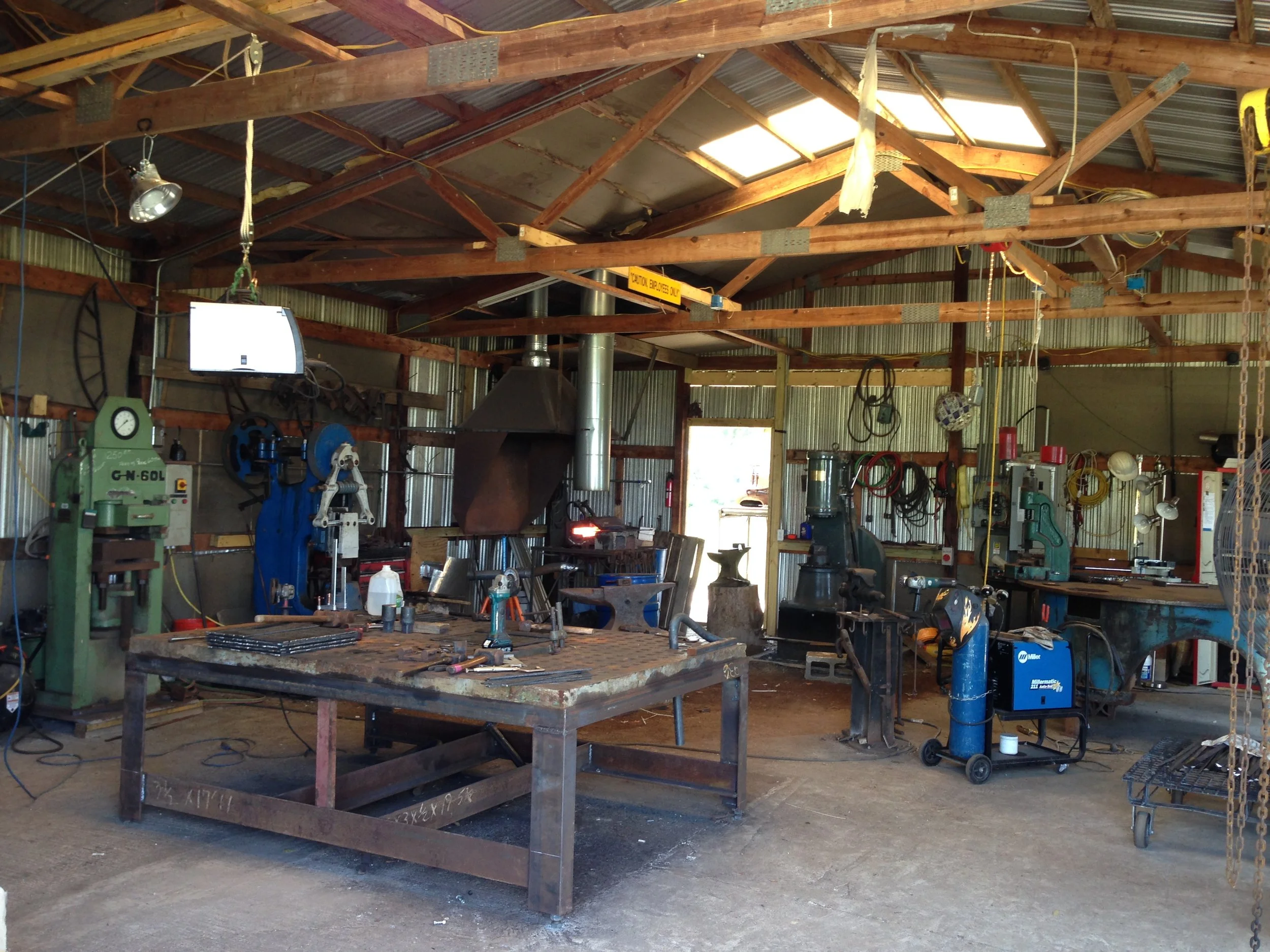
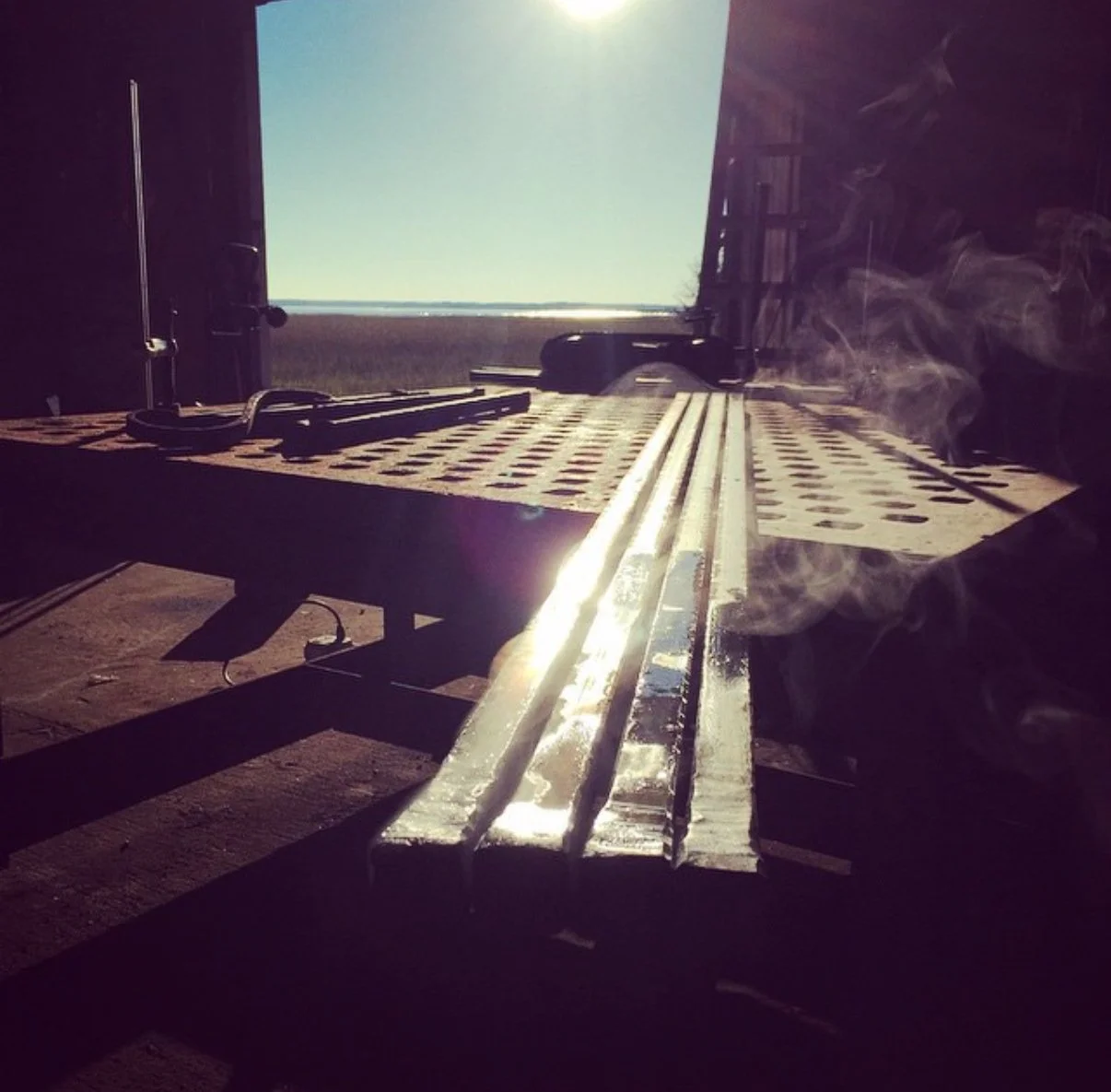
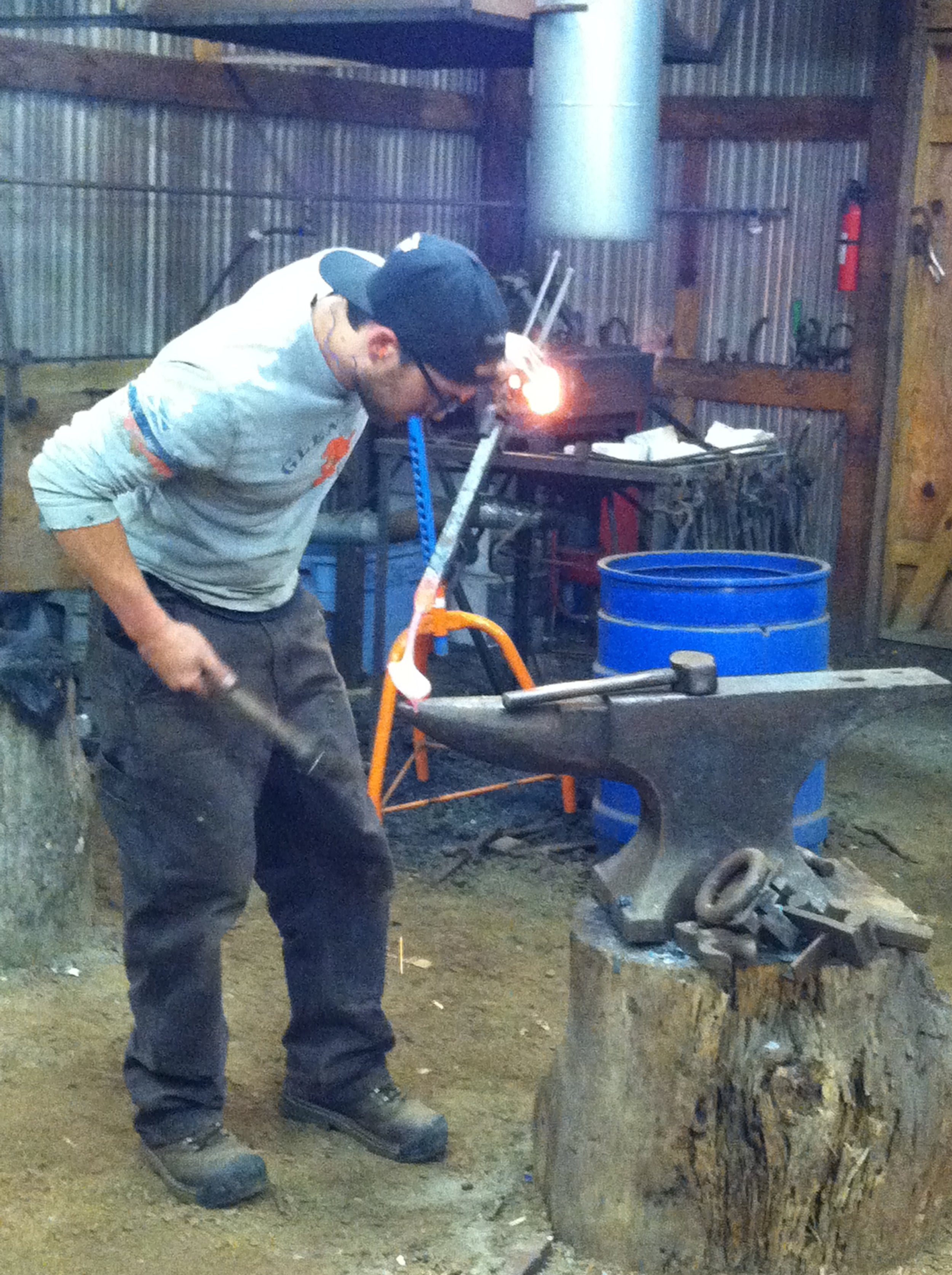
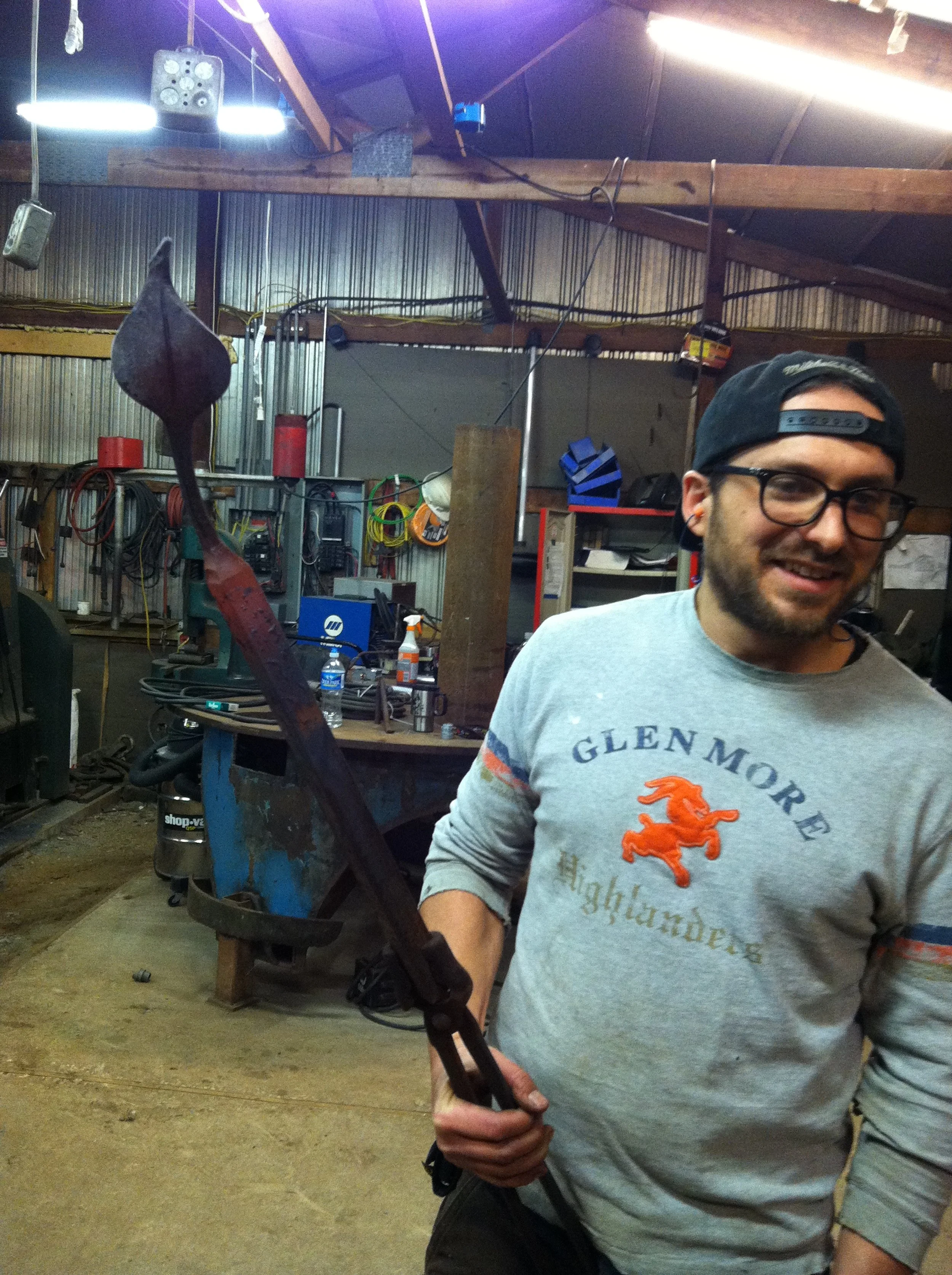
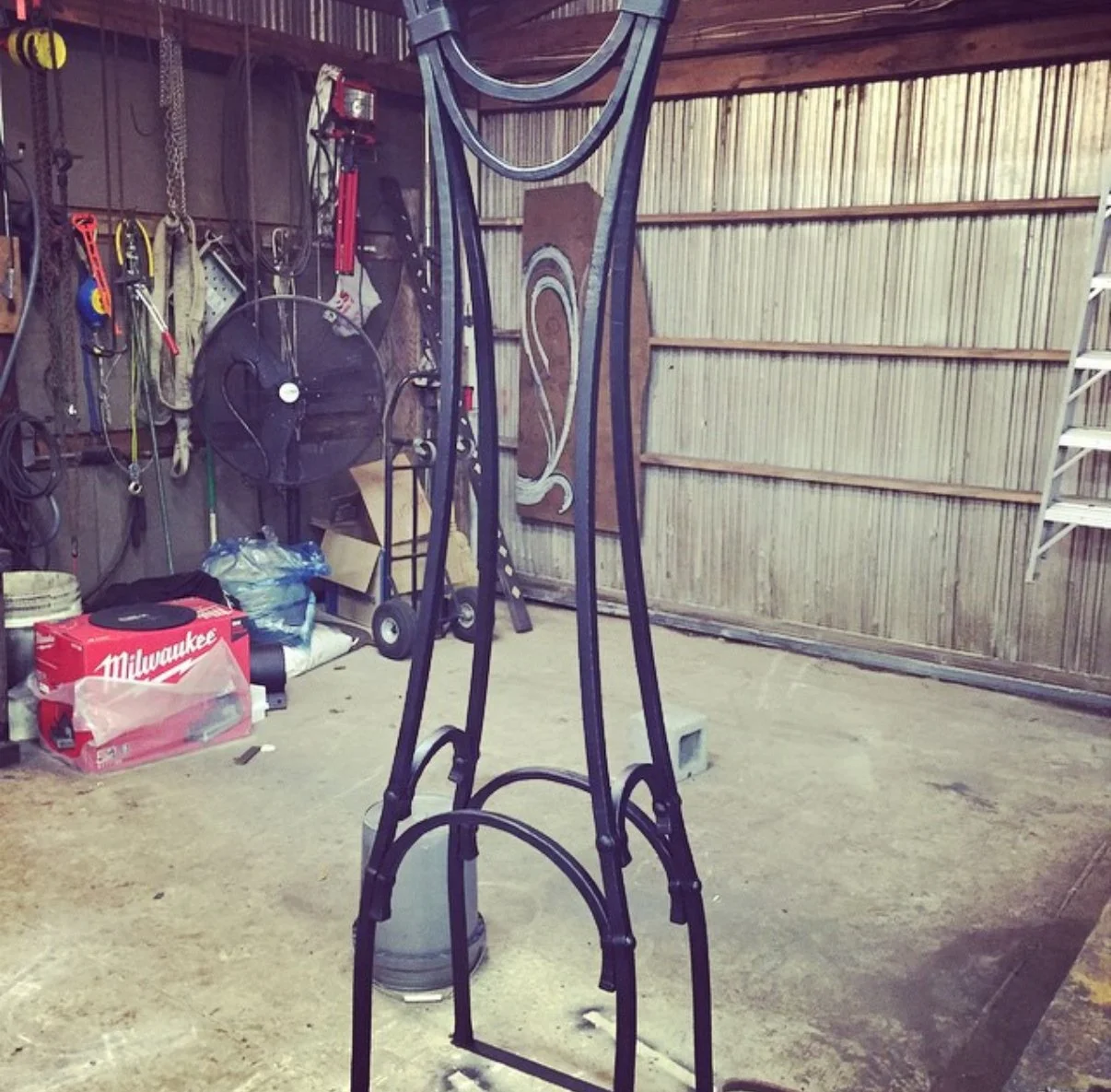
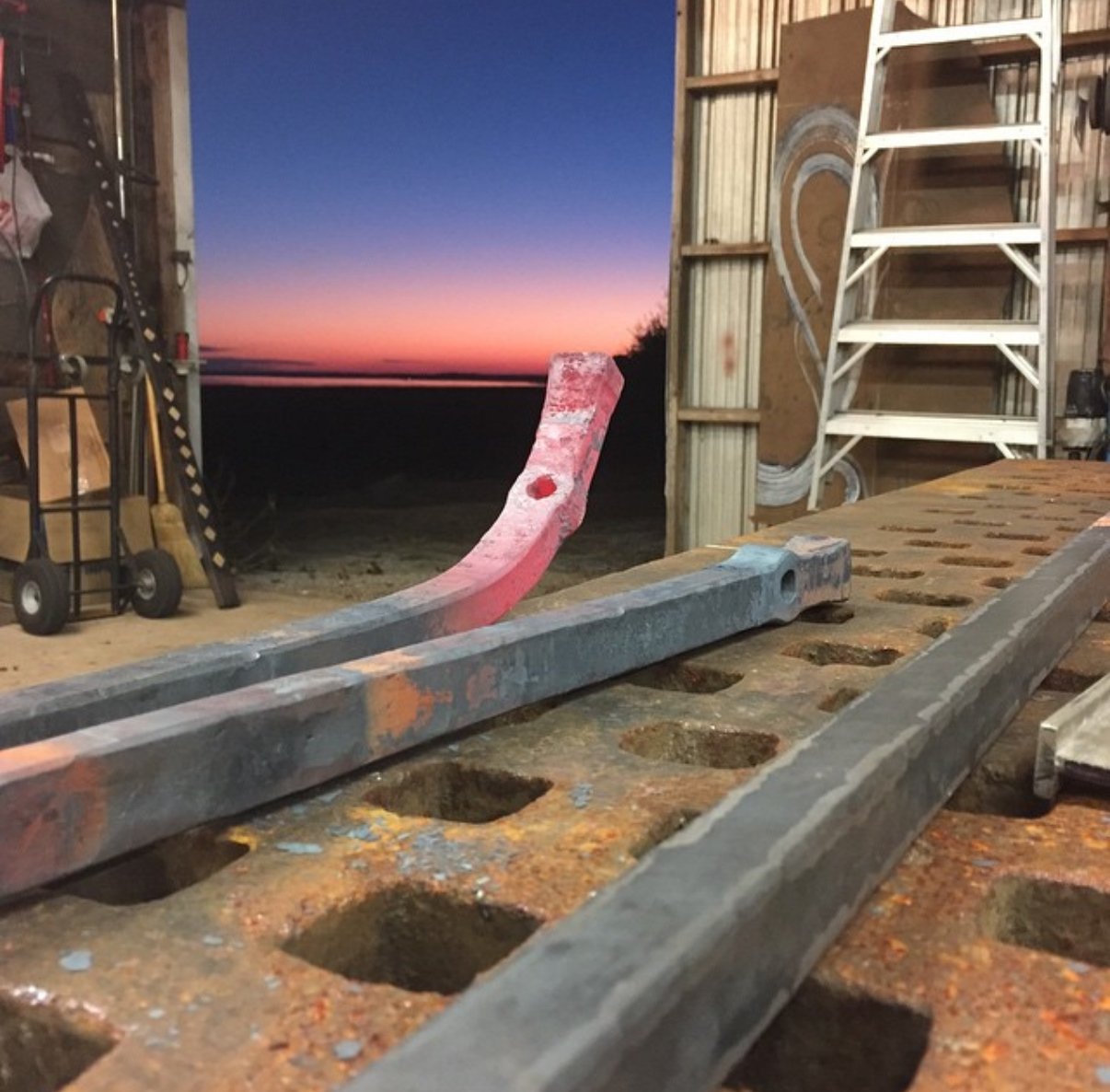
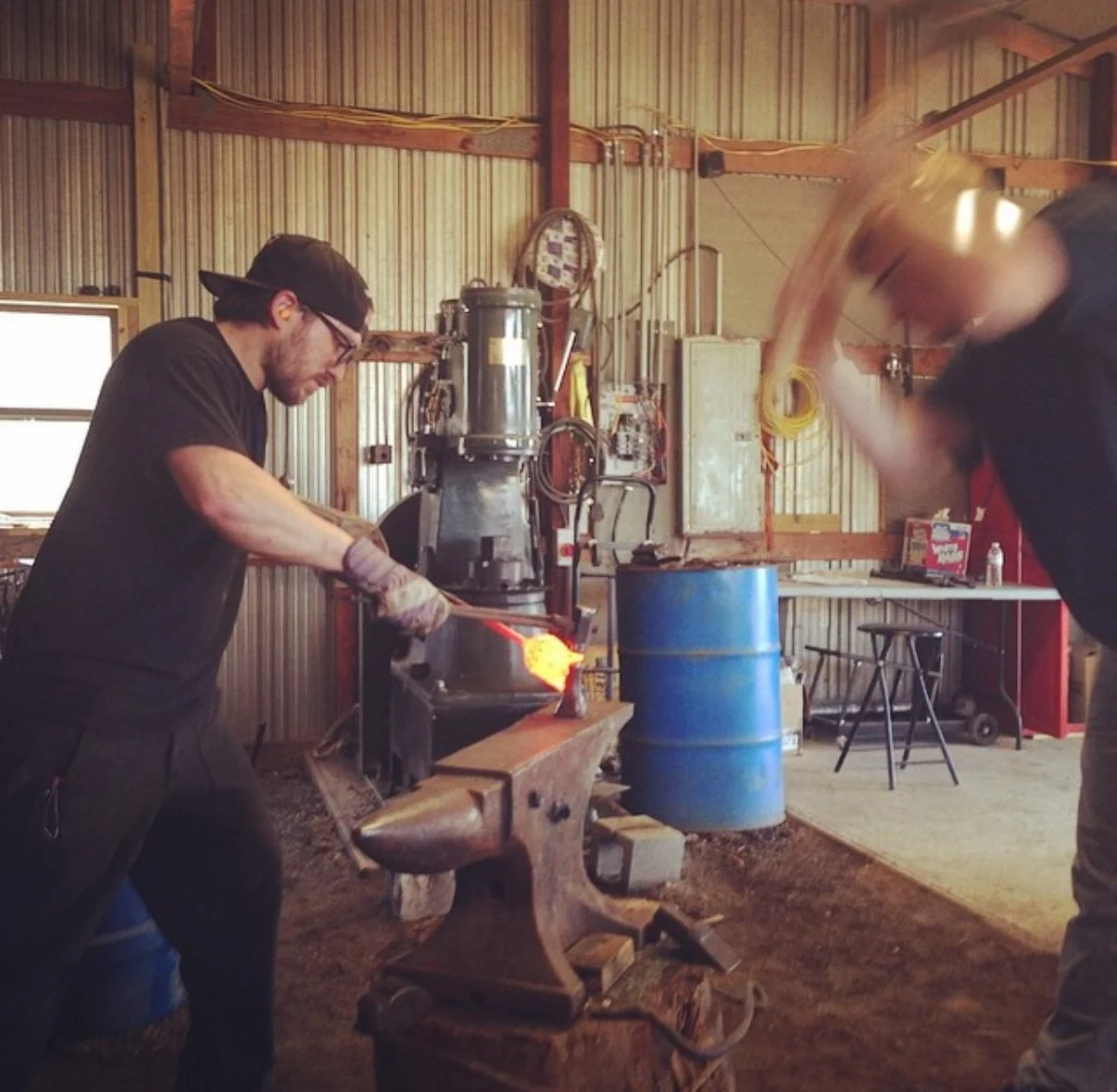
Robert Thomas Iron Design officially began in October of 2013 on Wadmalaw Island, South Carolina, in a former shrimp company freezer. The building was about 800 square feet, essentially a bare steel shell. The reasons for choosing it were practical: it was cheap, and it had three-phase power—which mattered more than comfort at the time.
When we moved in, we stripped out the freezer equipment and were left with a dirt floor. We poured concrete in the fabrication area ourselves so welders and equipment could be rolled around. There was no bathroom, no office, and no separation of spaces, just one room and a port-a-potty outside.
As work increased, we expanded in the only ways available: lean-tos, tents, and makeshift additions off the sides of the building. A surprising amount of work came out of that space, but eventually we hit its limits.
Building 43: Room to Grow, and New Constraints (2015–2024)
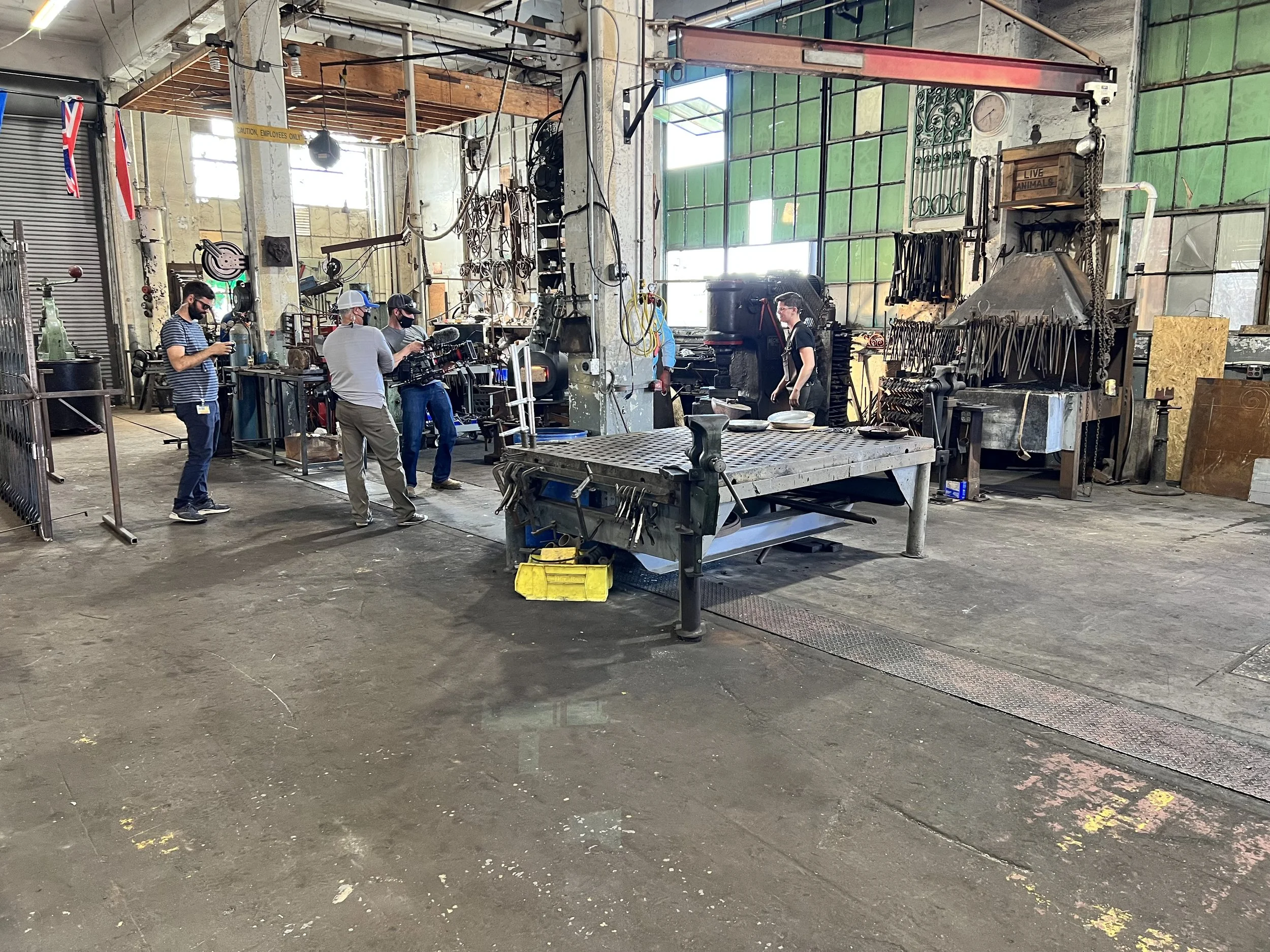
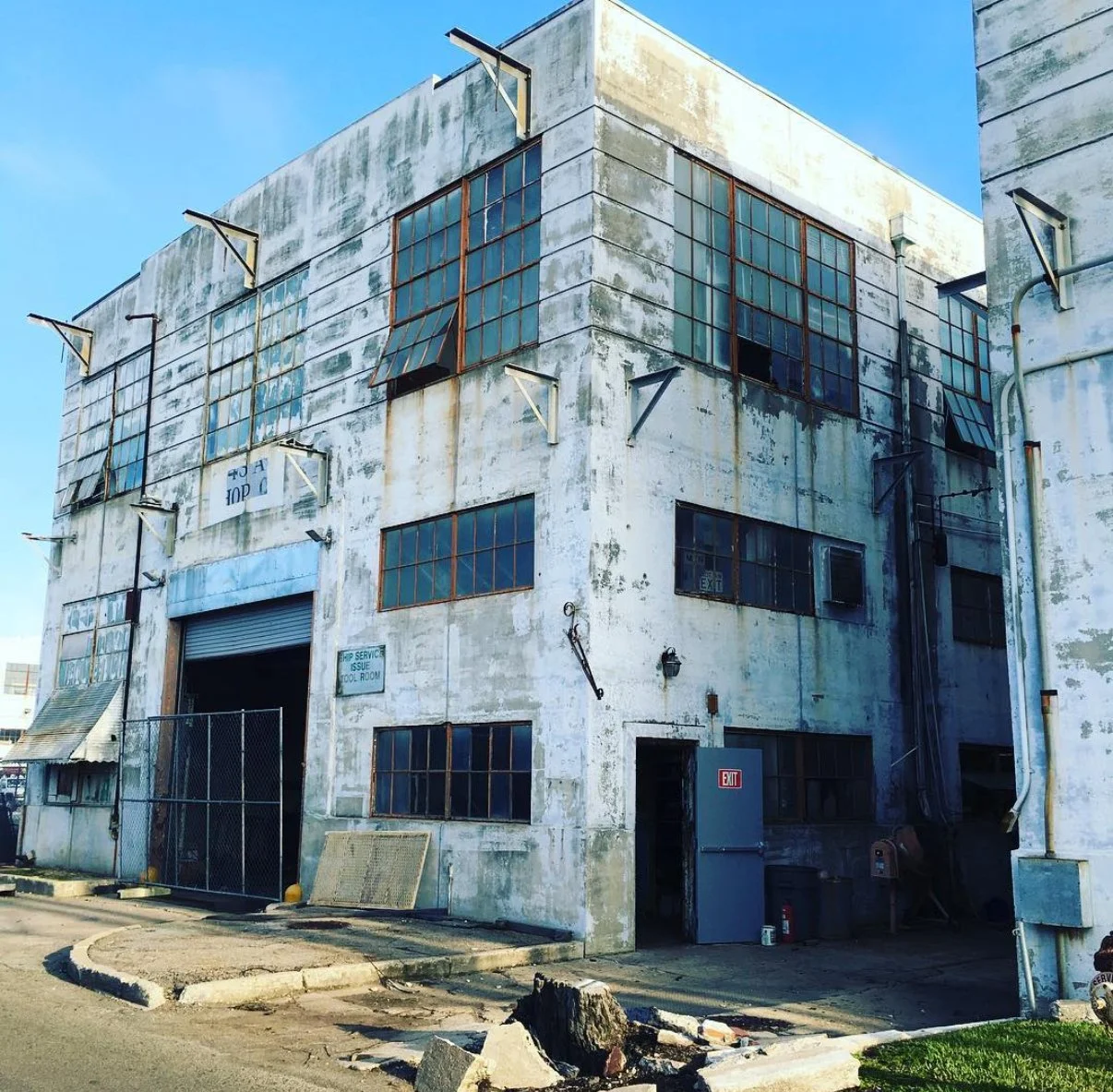
In the summer of 2015, we moved into Building 43 at the Navy Yard. Initially, we occupied about 3,500 square feet, roughly a quarter of the building. By 2018, we expanded into another quarter, bringing our total footprint to around 9,000 square feet.
This move was a big step forward. We gained:
— A continuous concrete floor
— Space for additional power hammers
— Better overall fabrication flow
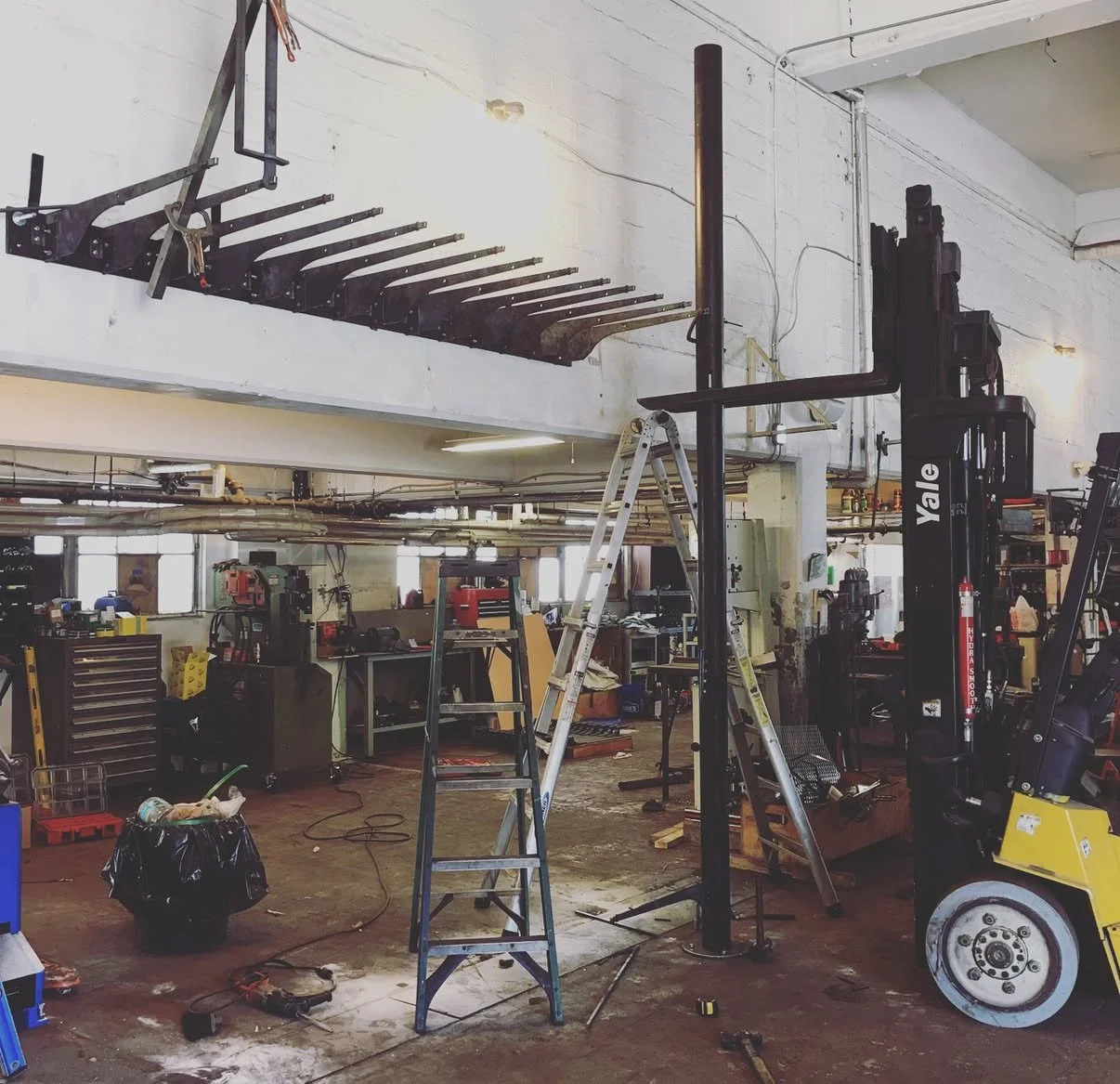
But Building 43 came with its own challenges. The layout was segmented and broken up, making it difficult to move large assemblies or streamline production. As we began developing our manufacturing capabilities around 2018, those limitations became more apparent.
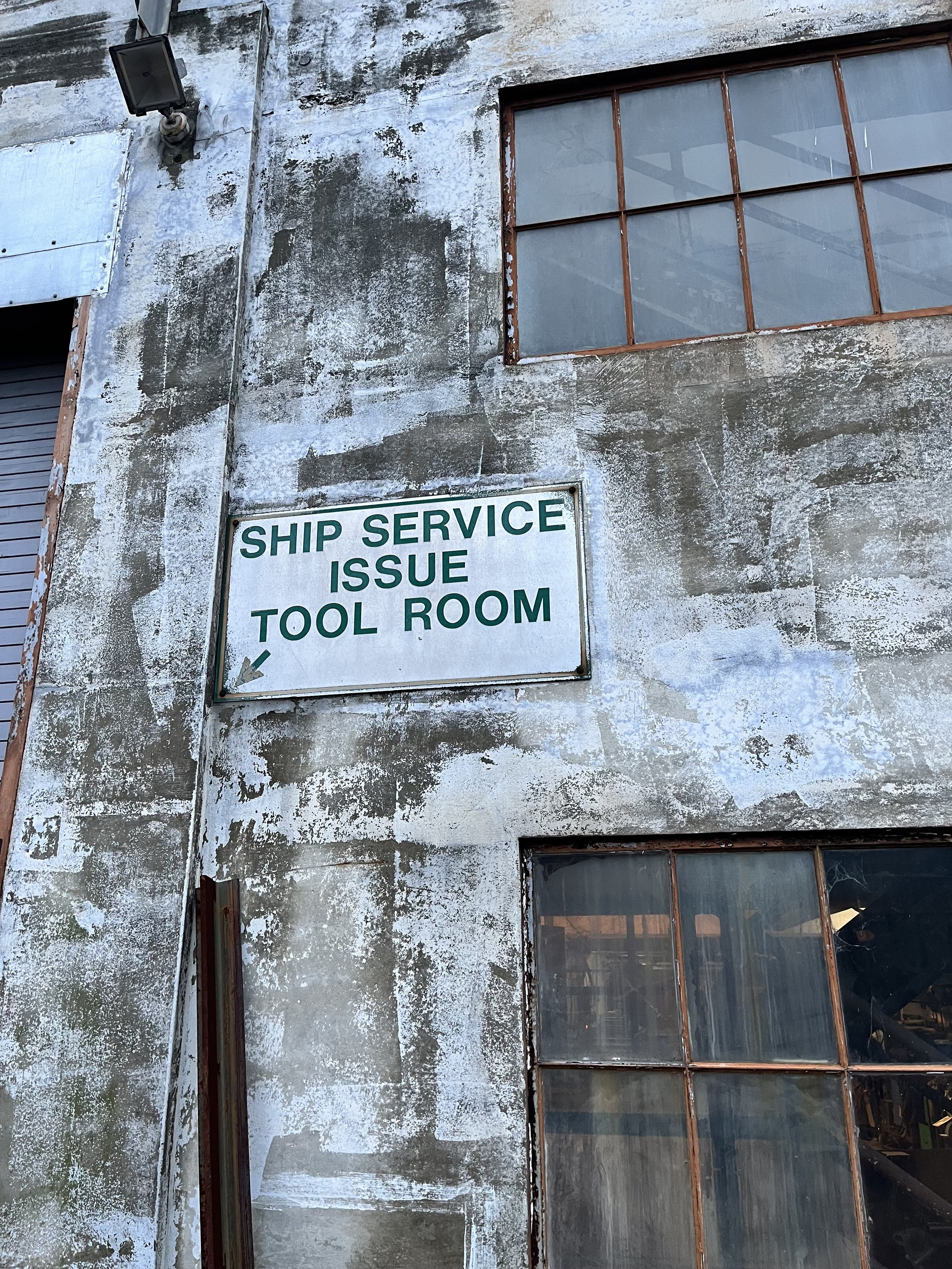
Historically, Building 43 served as a tool room for the Navy Yard—a place where tools were checked out, maintained, and sharpened. There was something fitting about working in a building dedicated to tools, but by 2023 it was clear we needed more space and more flexibility.
We remained in Building 43 until January 1, 2024, when we officially moved into Building 56.
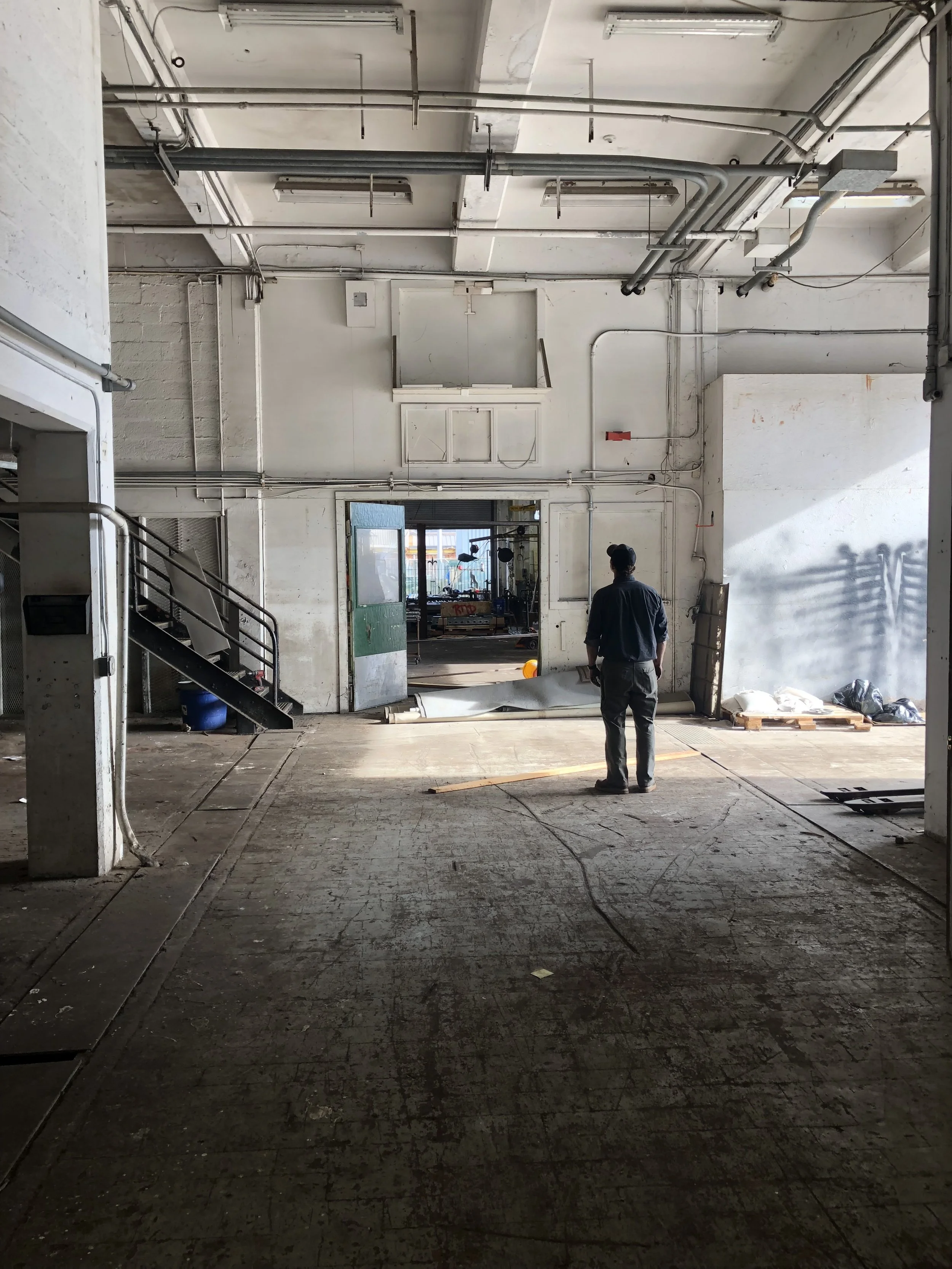
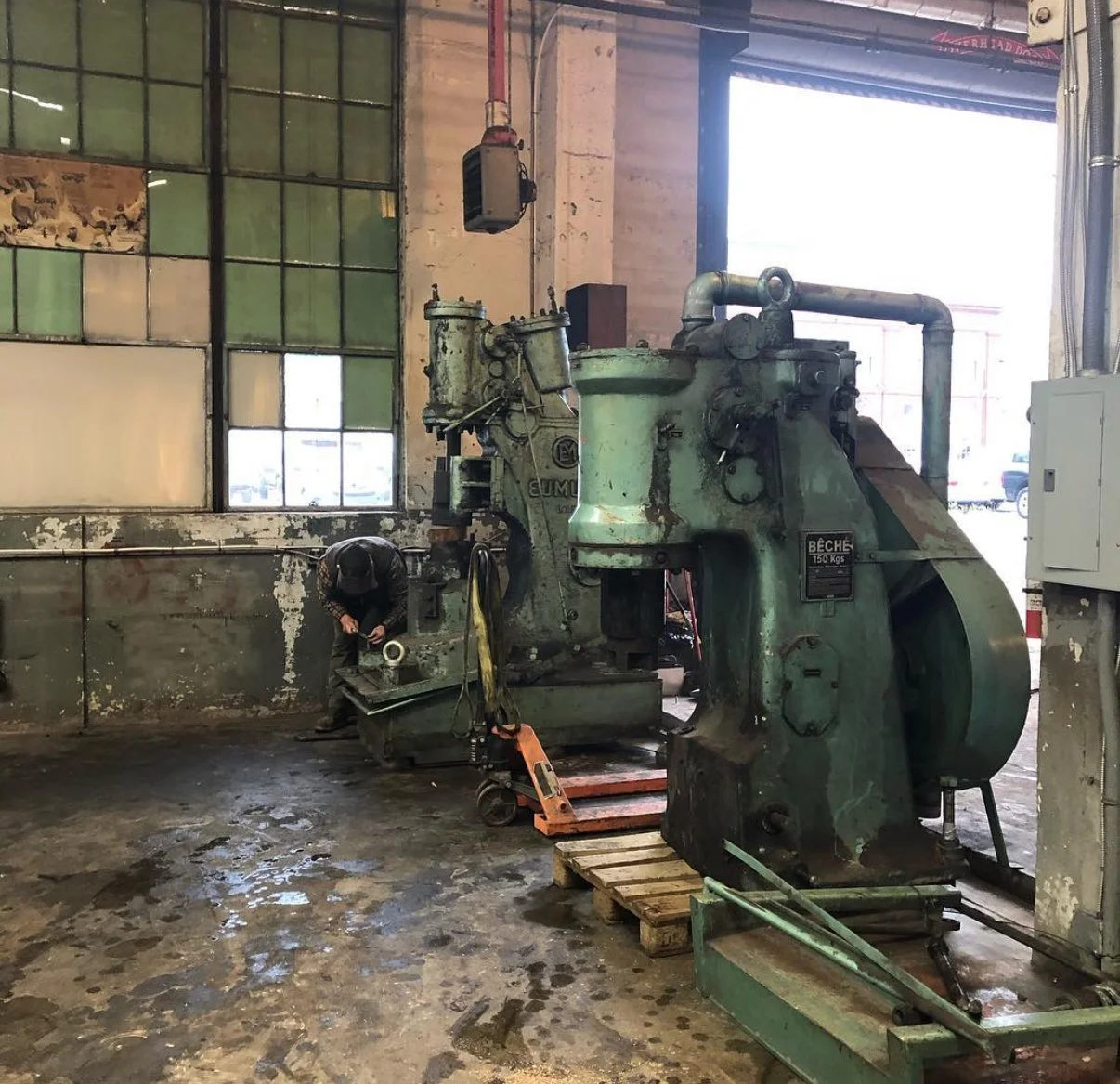
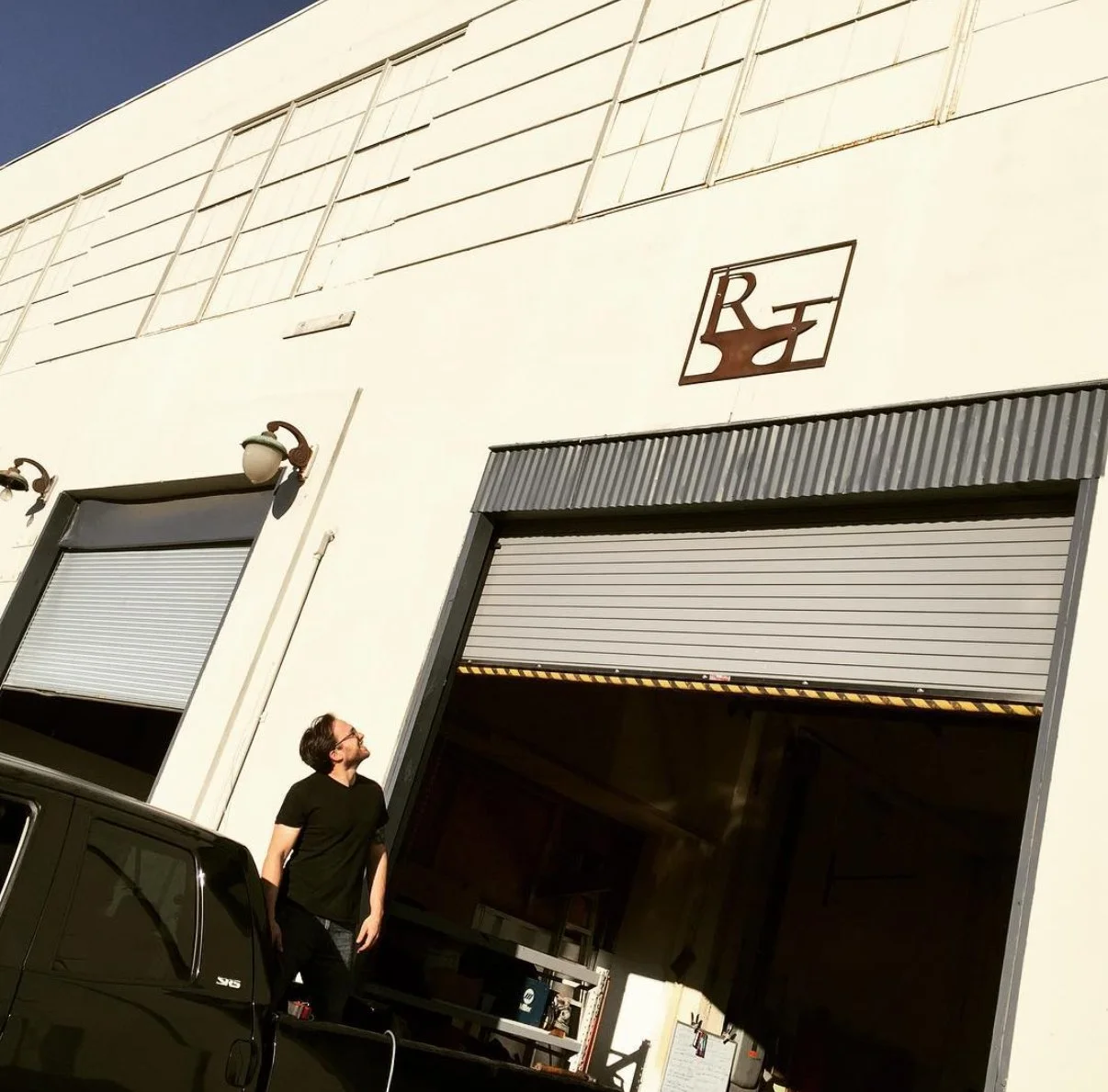
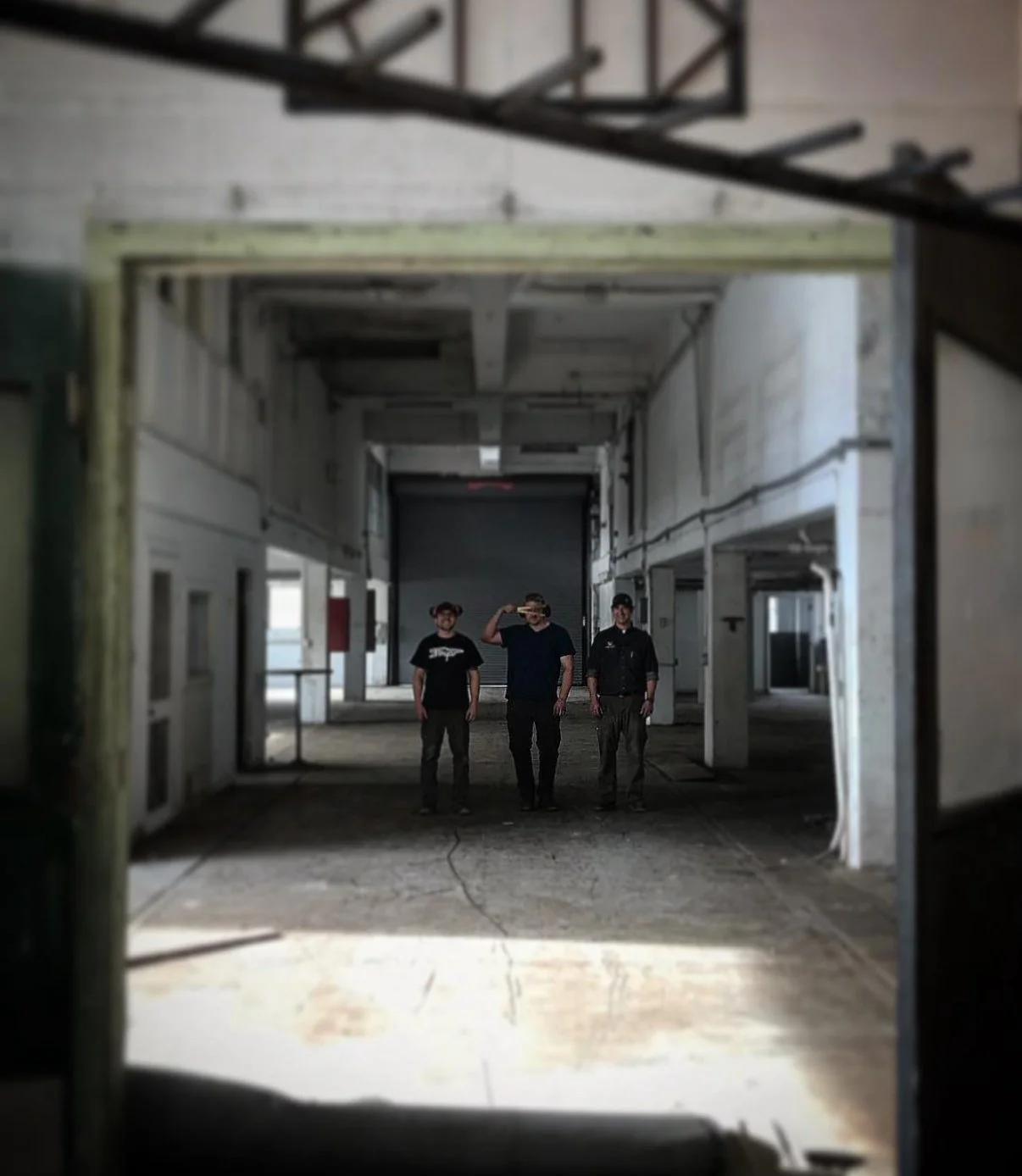
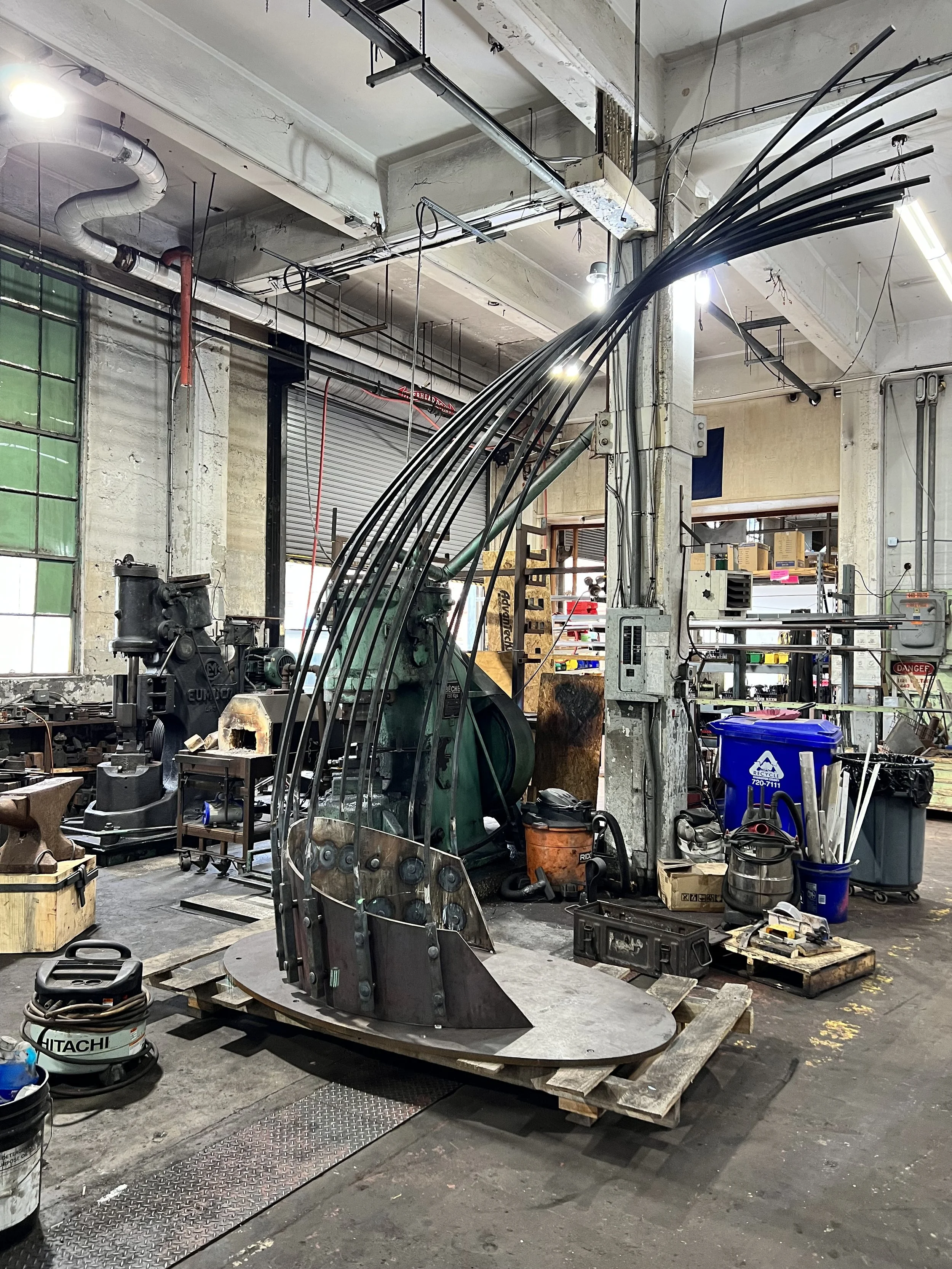
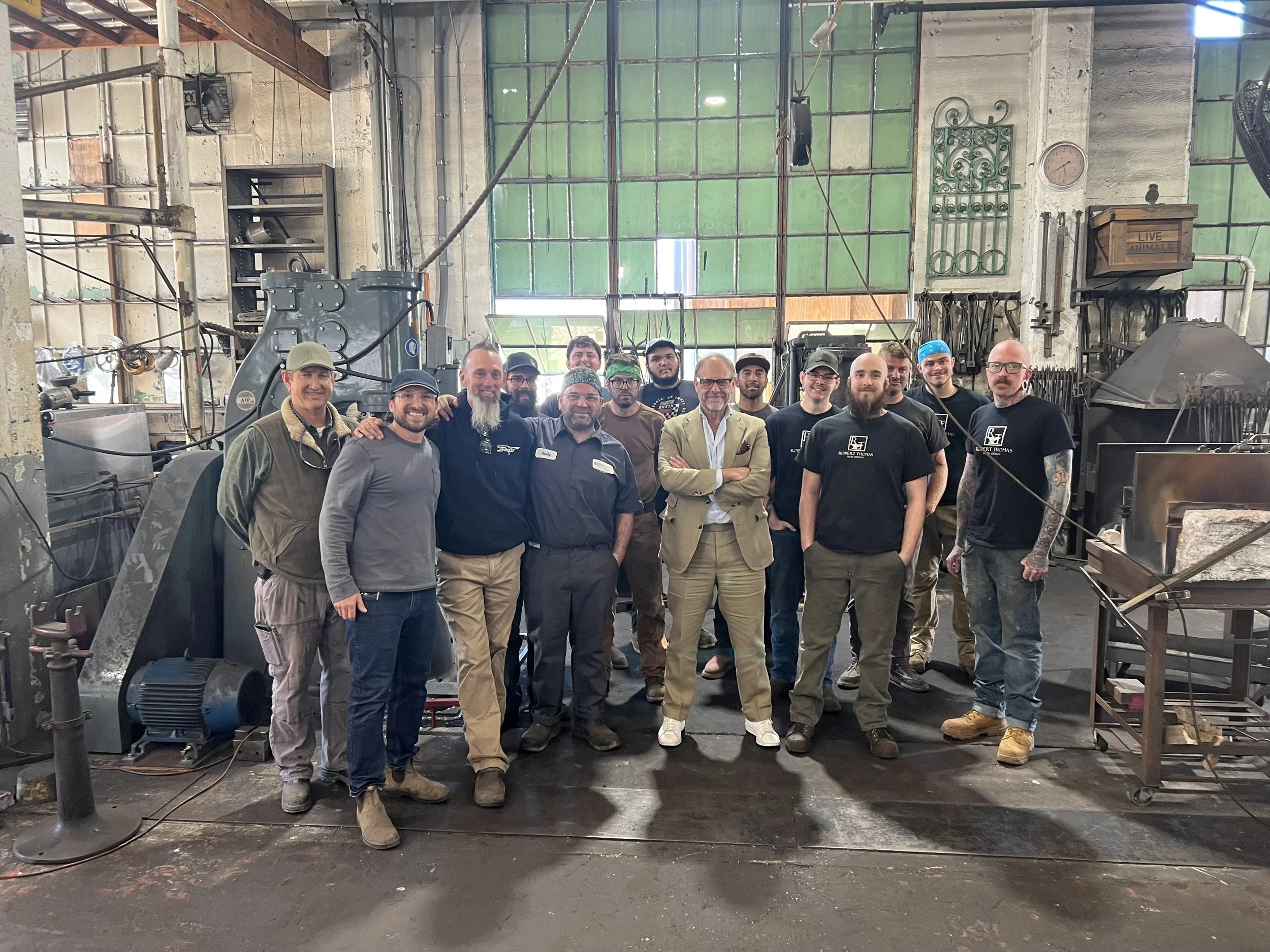
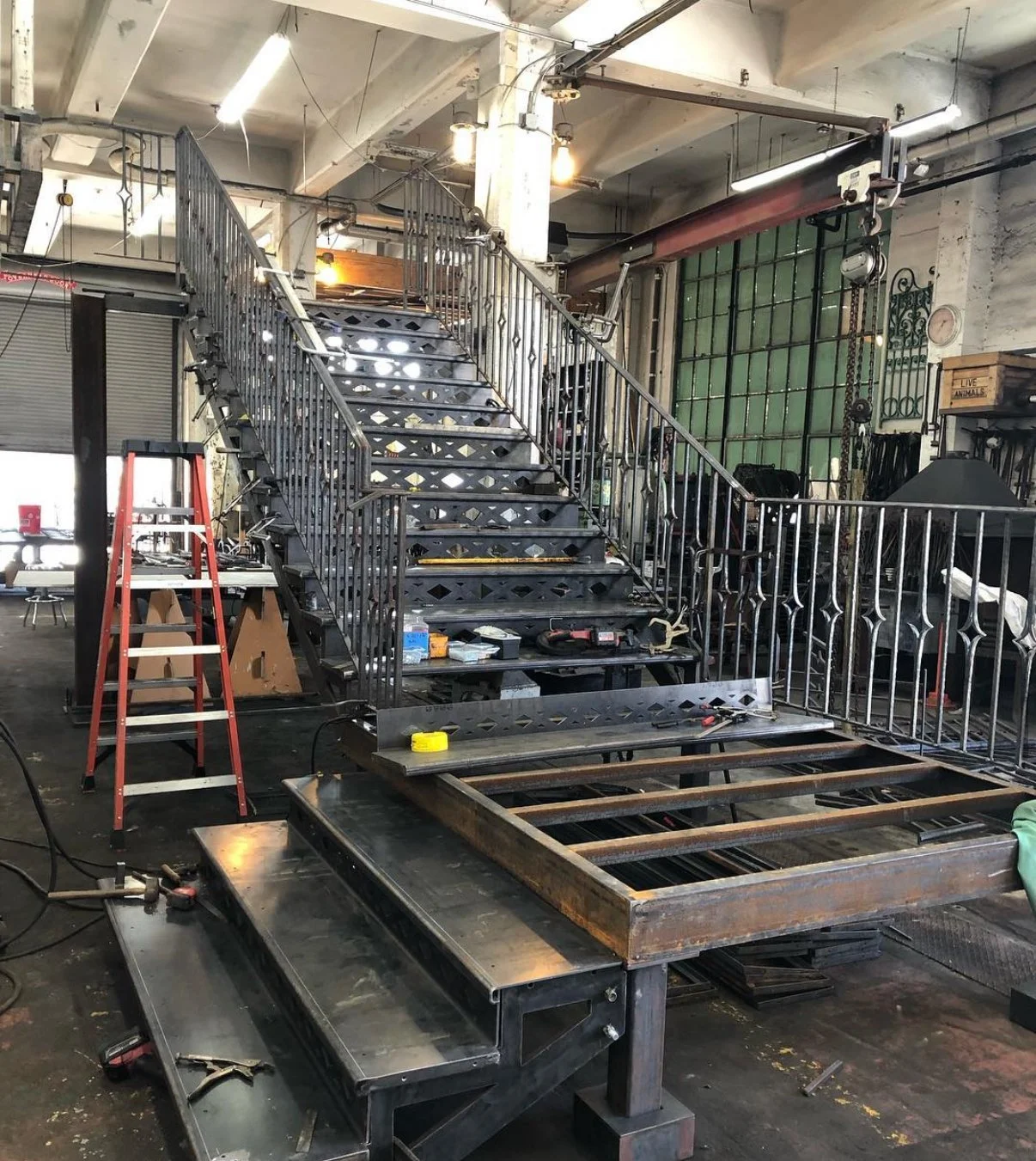
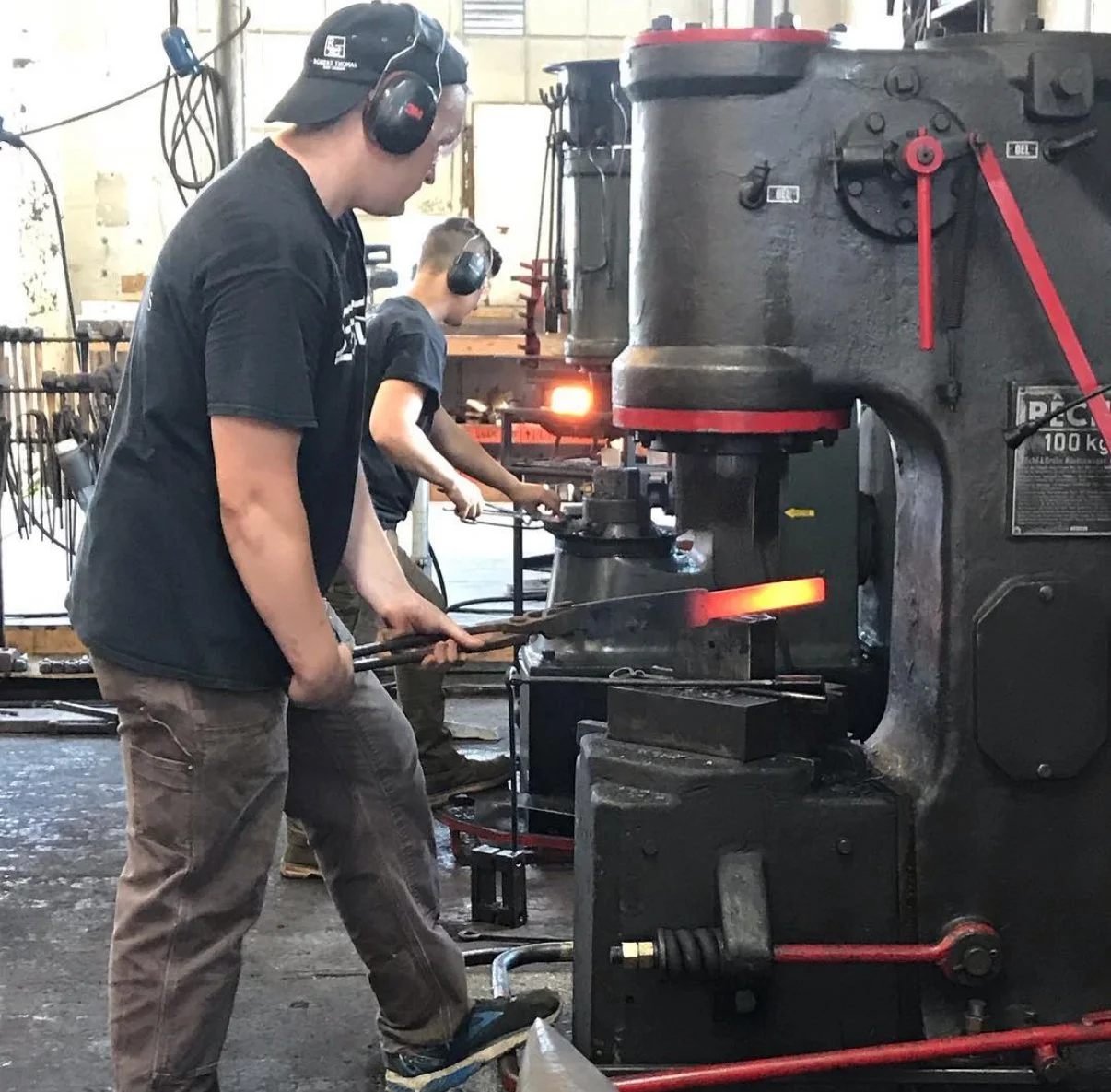
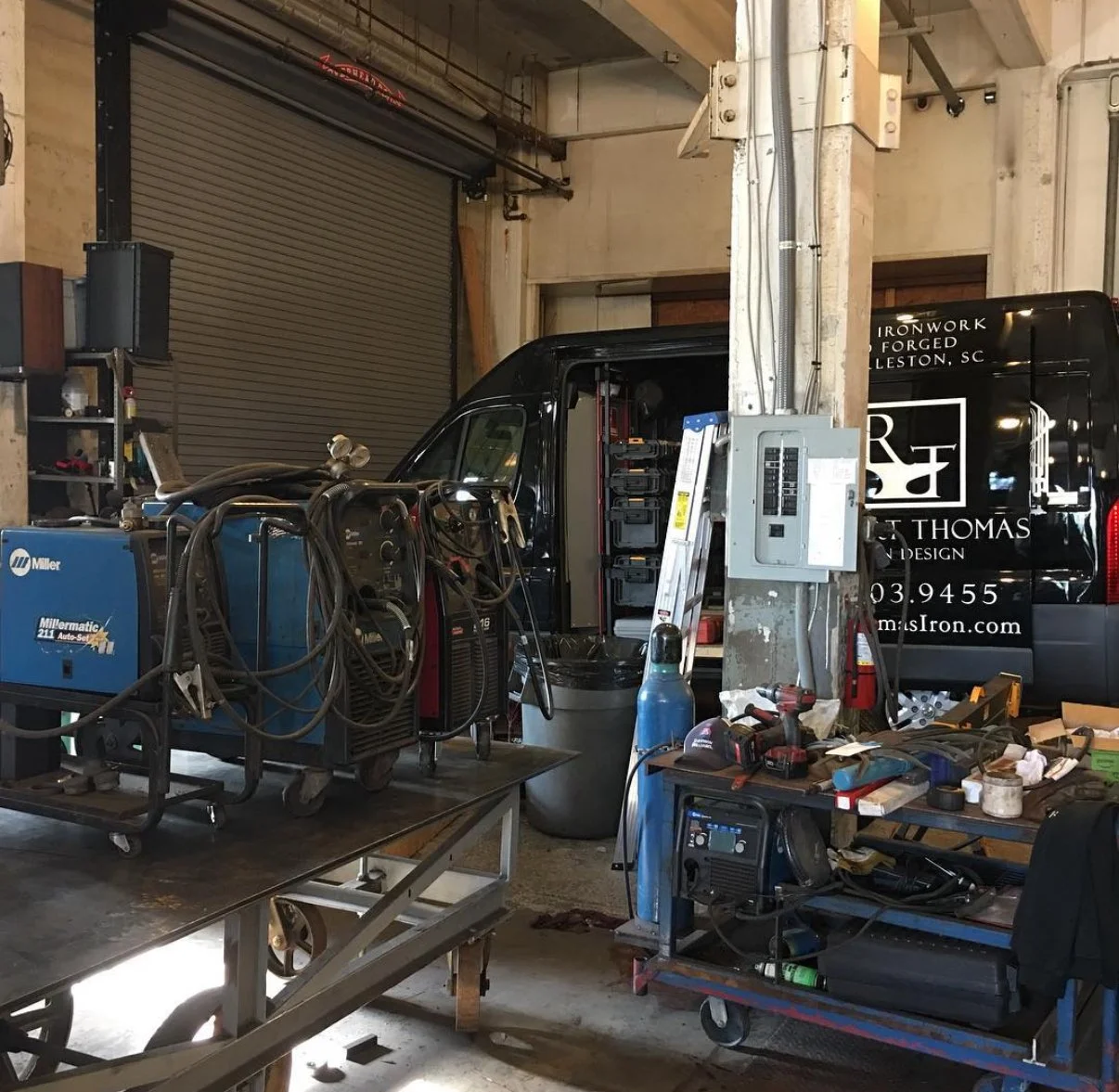
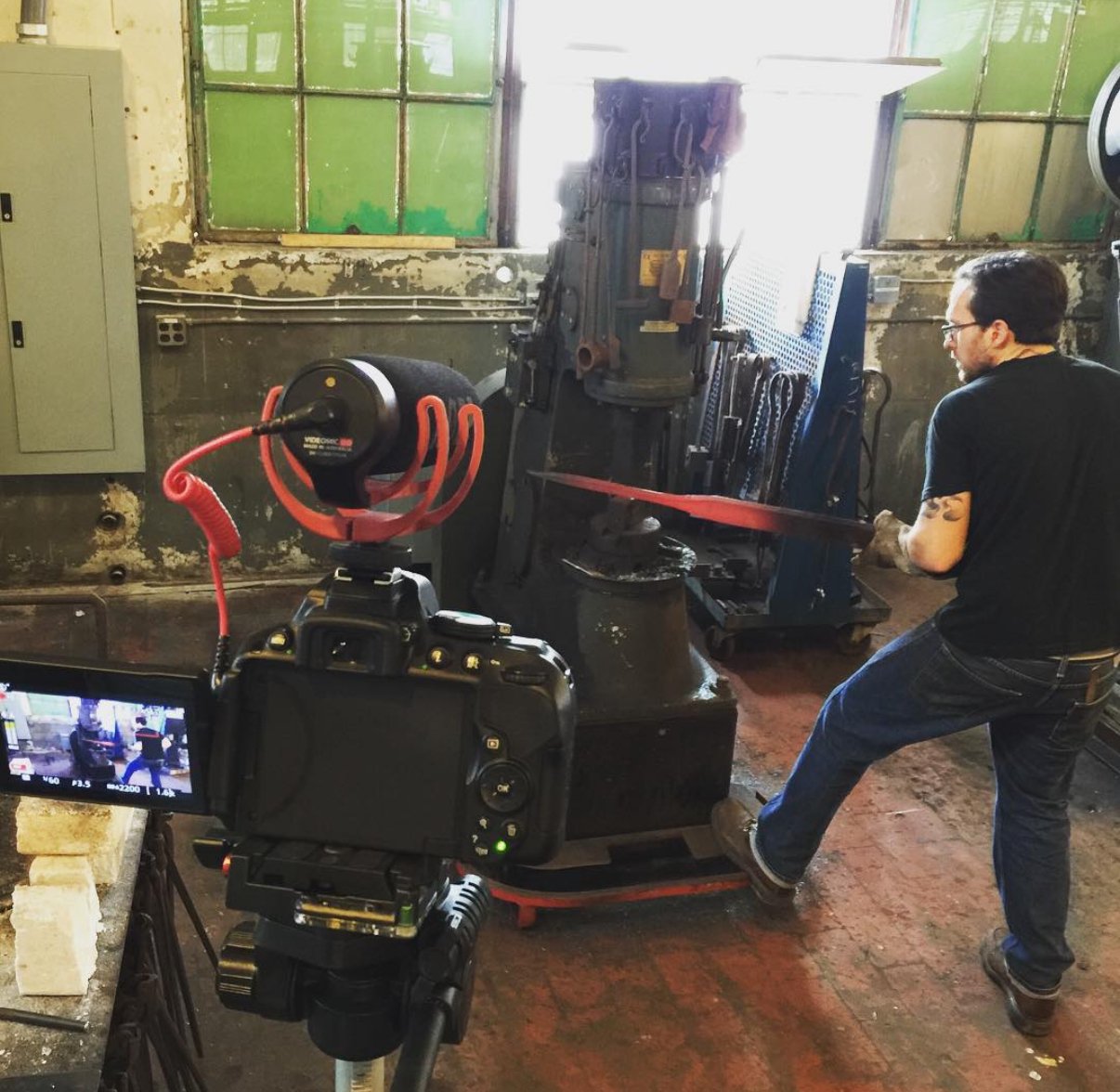
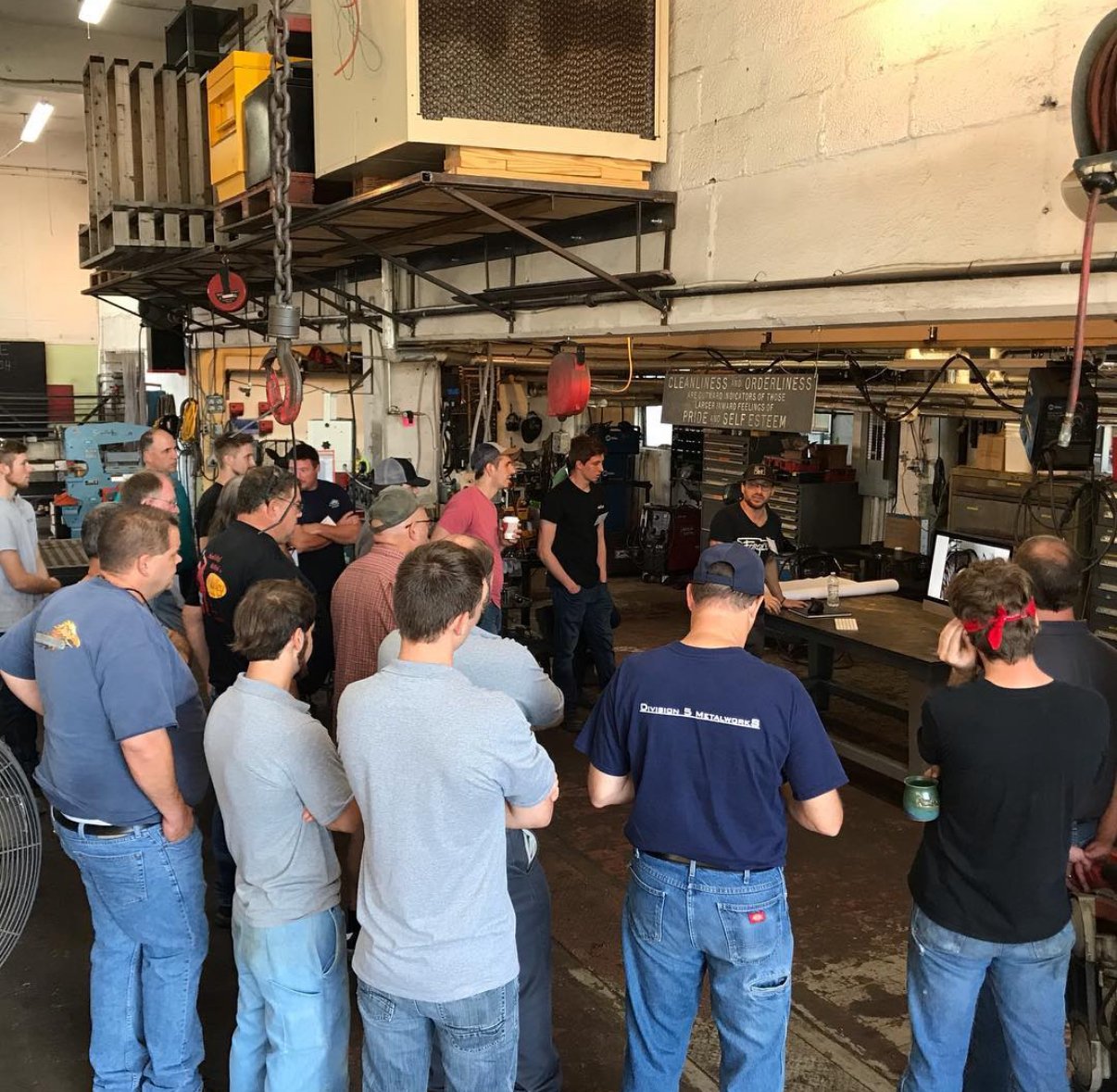
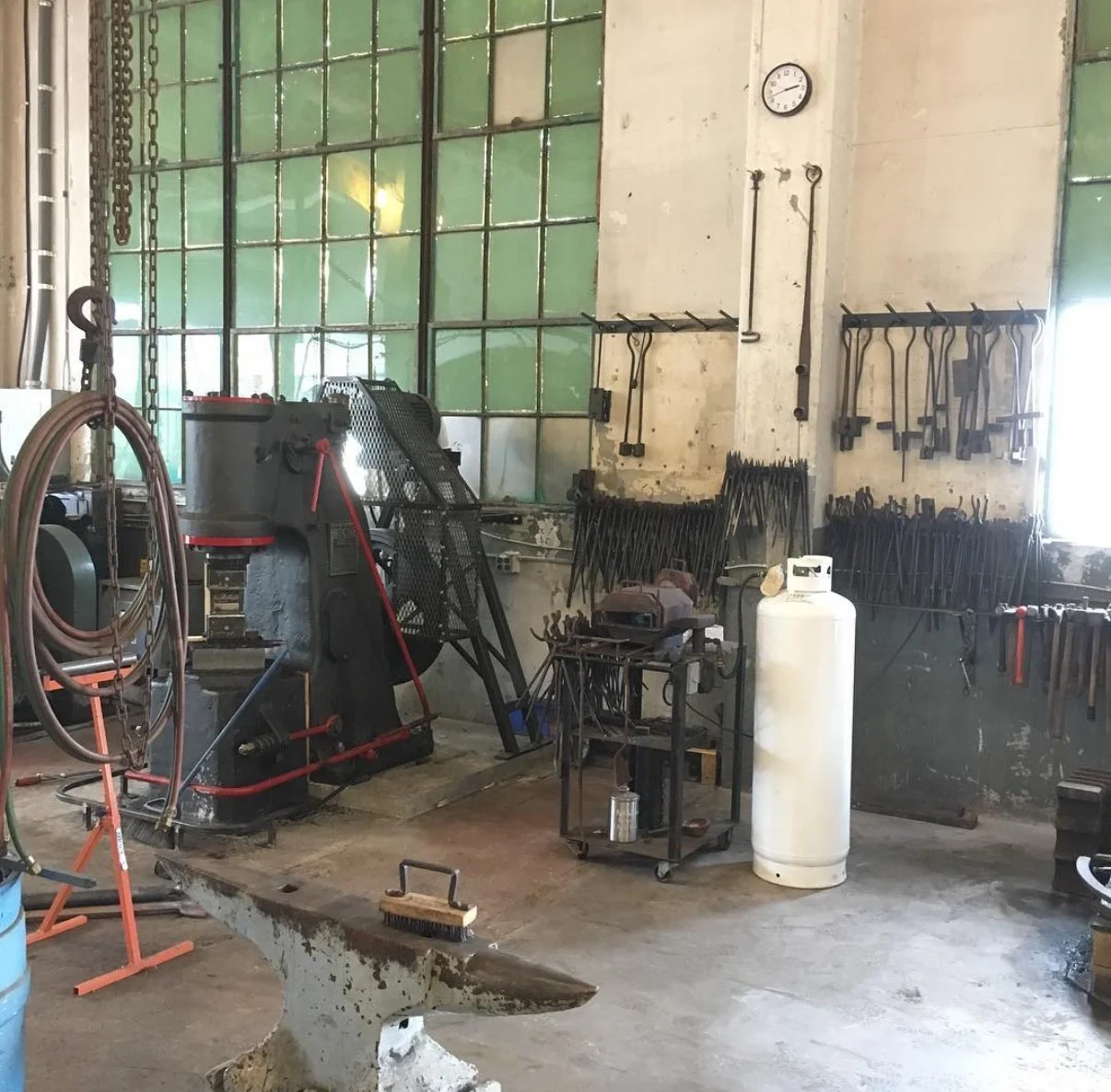
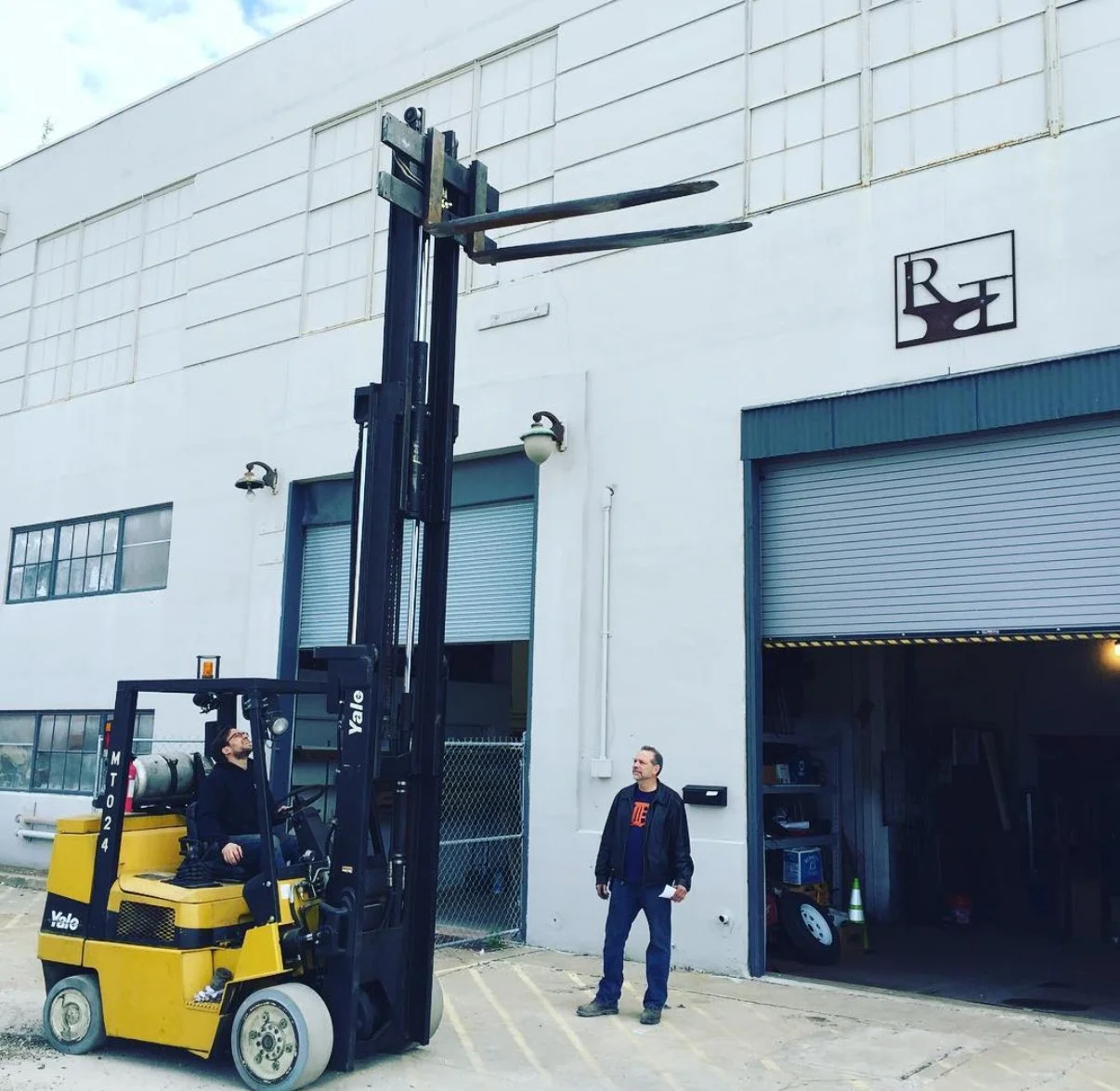
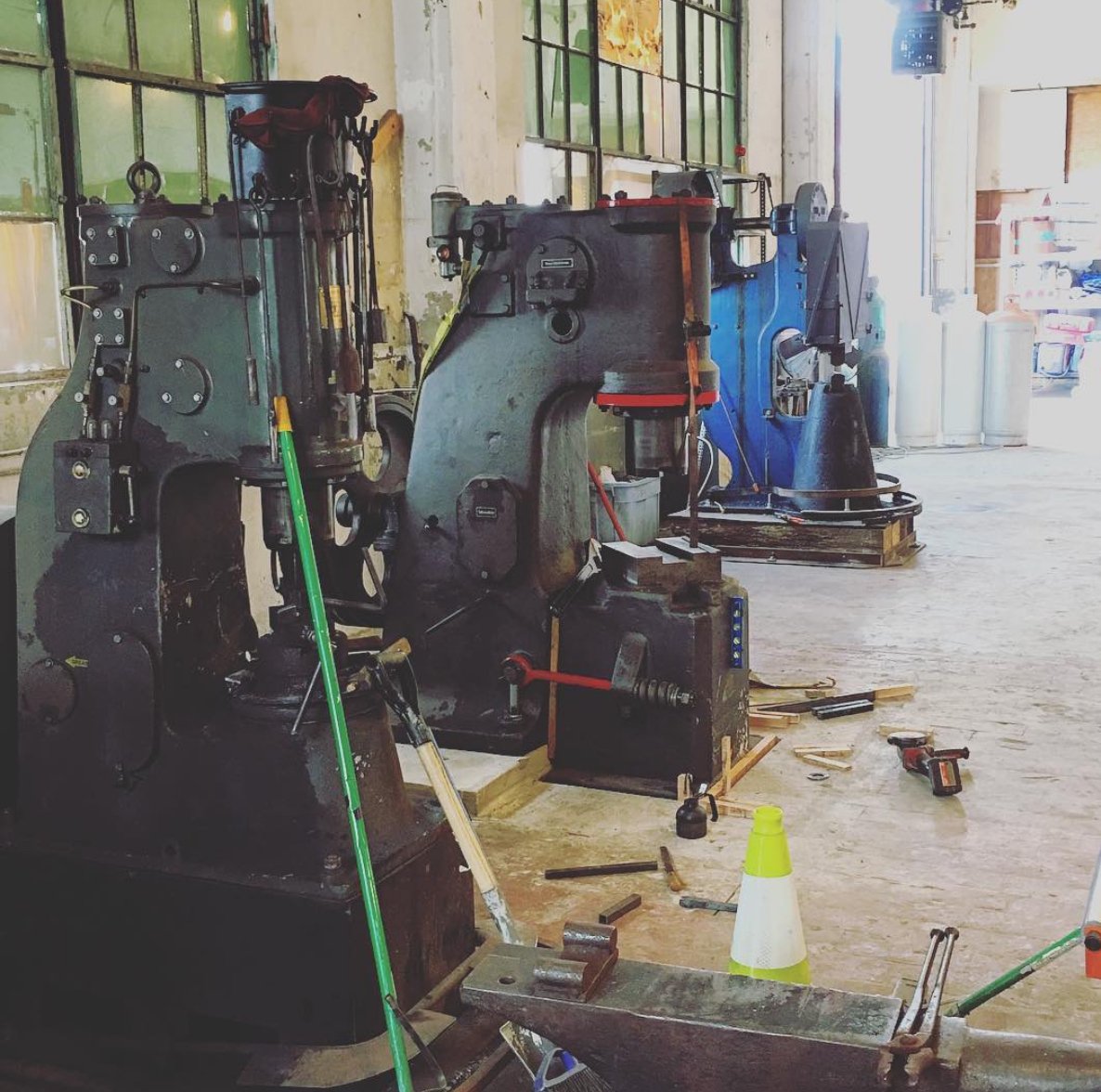
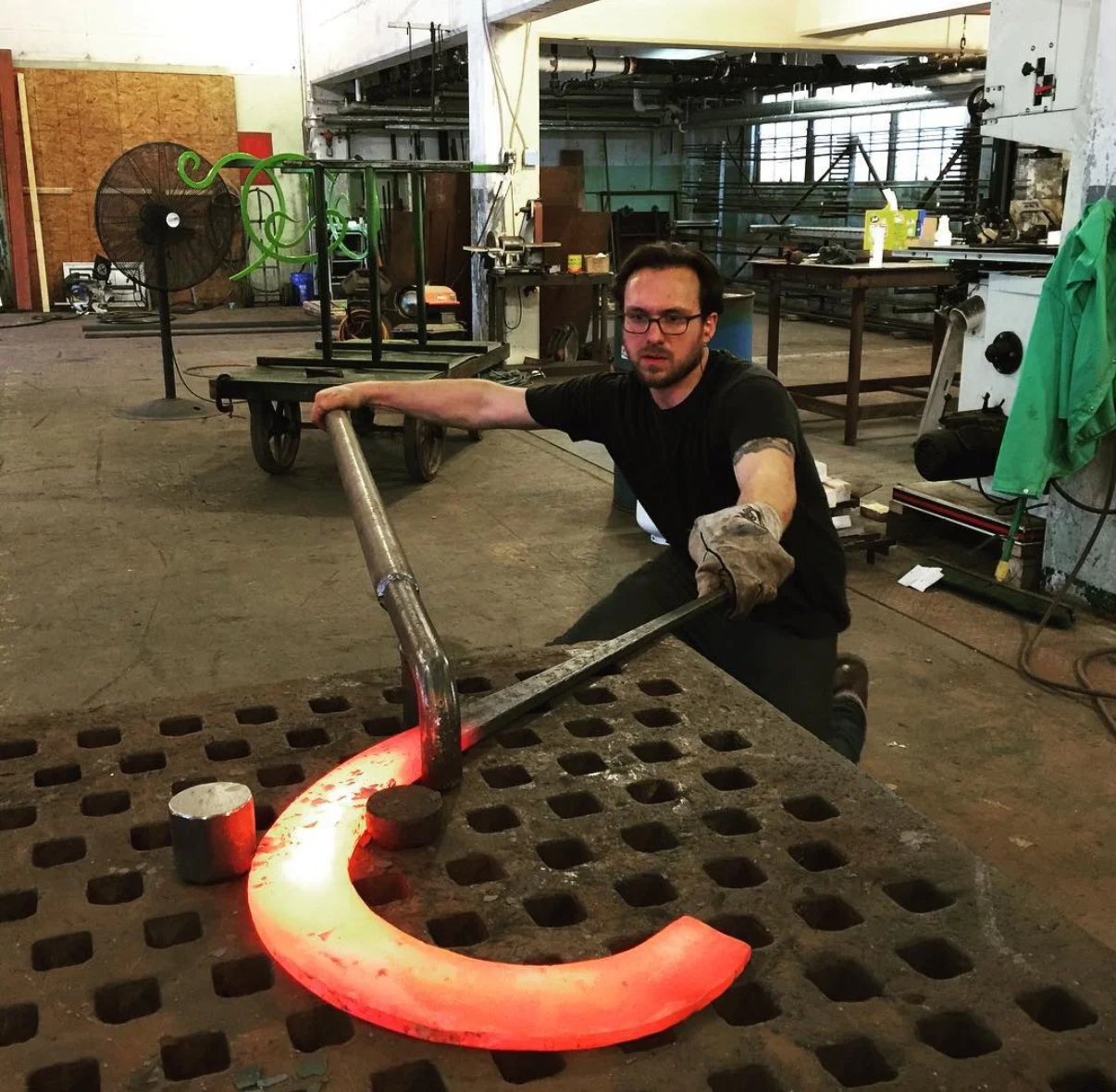
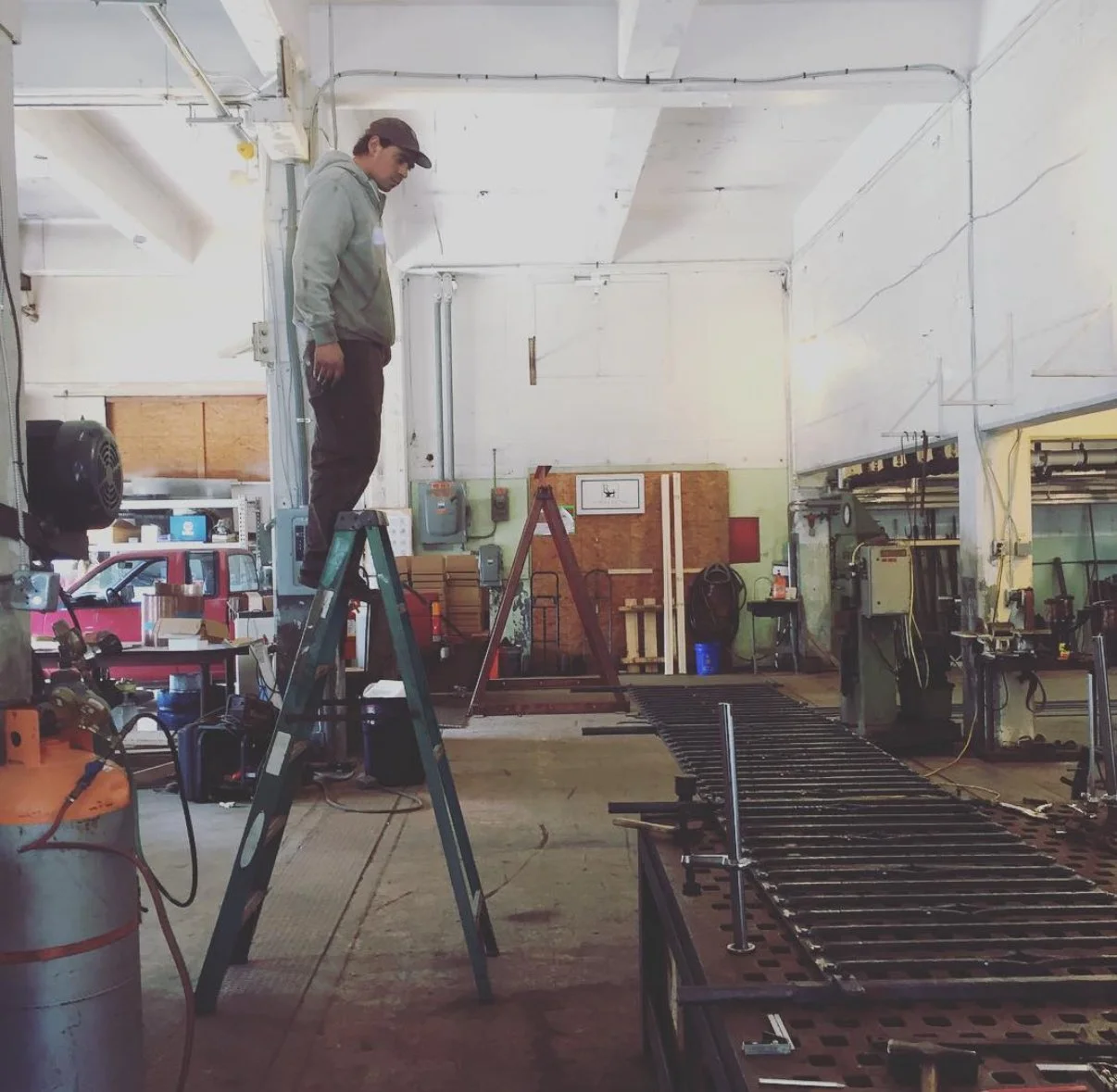
Building 56: Scale, History, and Possibility.
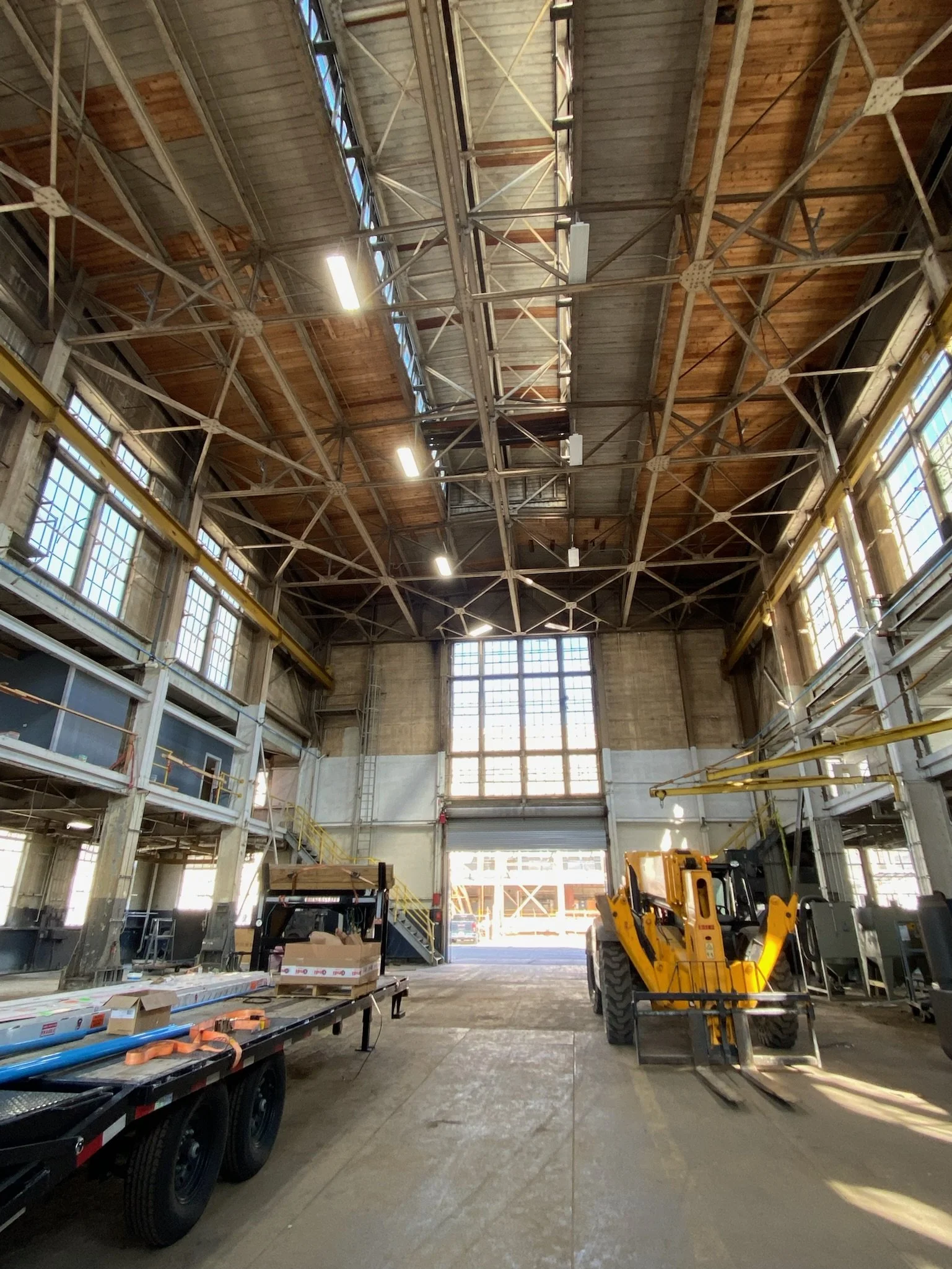
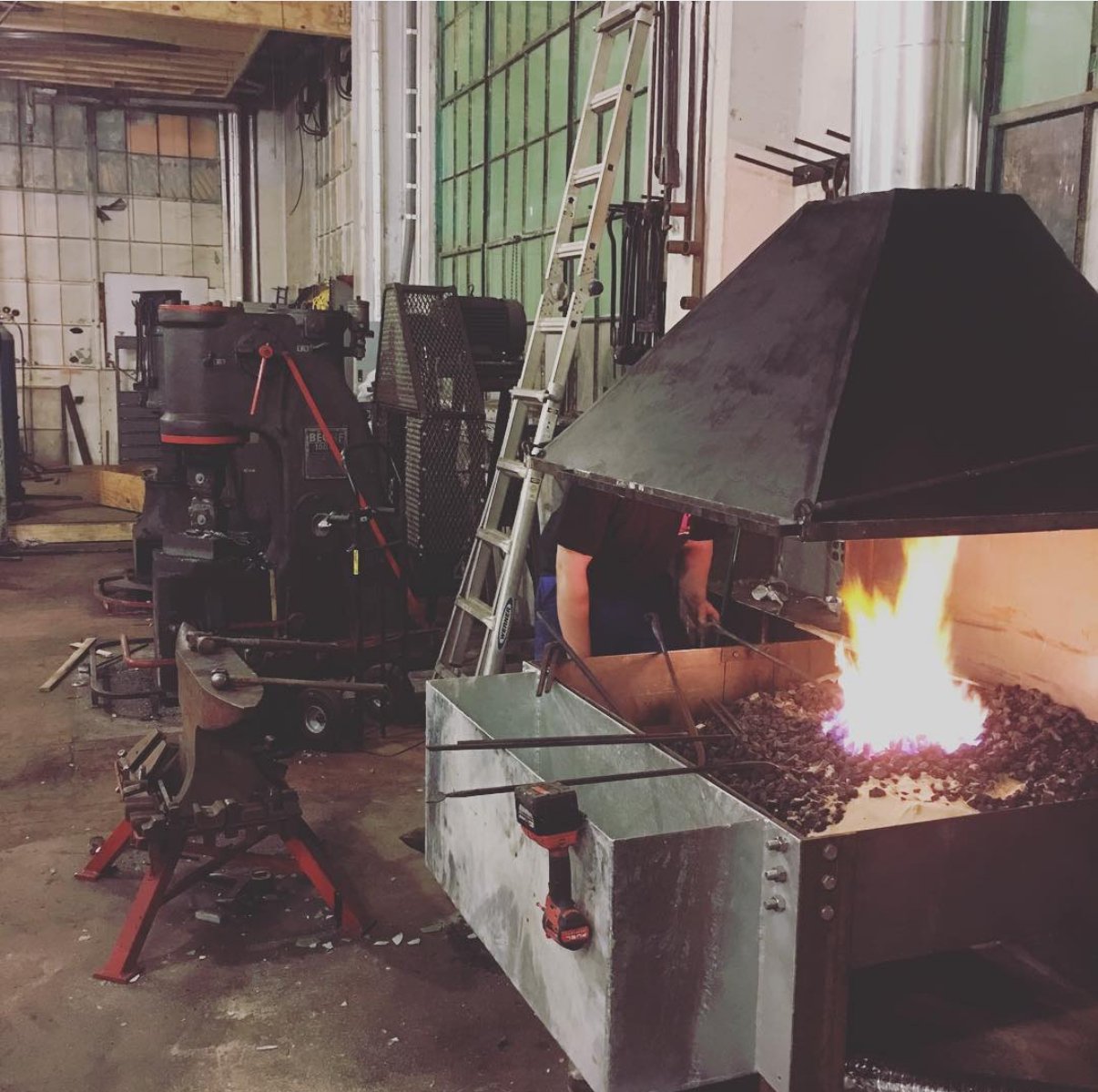
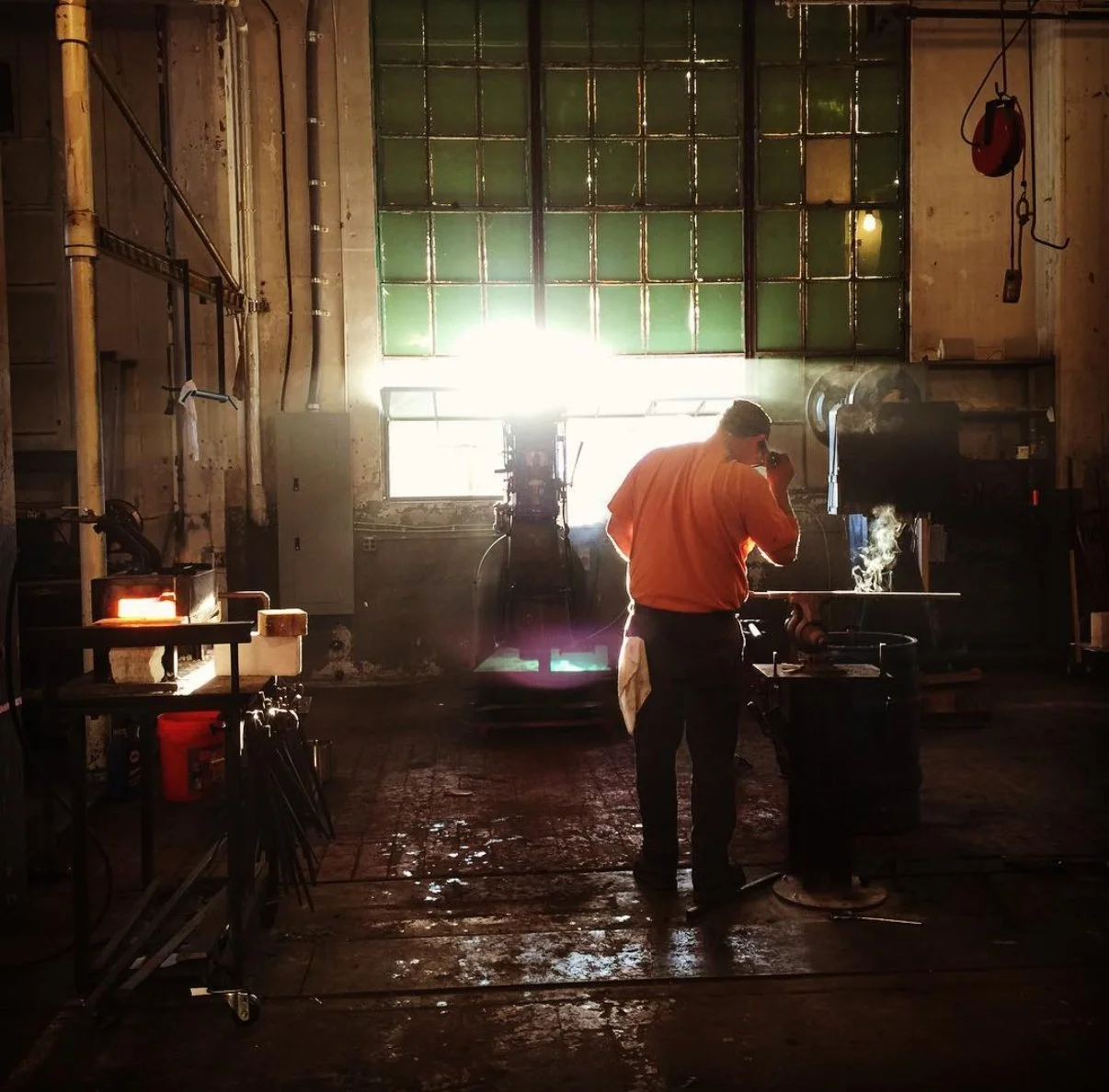
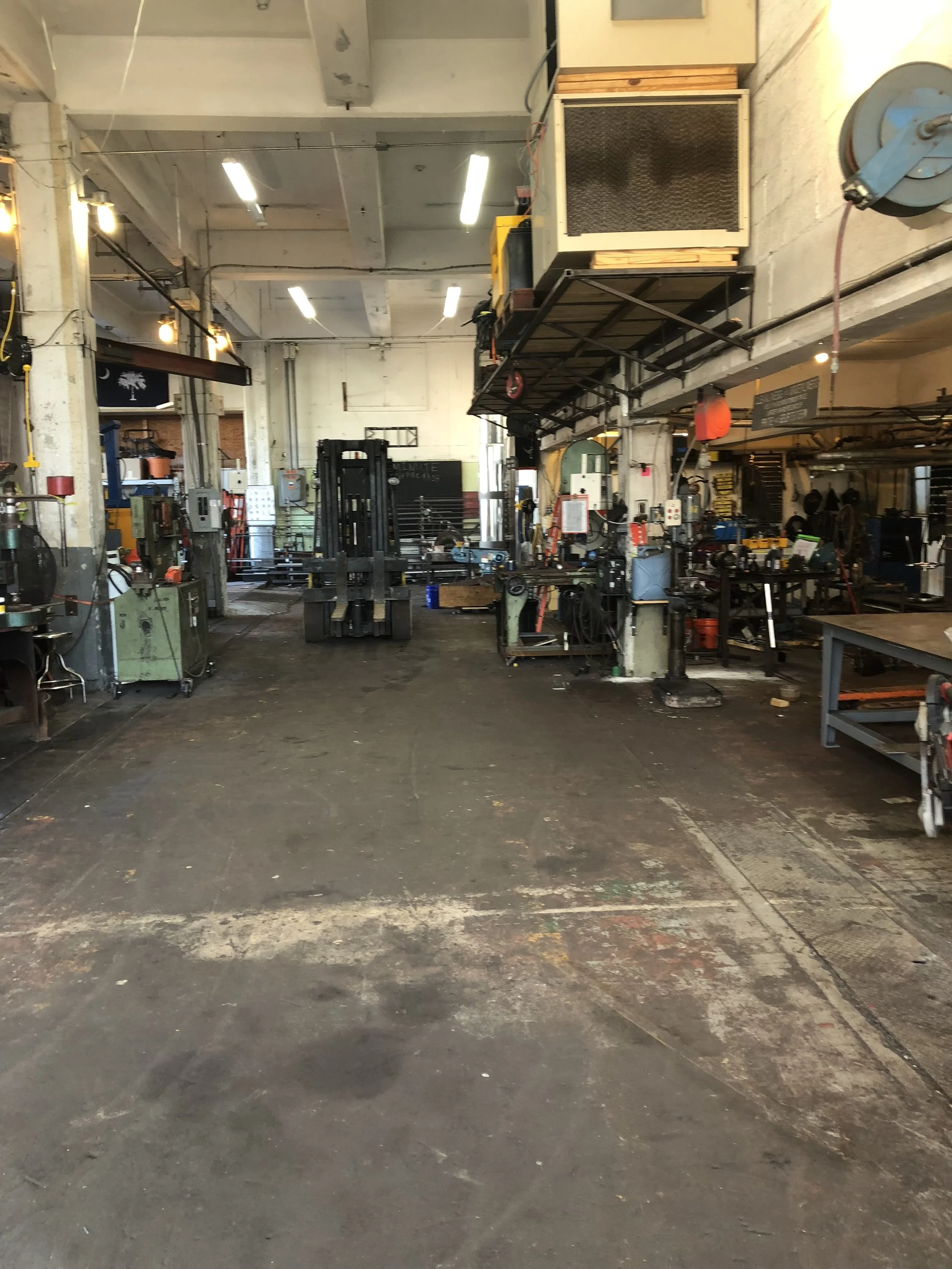
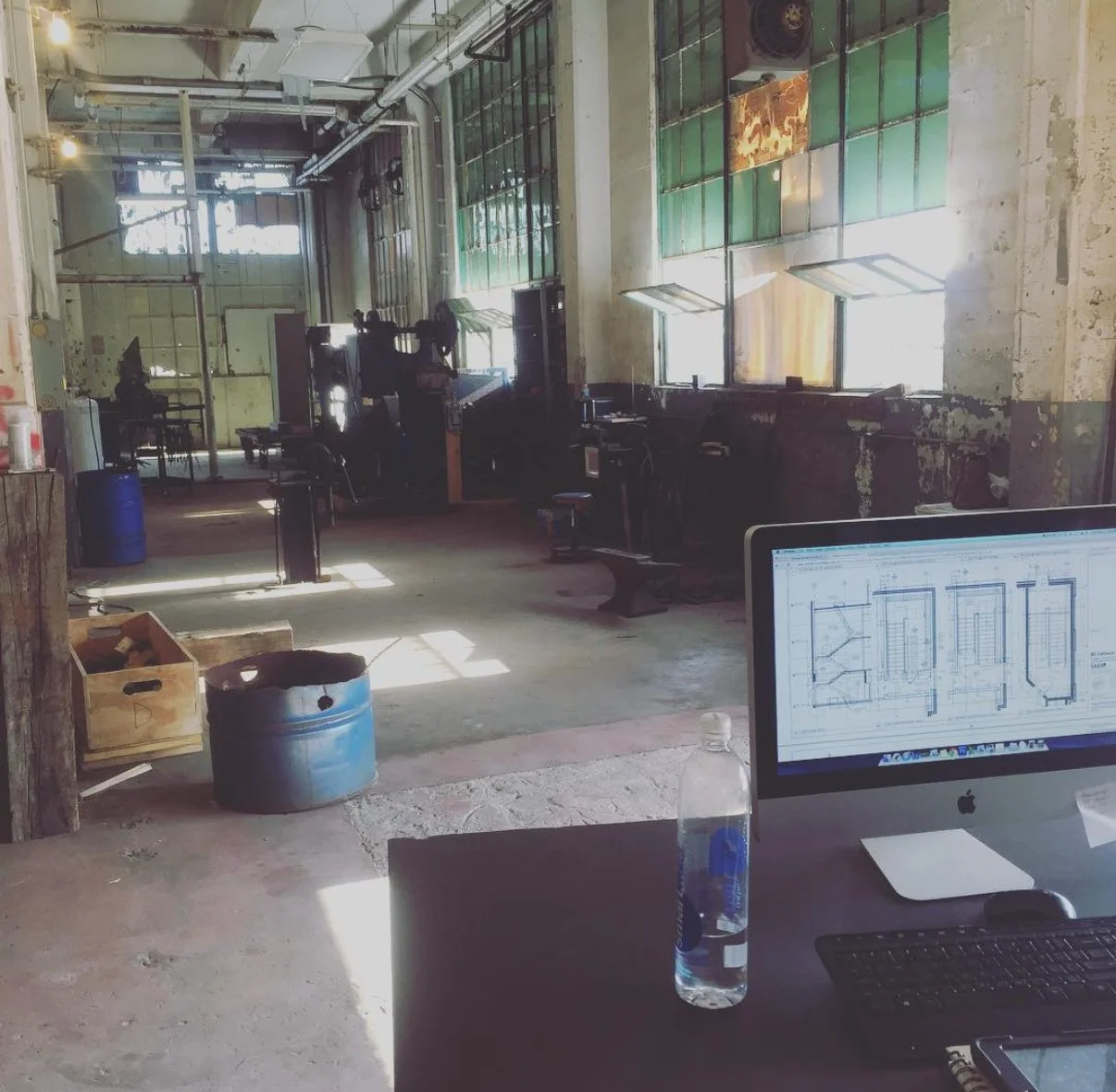
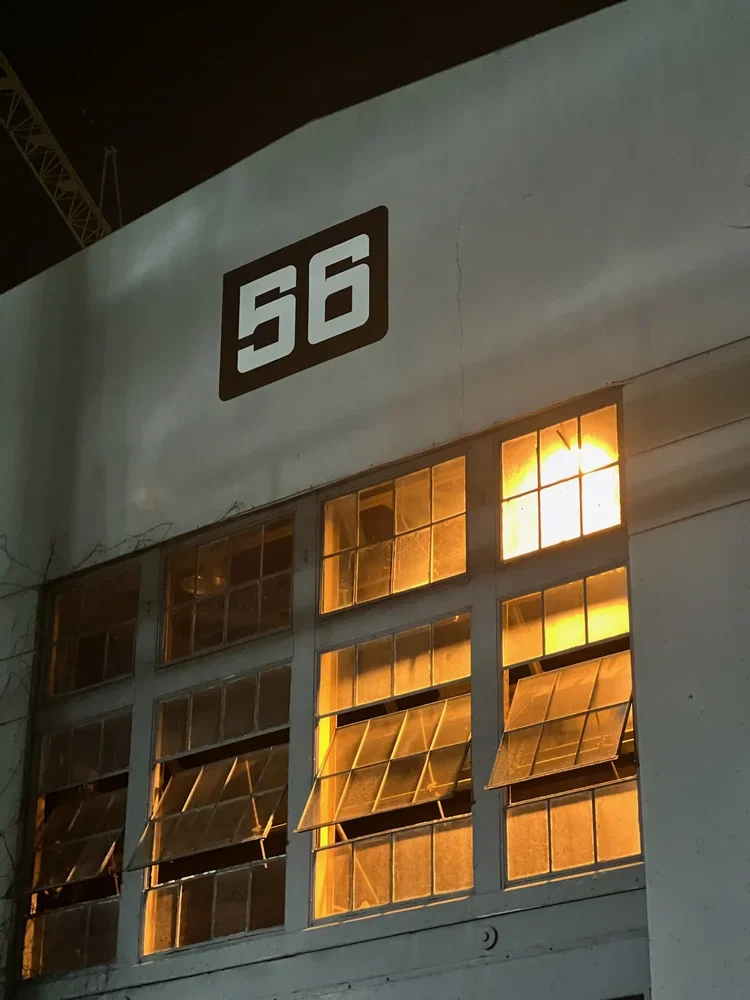
Building 56 was originally a pipe shop for the Navy, constructed in 1936 as the country ramped up for World War II. Walking into it for the first time, you immediately feel its purpose and its agein the best possible way.
The building offers:
— Nearly 42,000 square feet of floor space
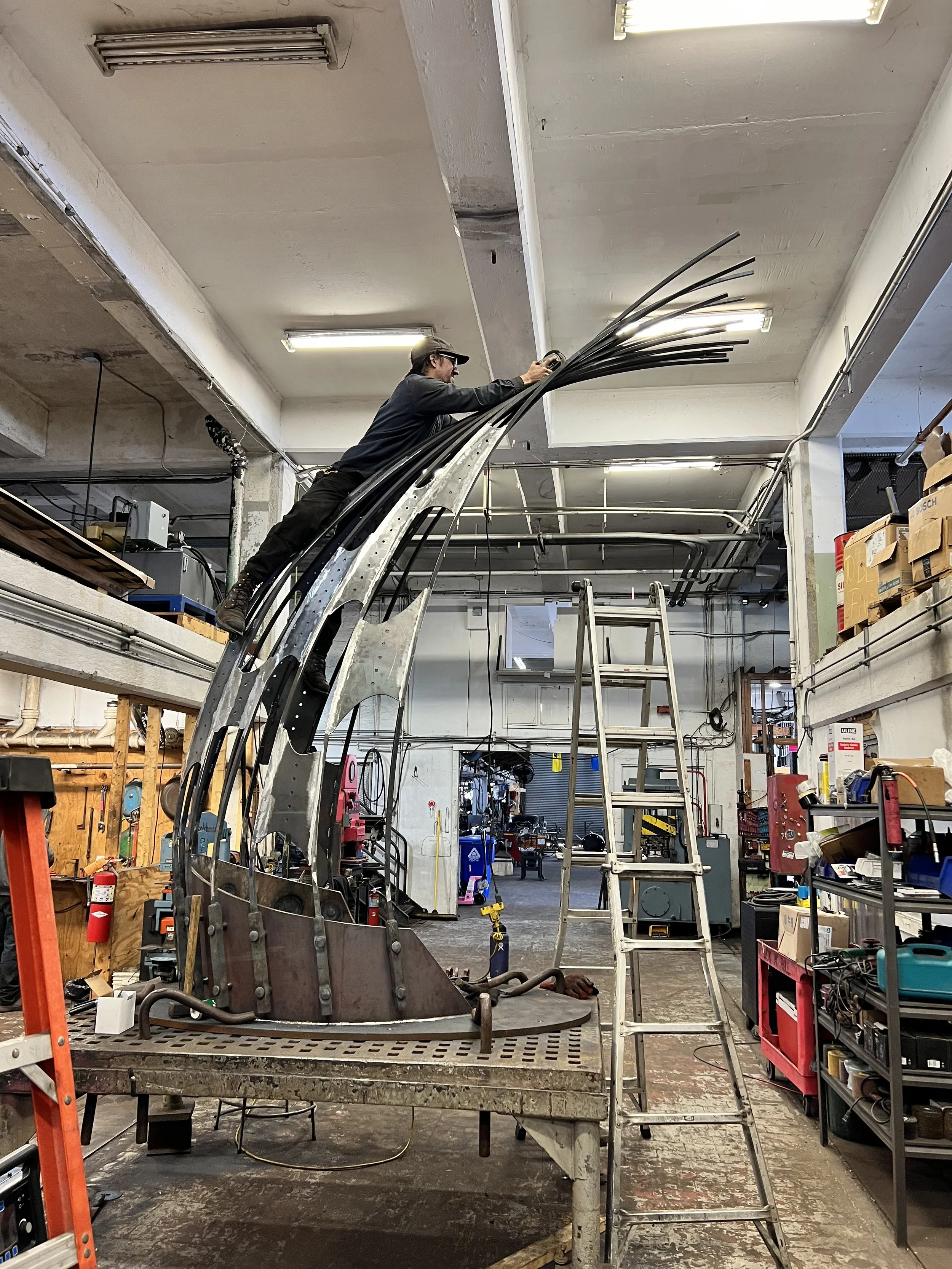
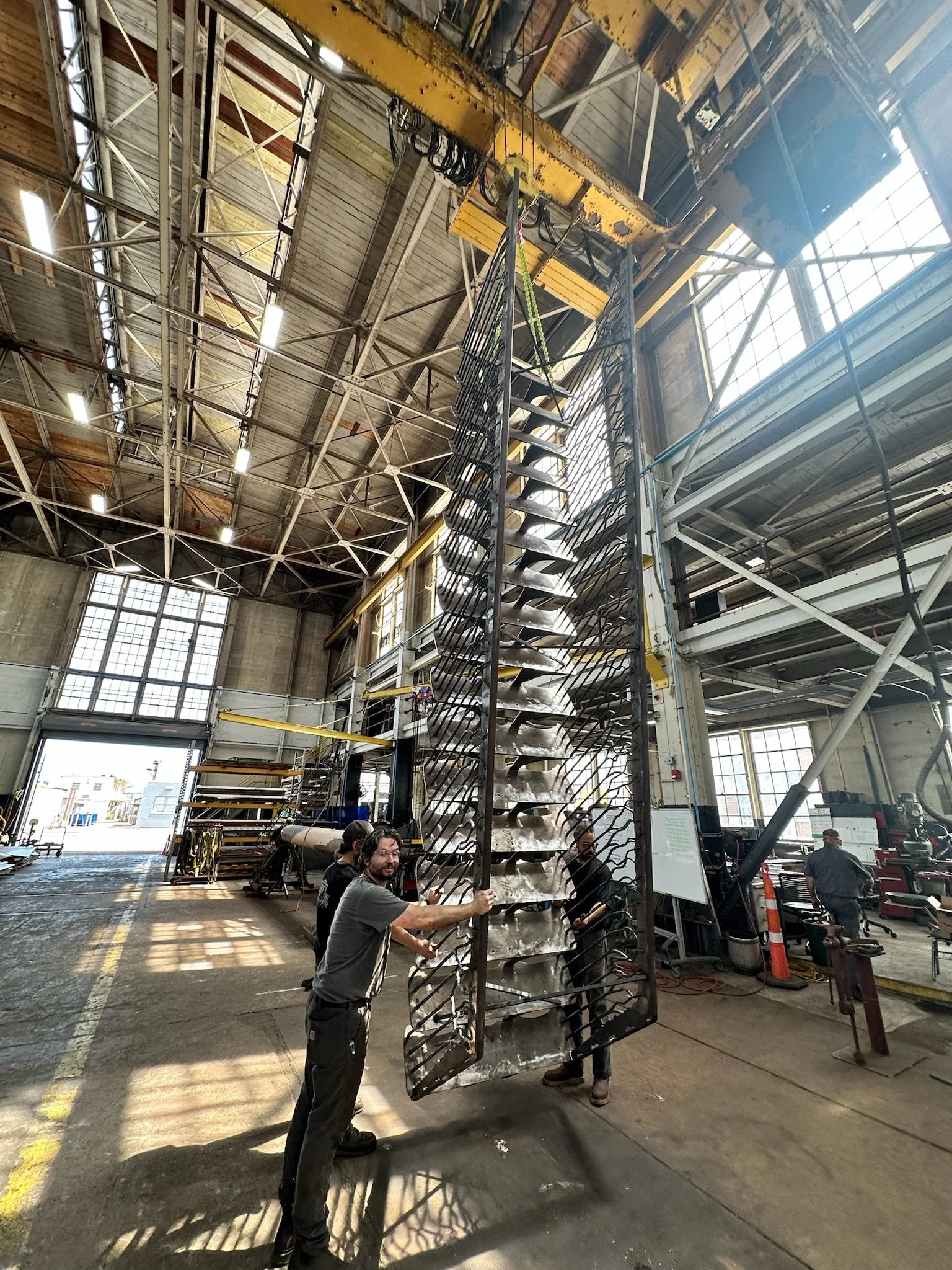
— Additional mezzanine areas for large-scale fabrication
— Bridge cranes
— Clear spans reaching 50 feet at the center
— An atrium-style layout that feels open, bright, and industrial
Today, we occupy roughly two-thirds of the building, with the remaining third reserved for future growth. For the first time, we’re not pushing up against our walls—we’re planning ahead.
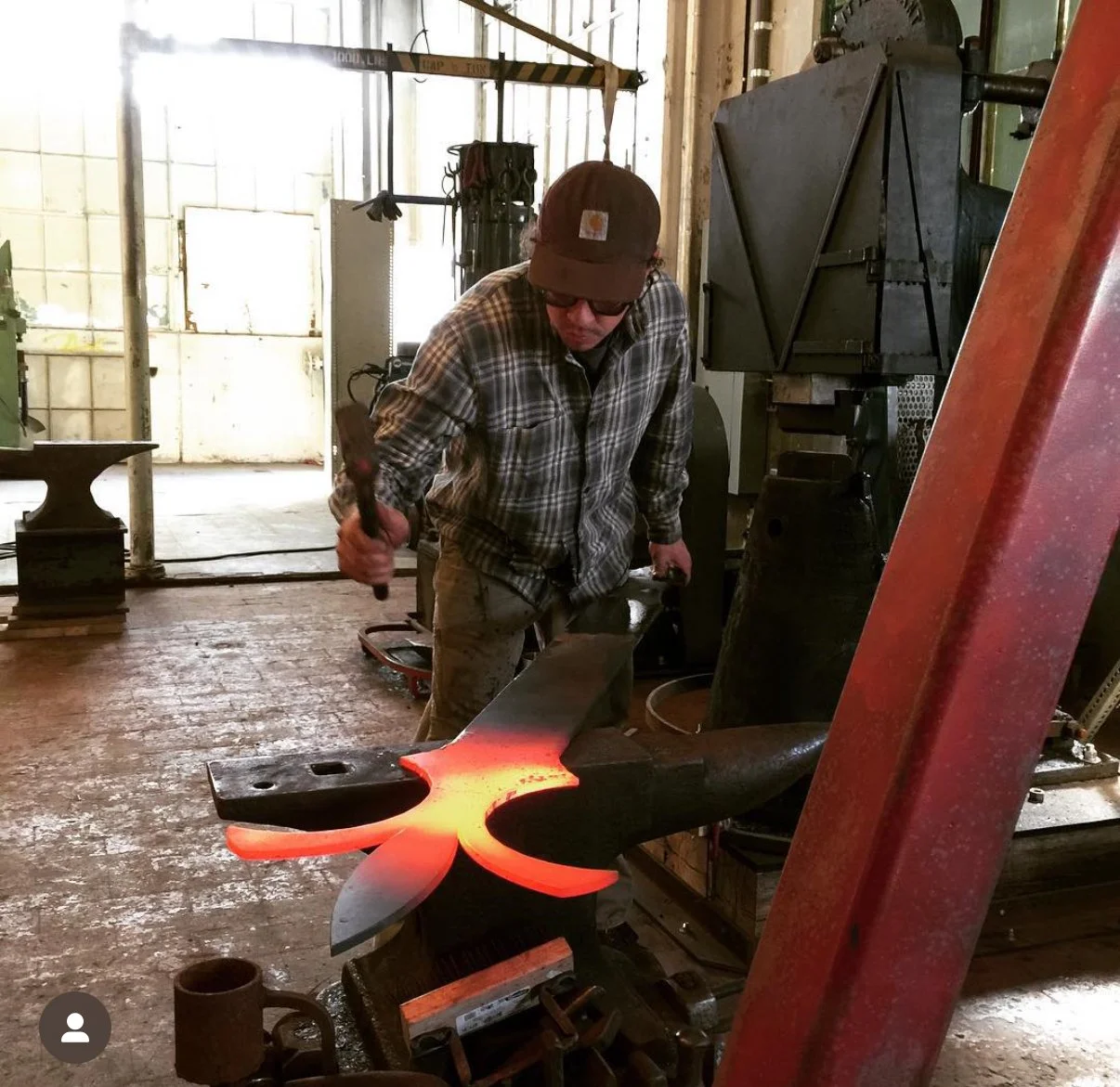
Building 56 is also home to several complementary tenants, including Datum Workshop, Robert Long Lighting, and Sparks & Co. Blacksmithing. Having skilled craftspeople working under the same roof creates a collaborative energy that benefits everyone.
Beyond fabrication space, we’ve built out:
— A heated and cooled lunchroom
— A conference room
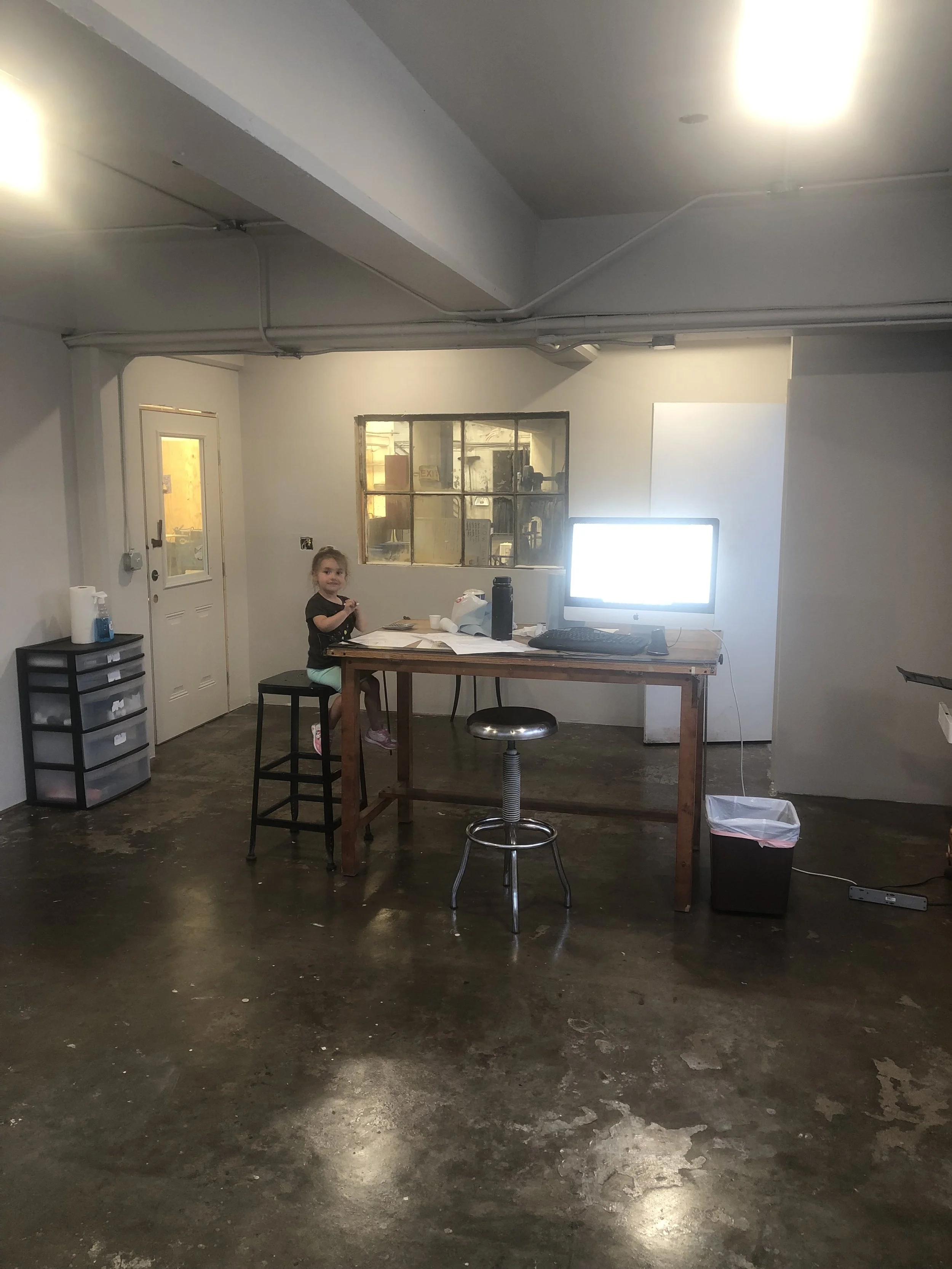
— A design-forward office and studio space, recently climate-controlled
It’s a functional shop, but it’s also a place where ideas are meant to develop.
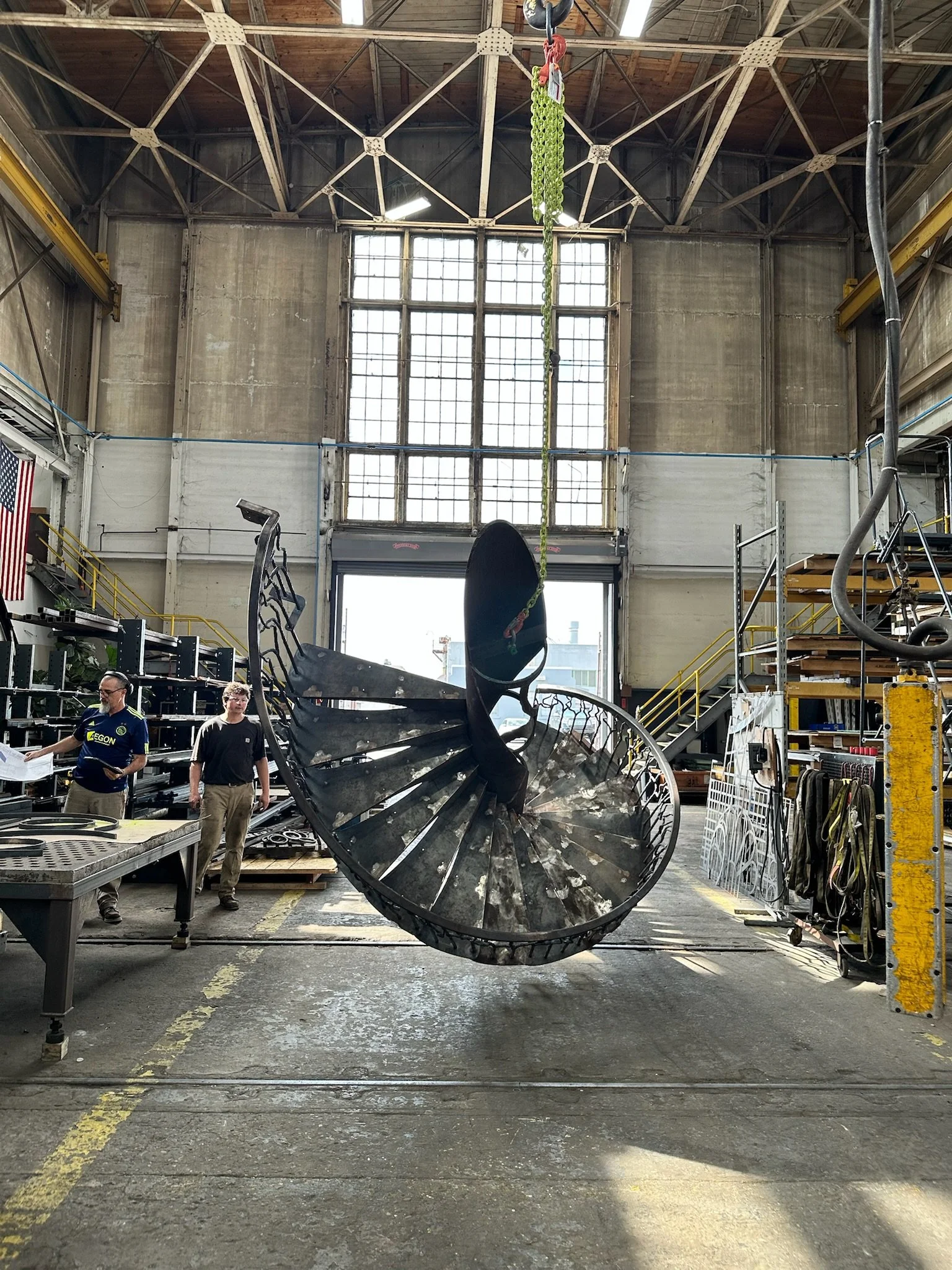
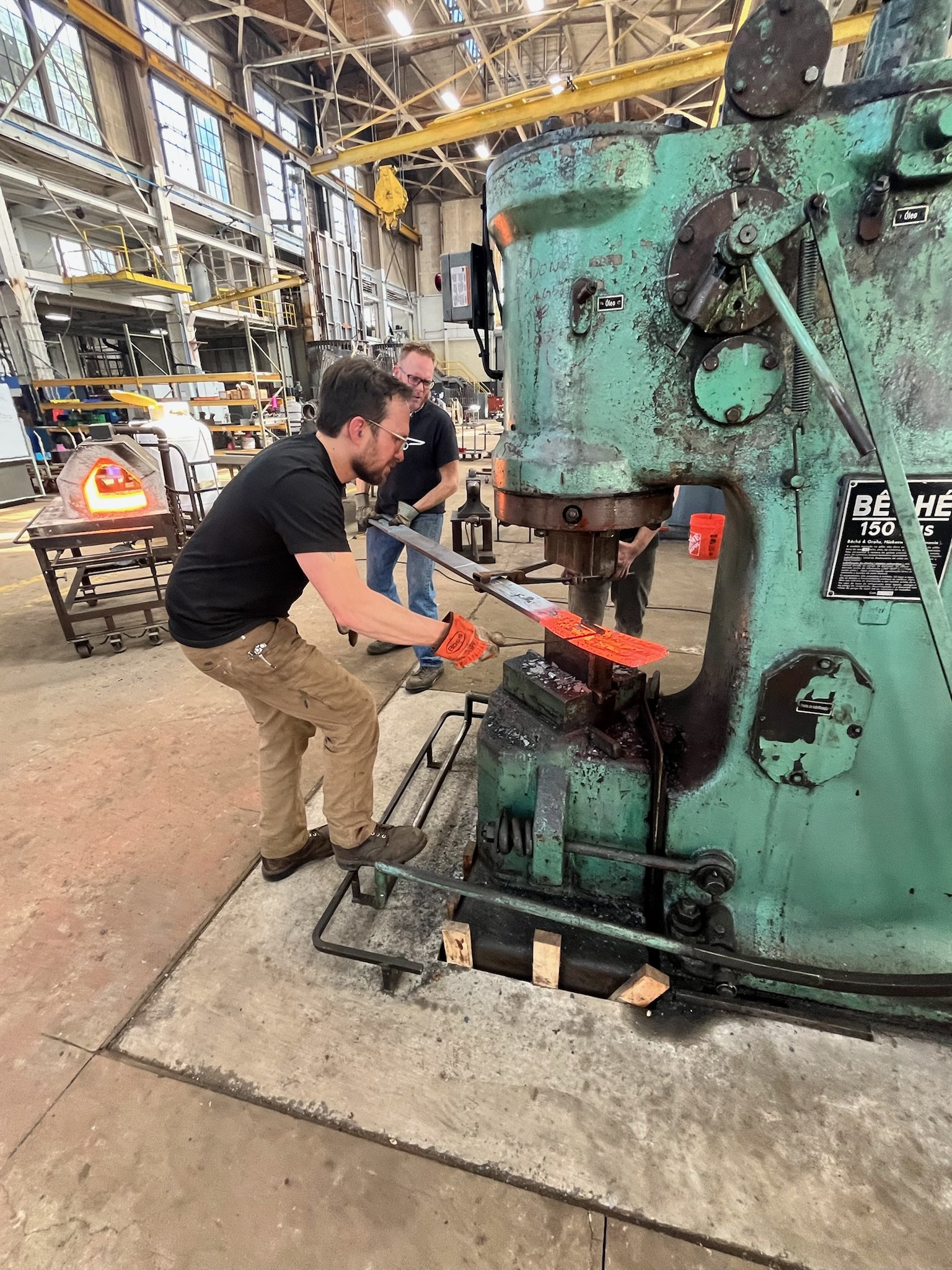
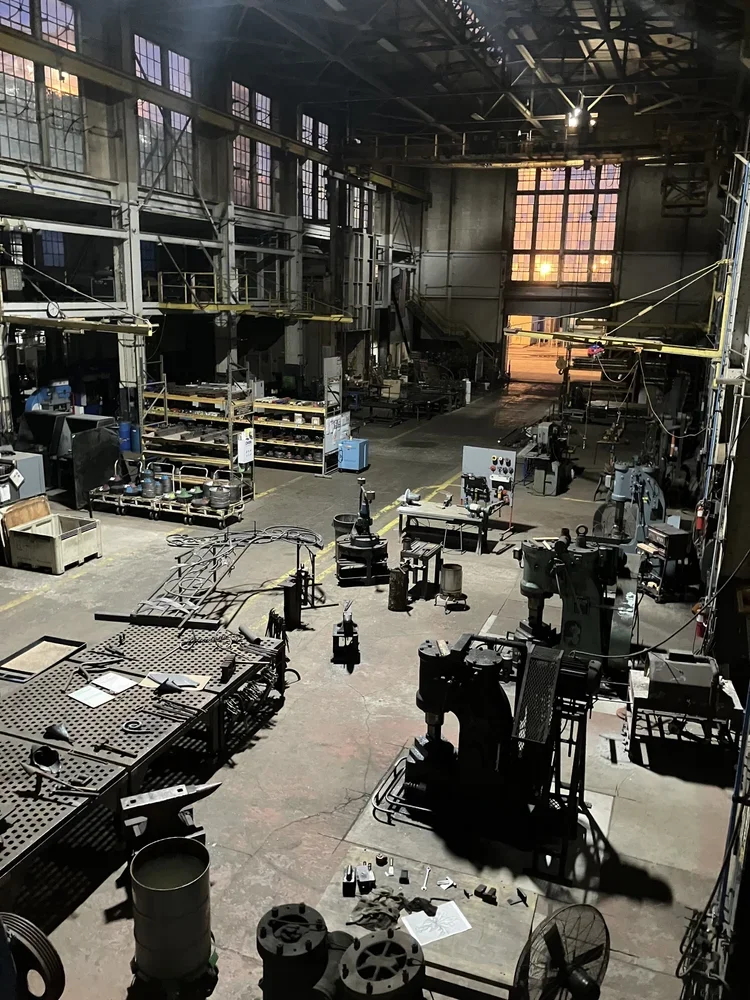
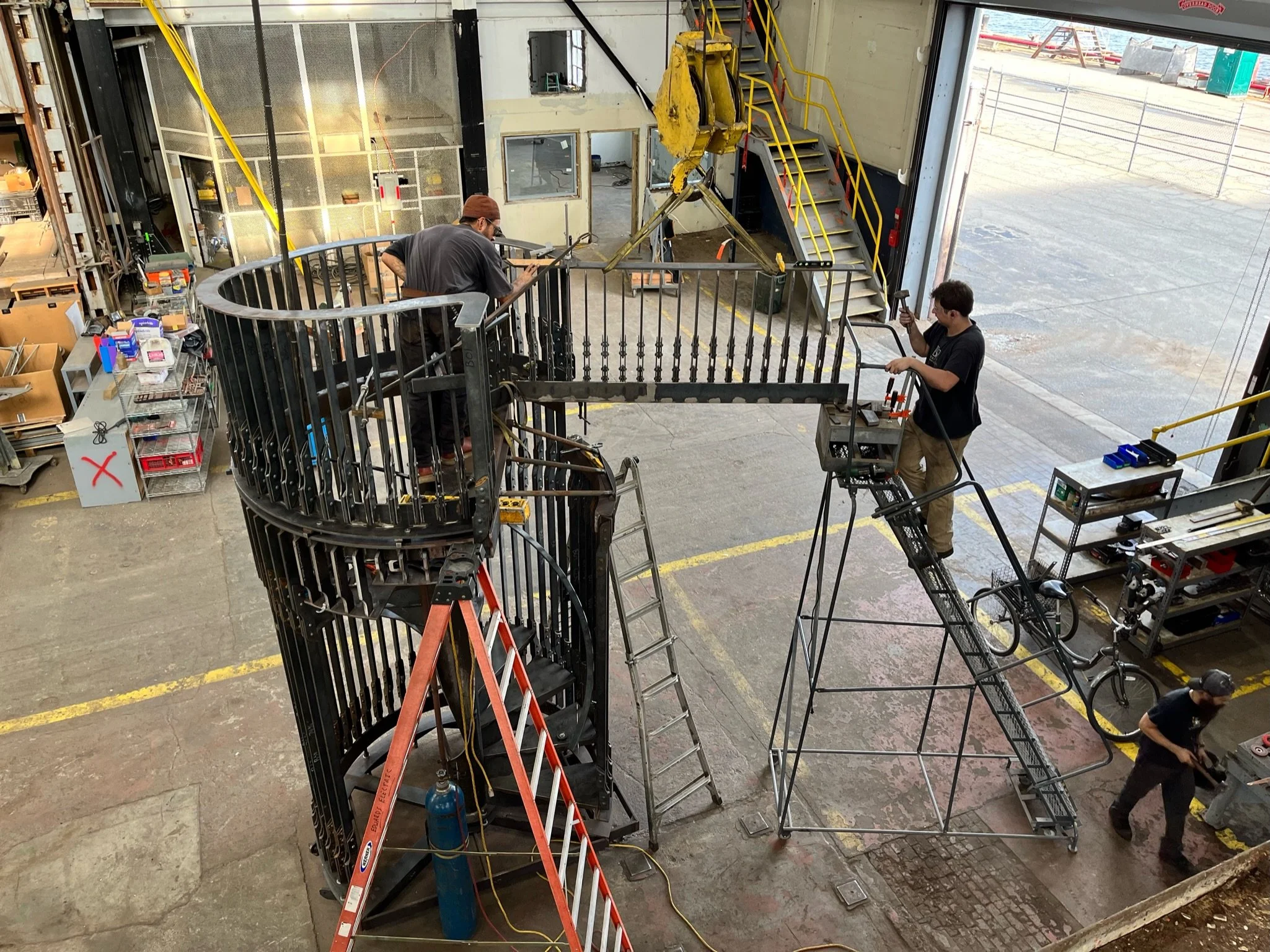
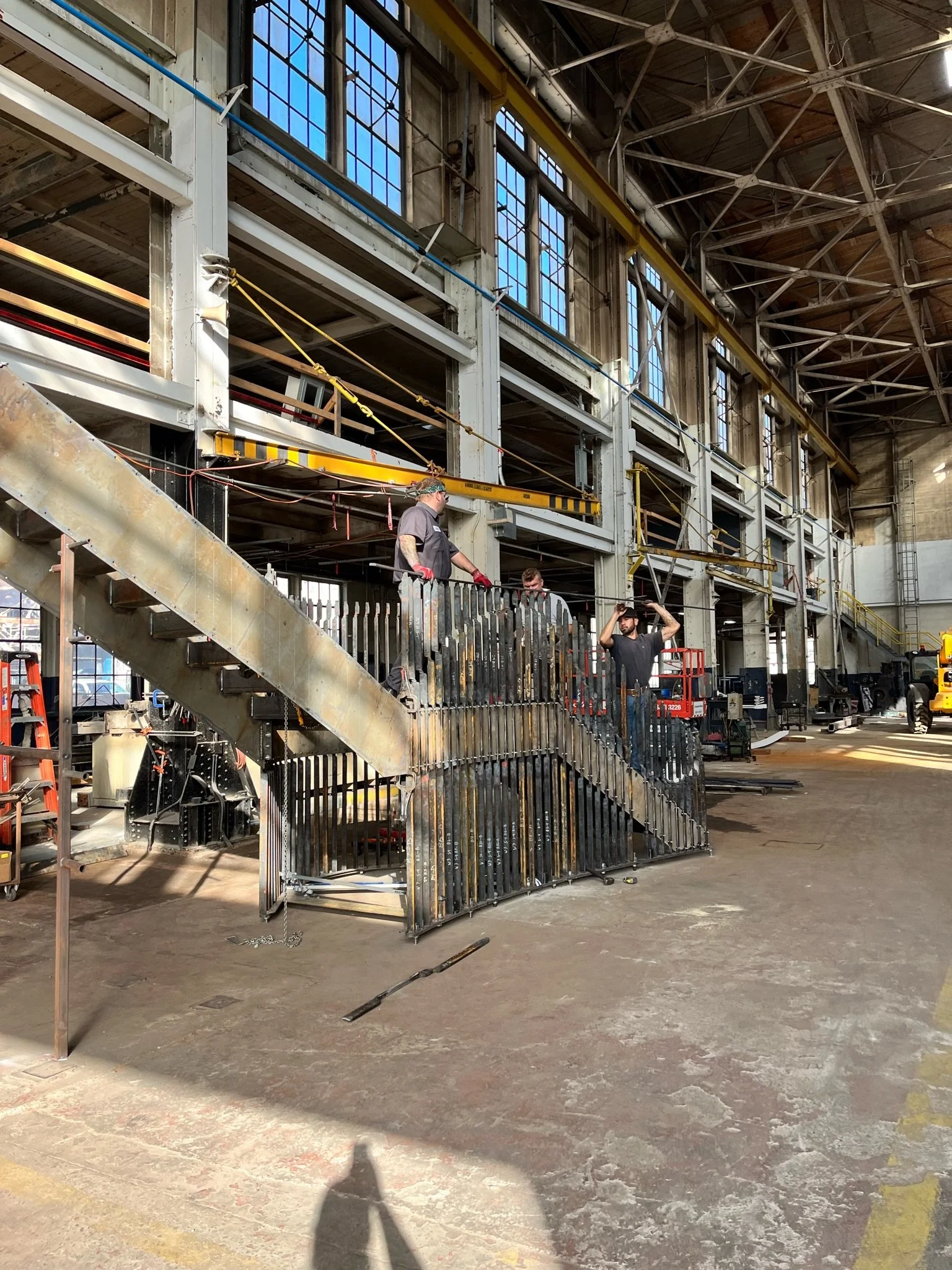
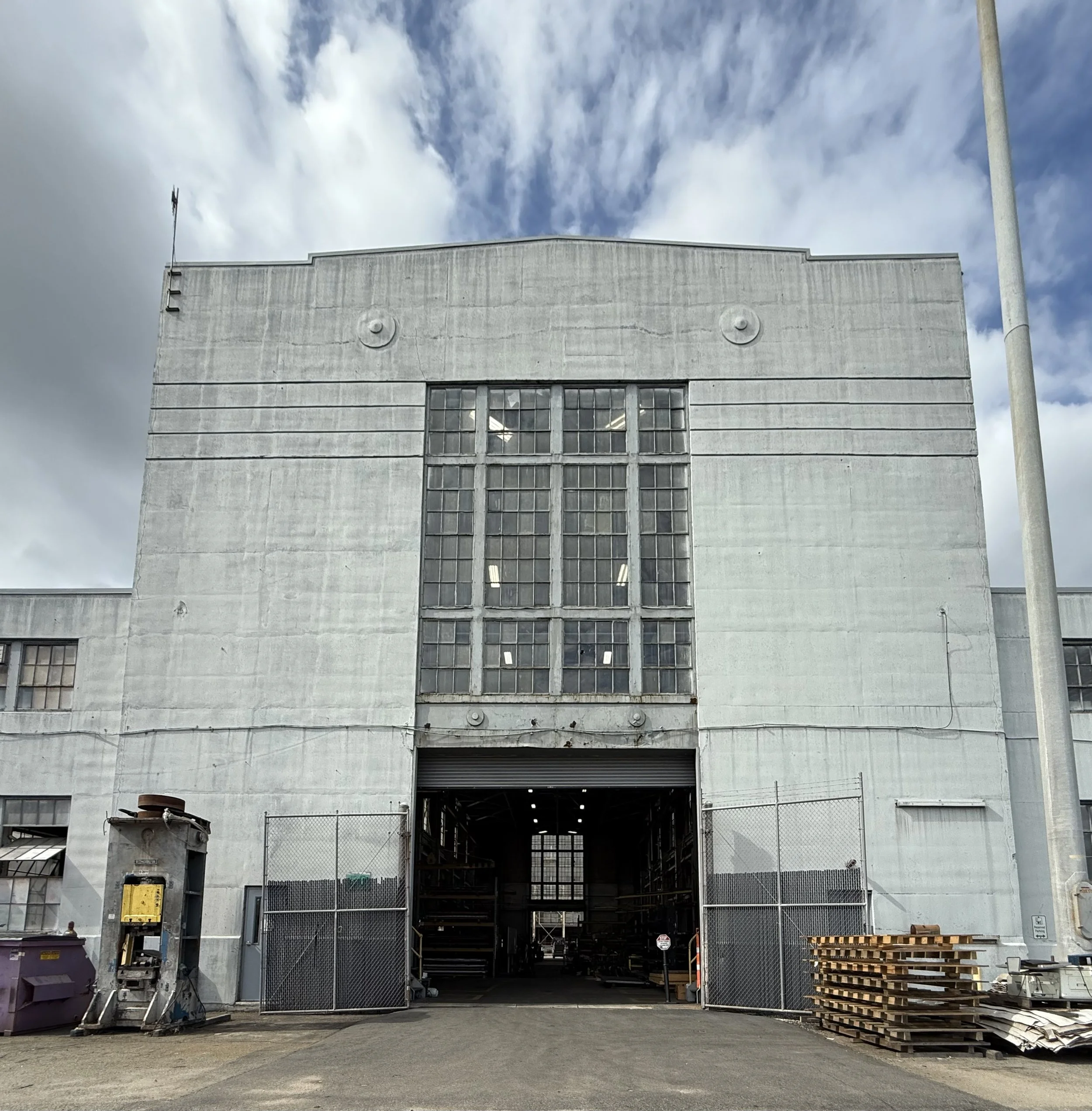
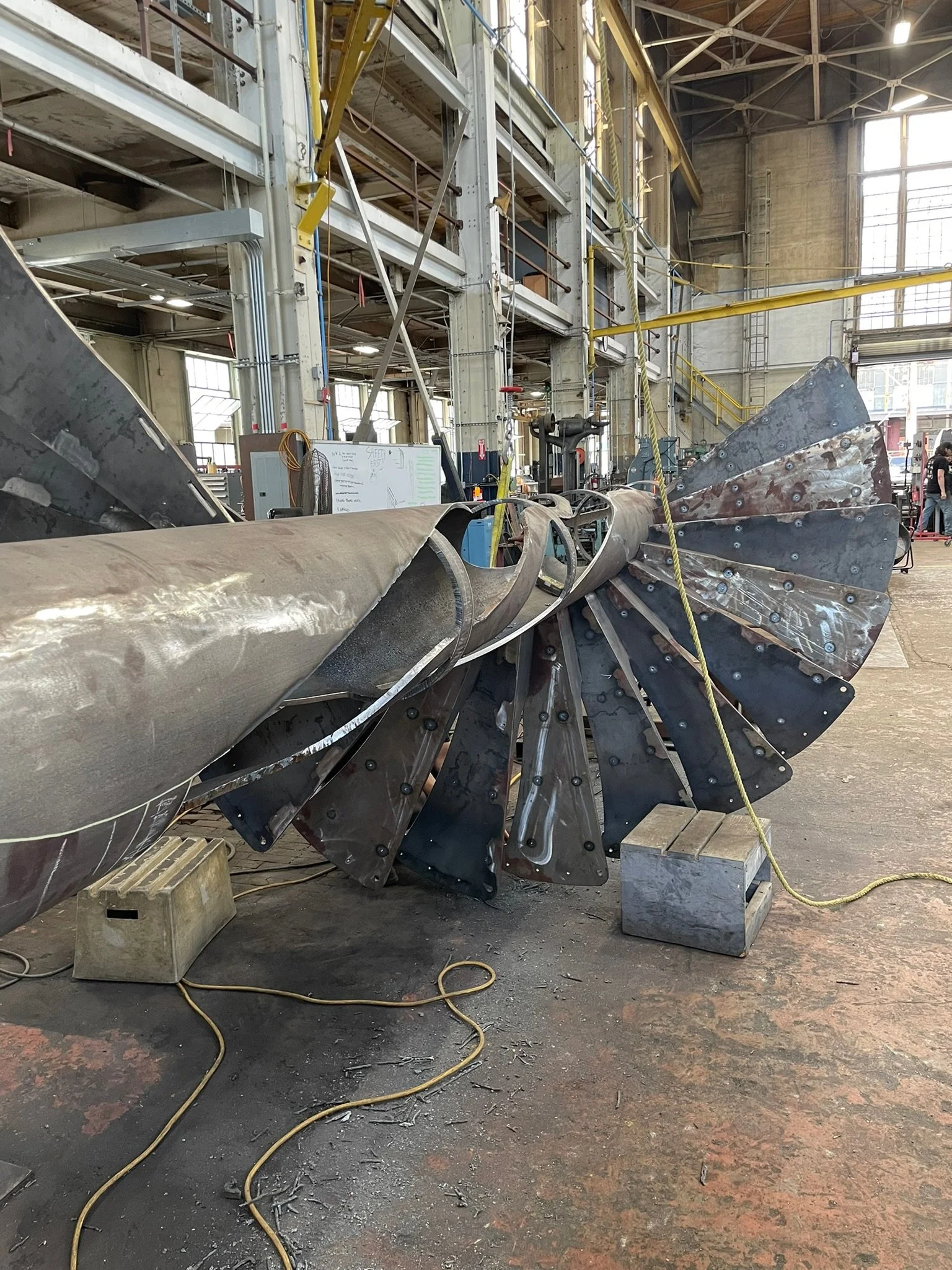
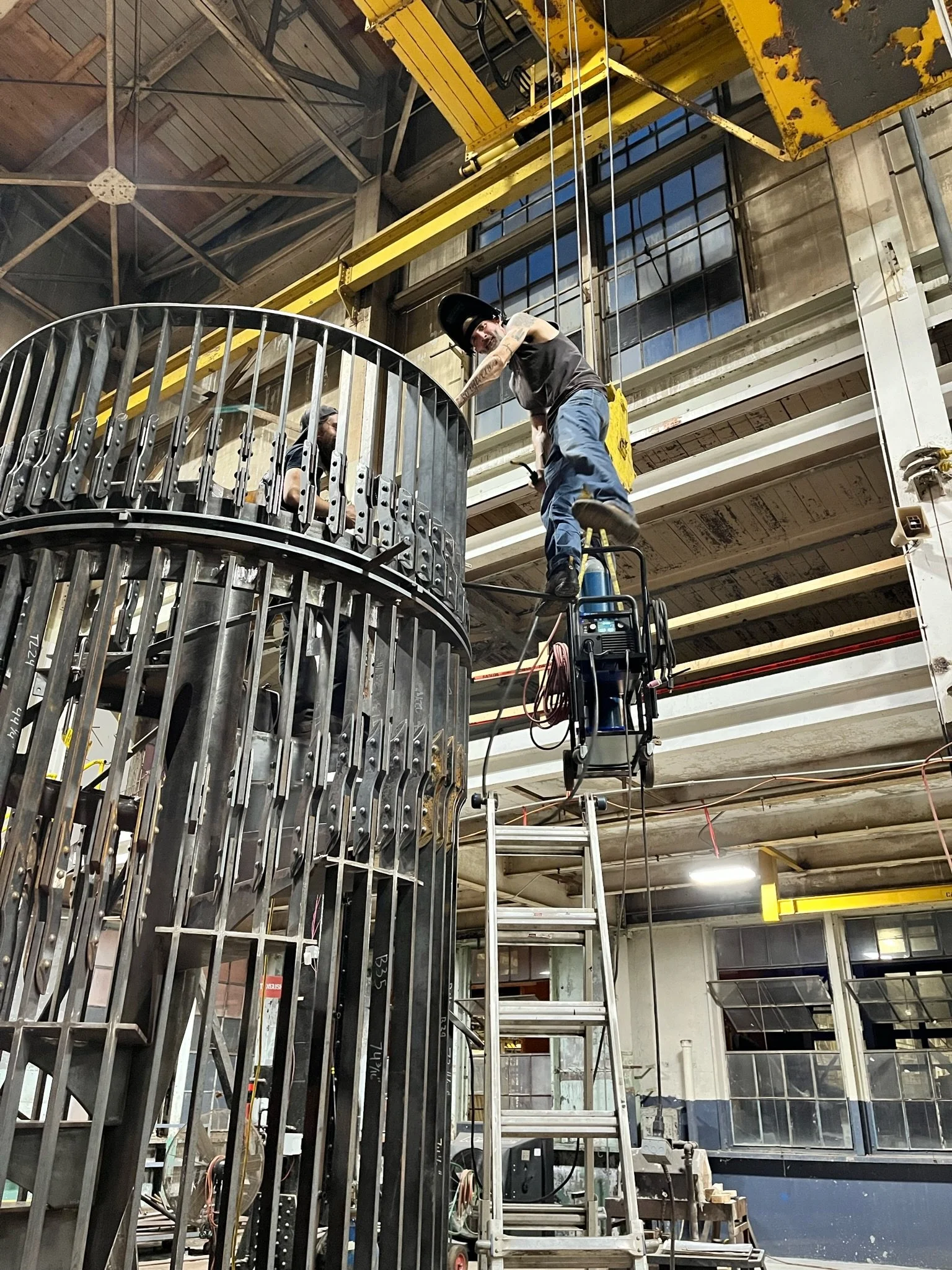
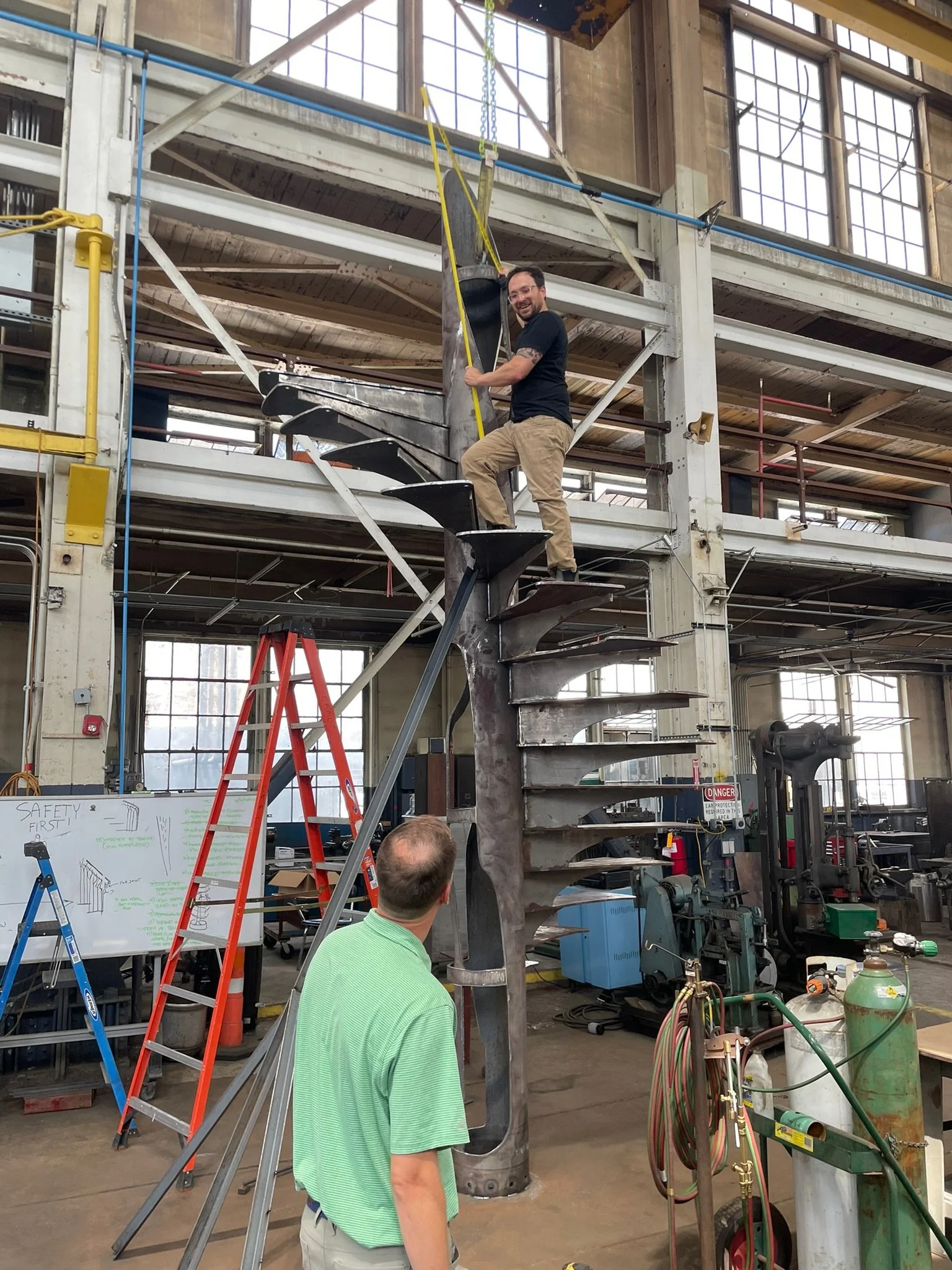
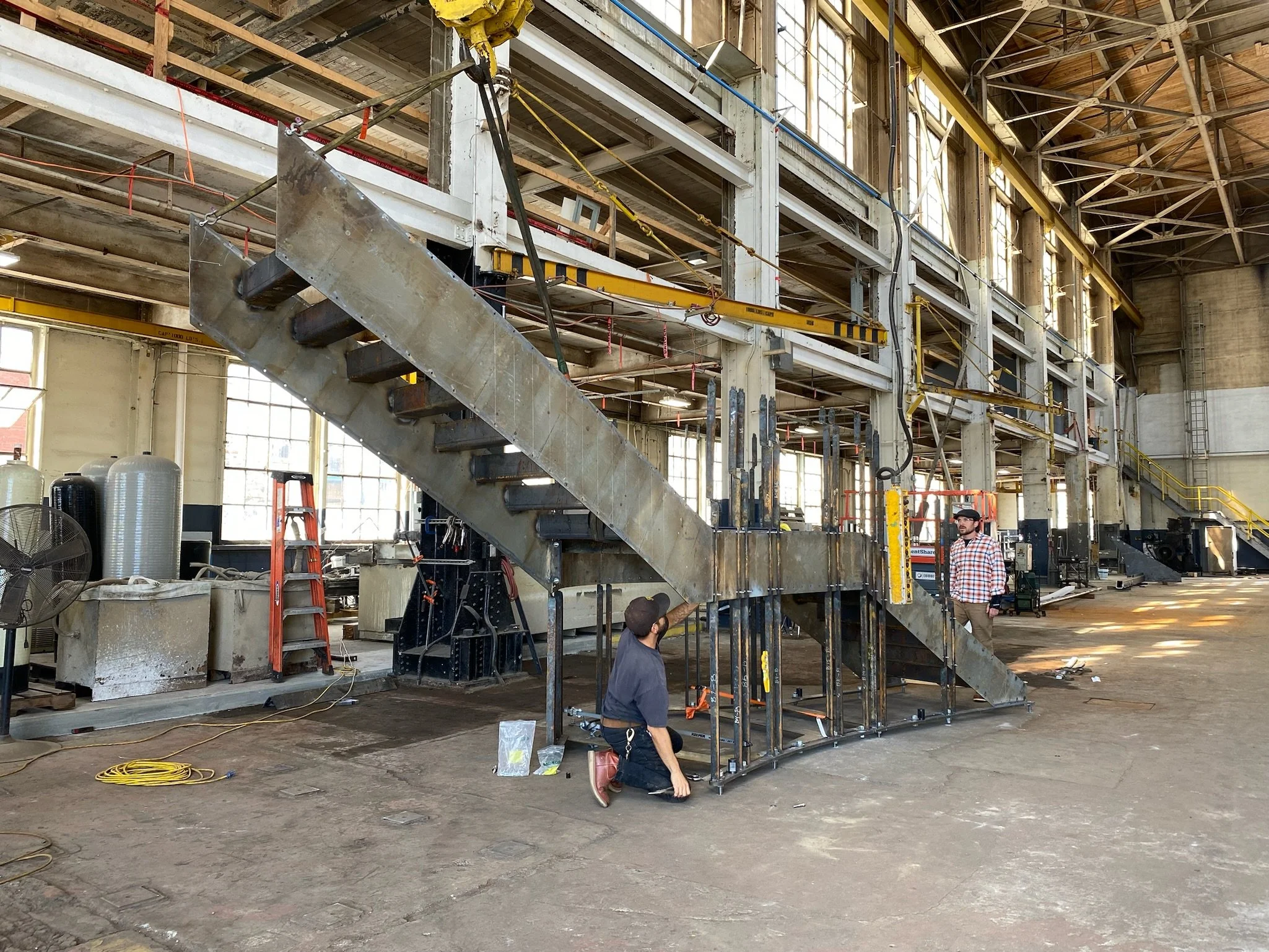
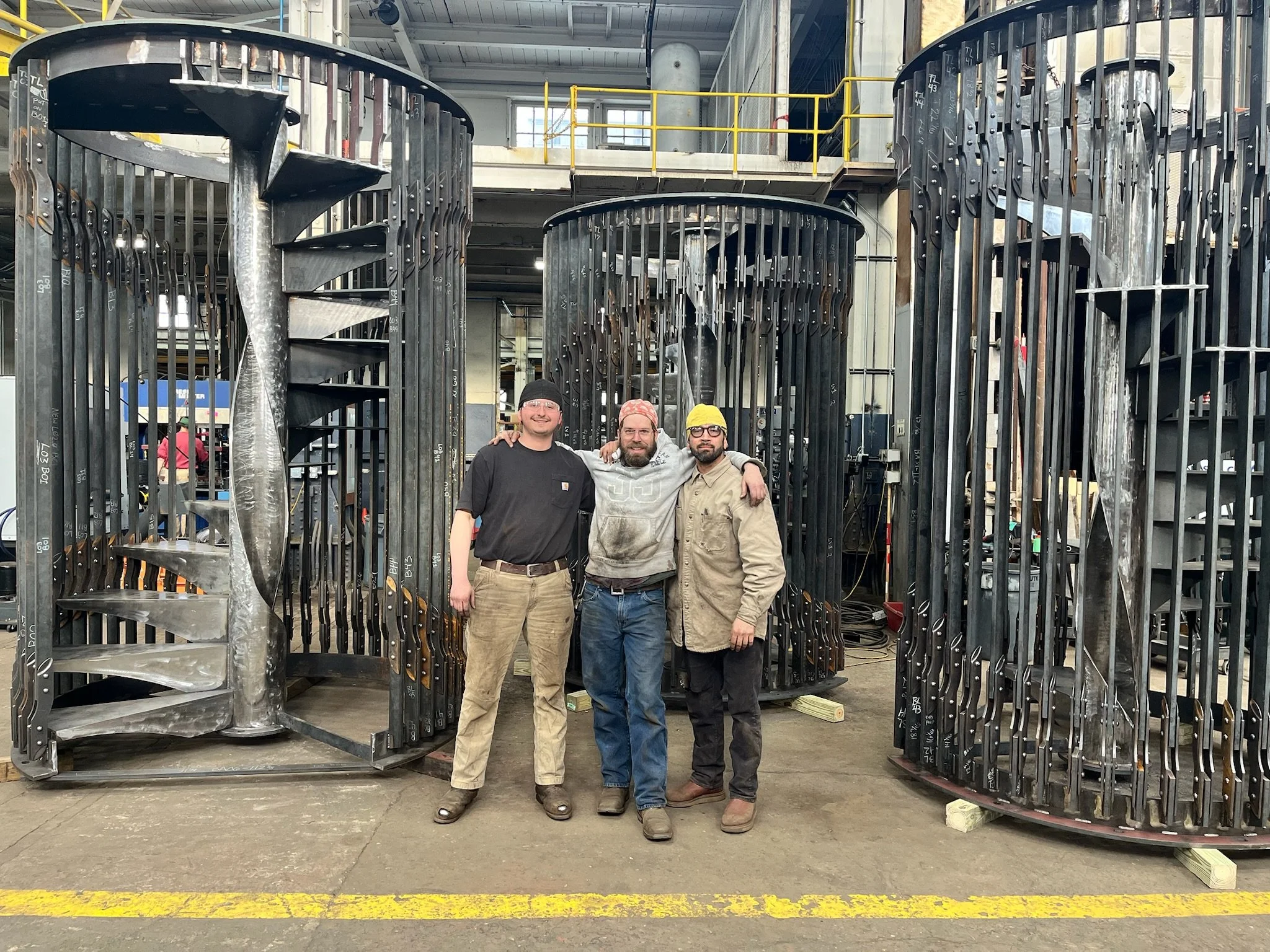
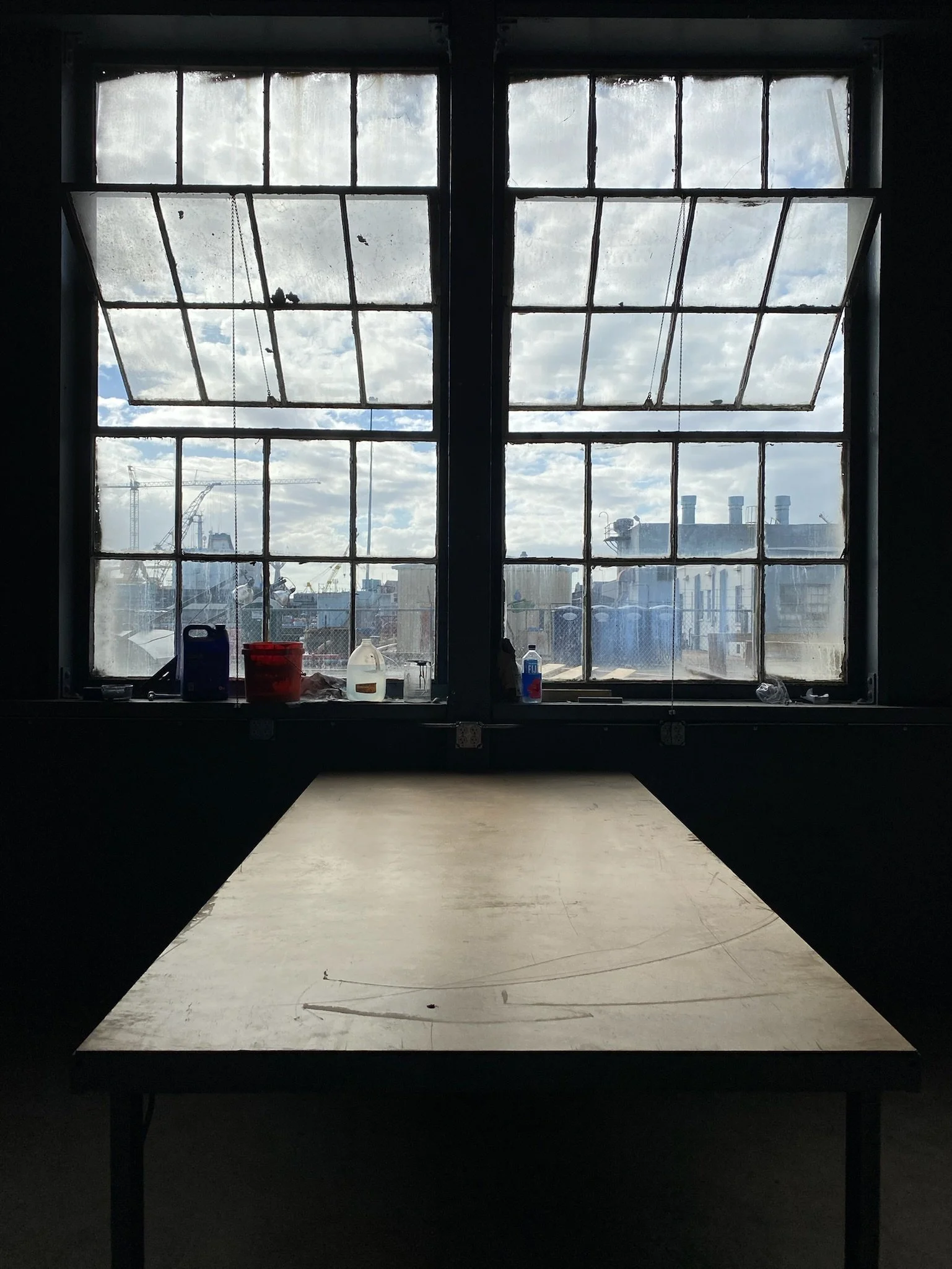
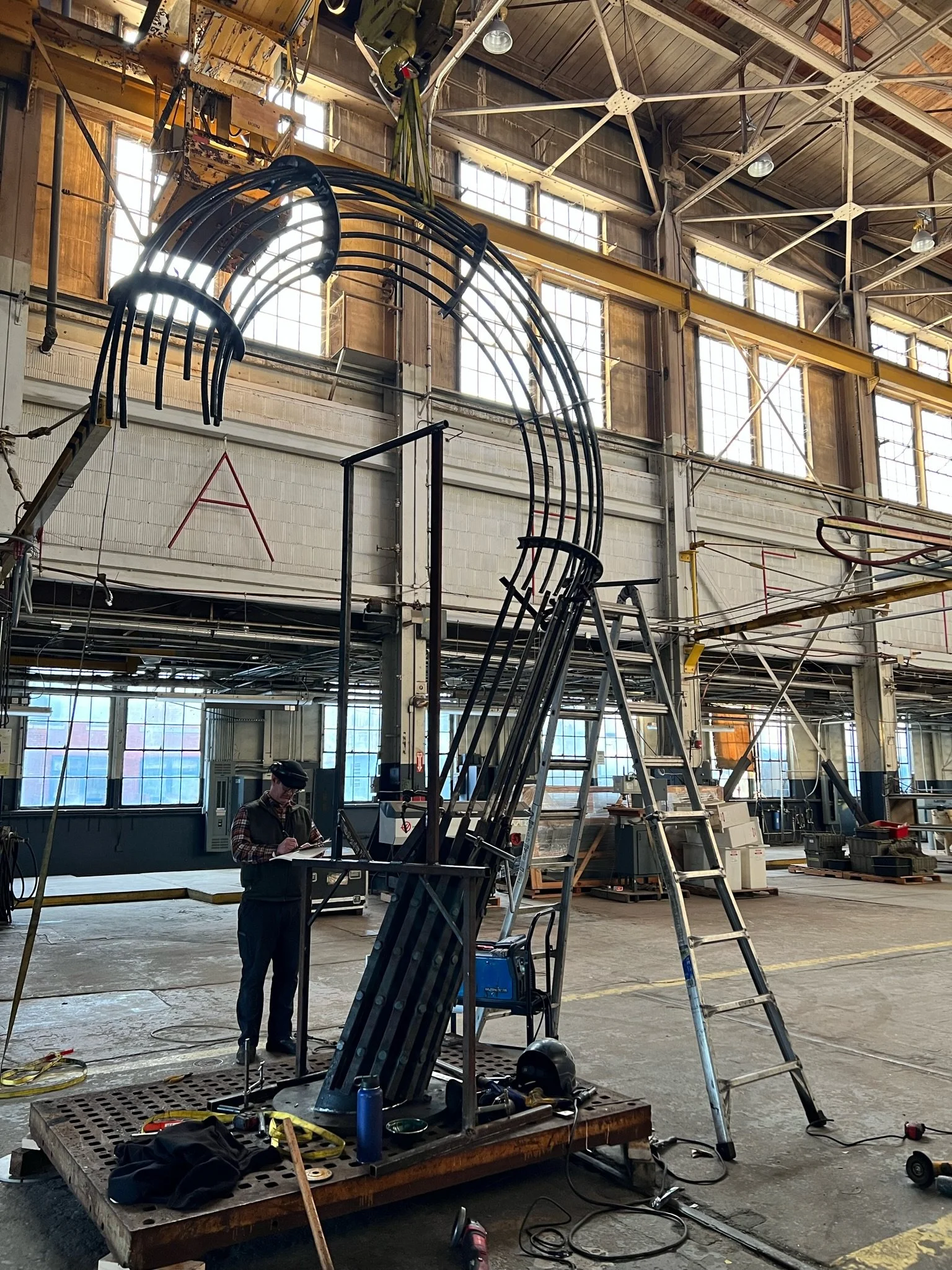
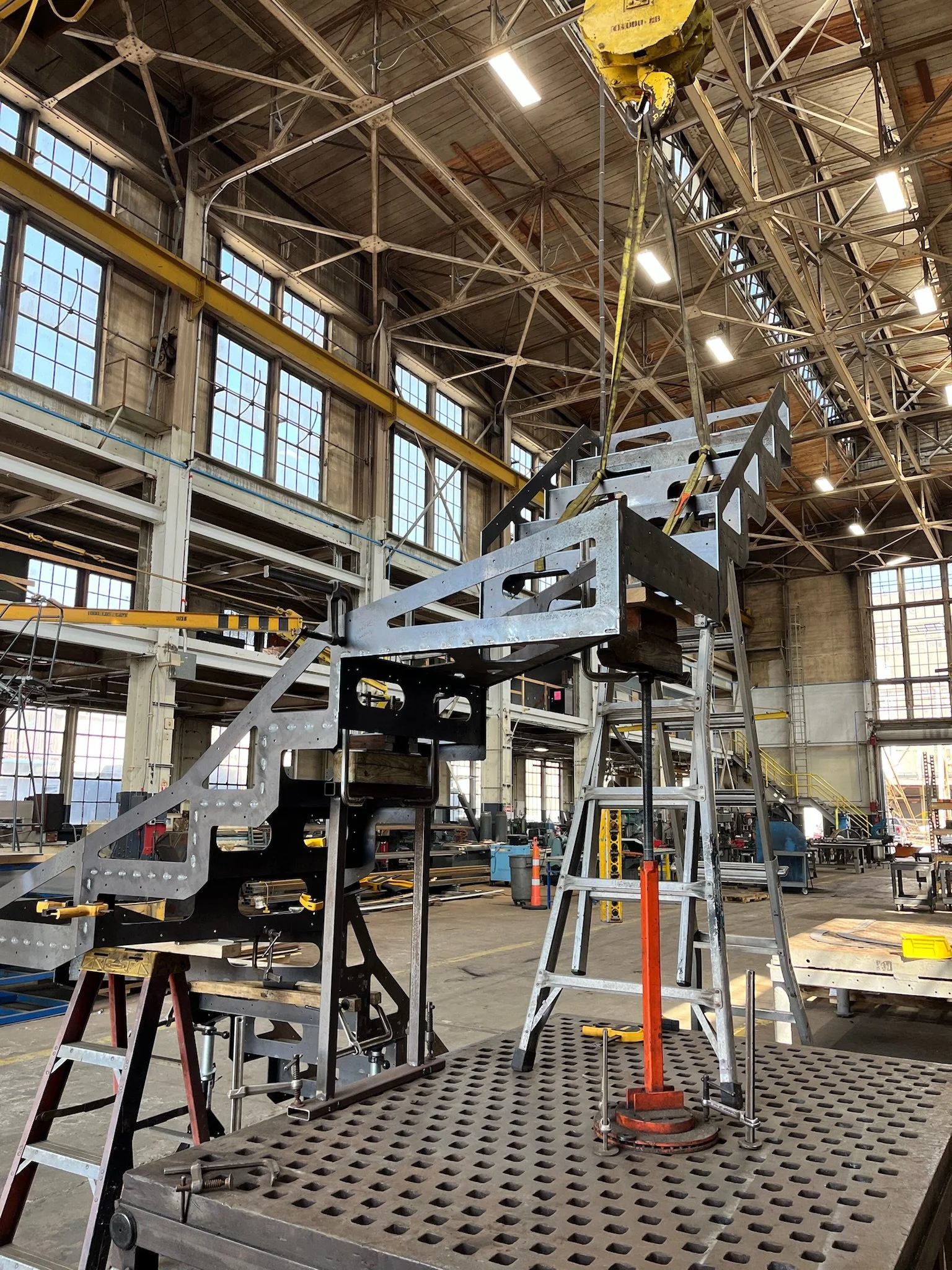
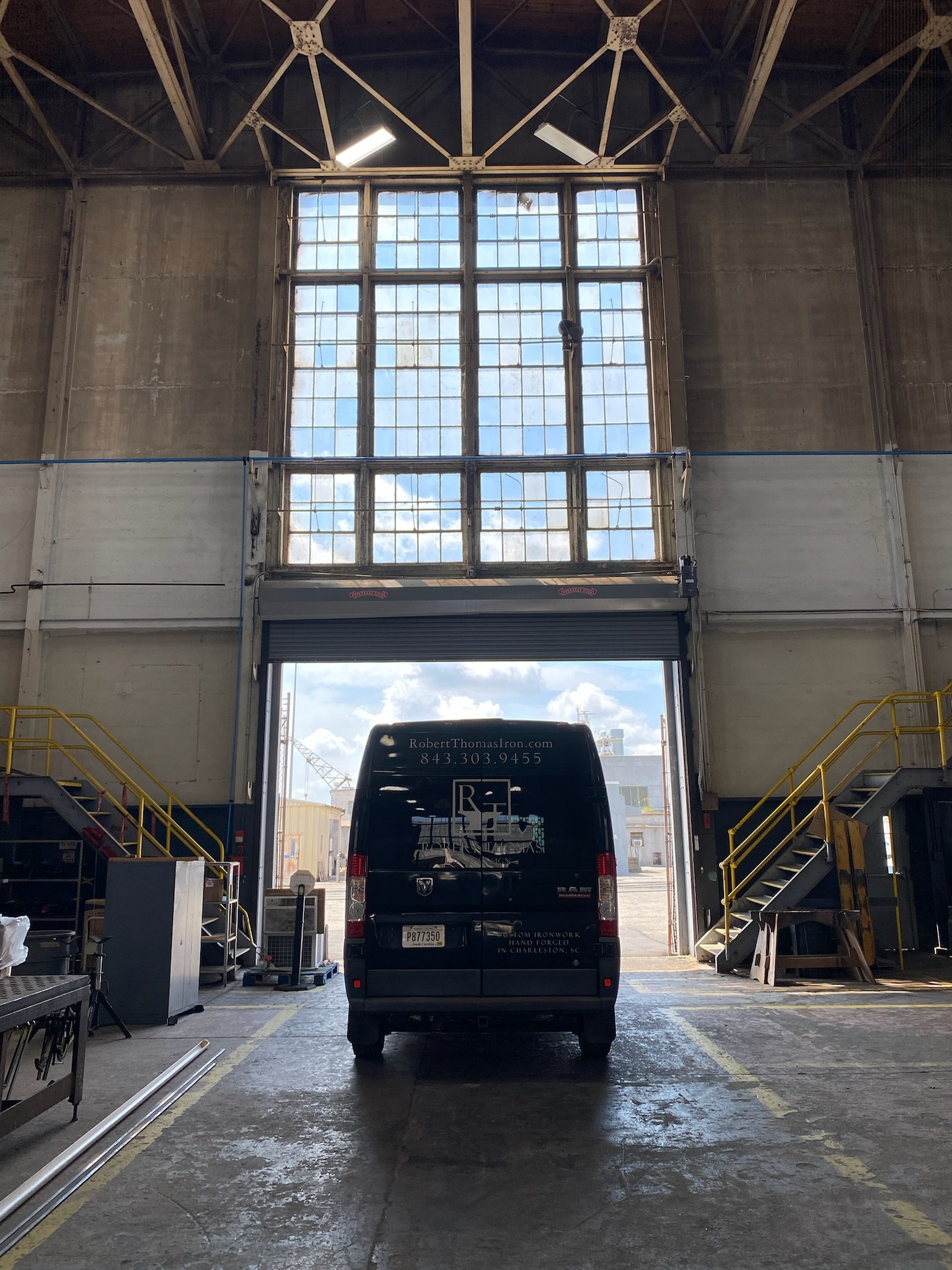
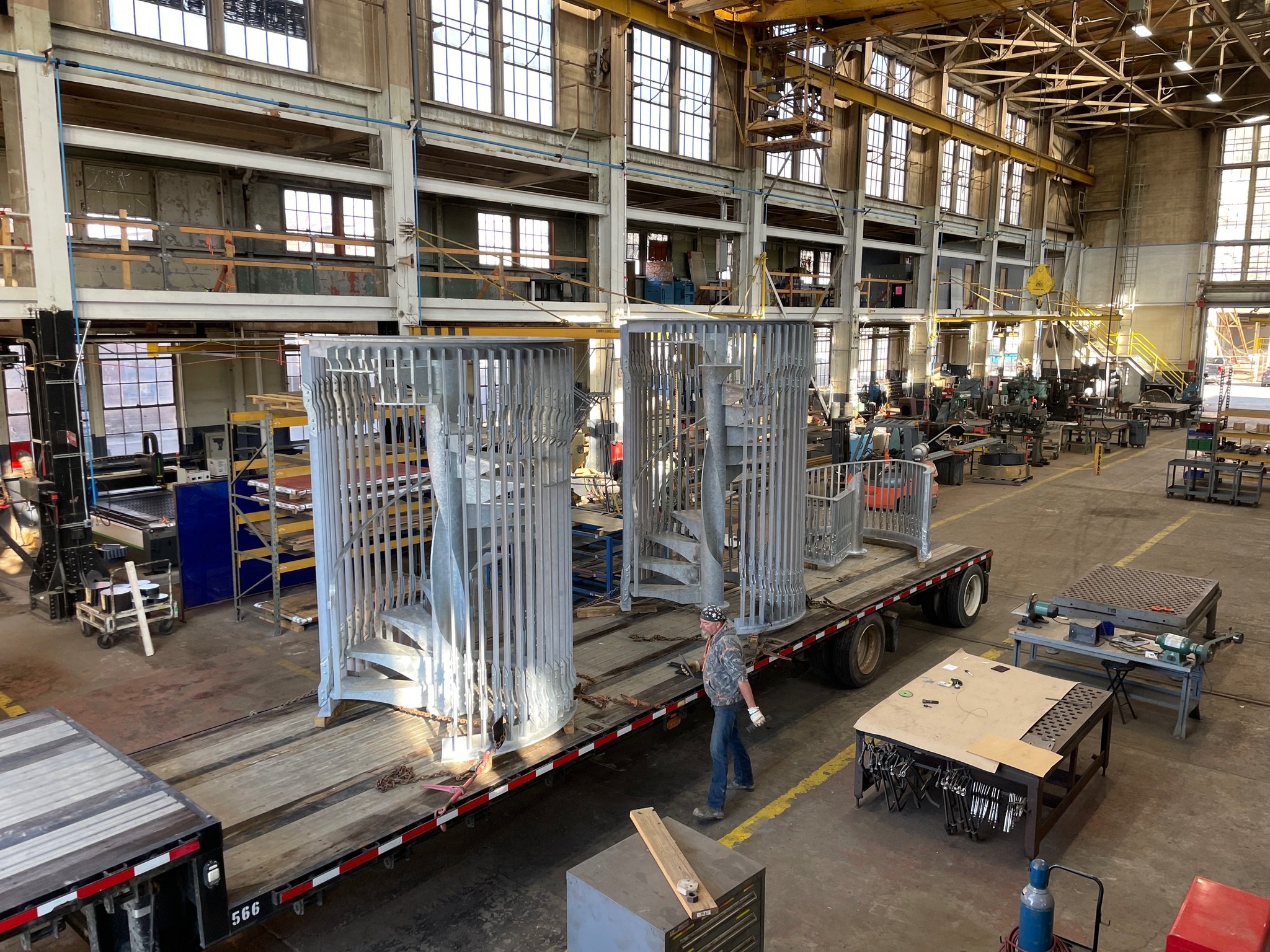
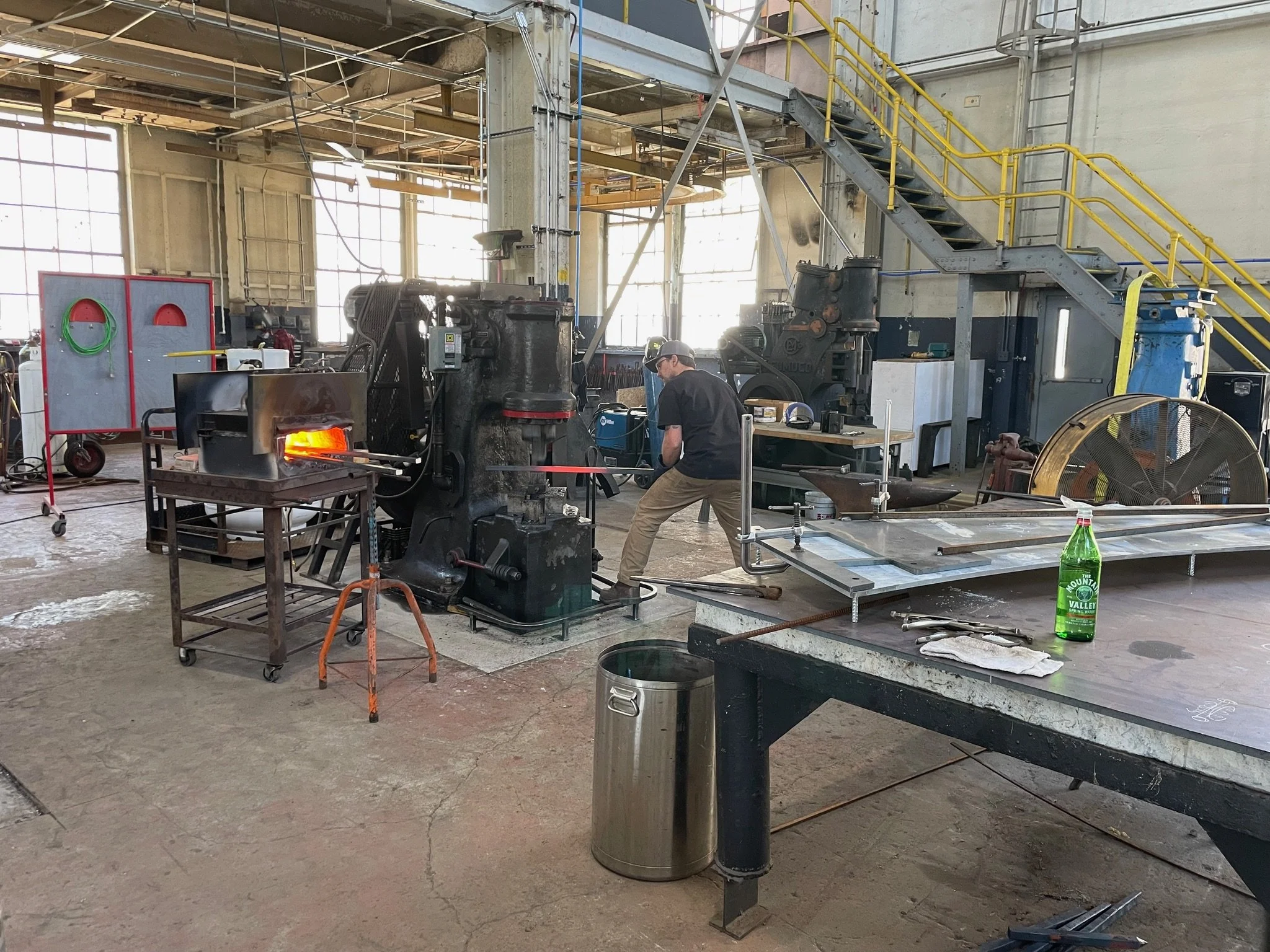
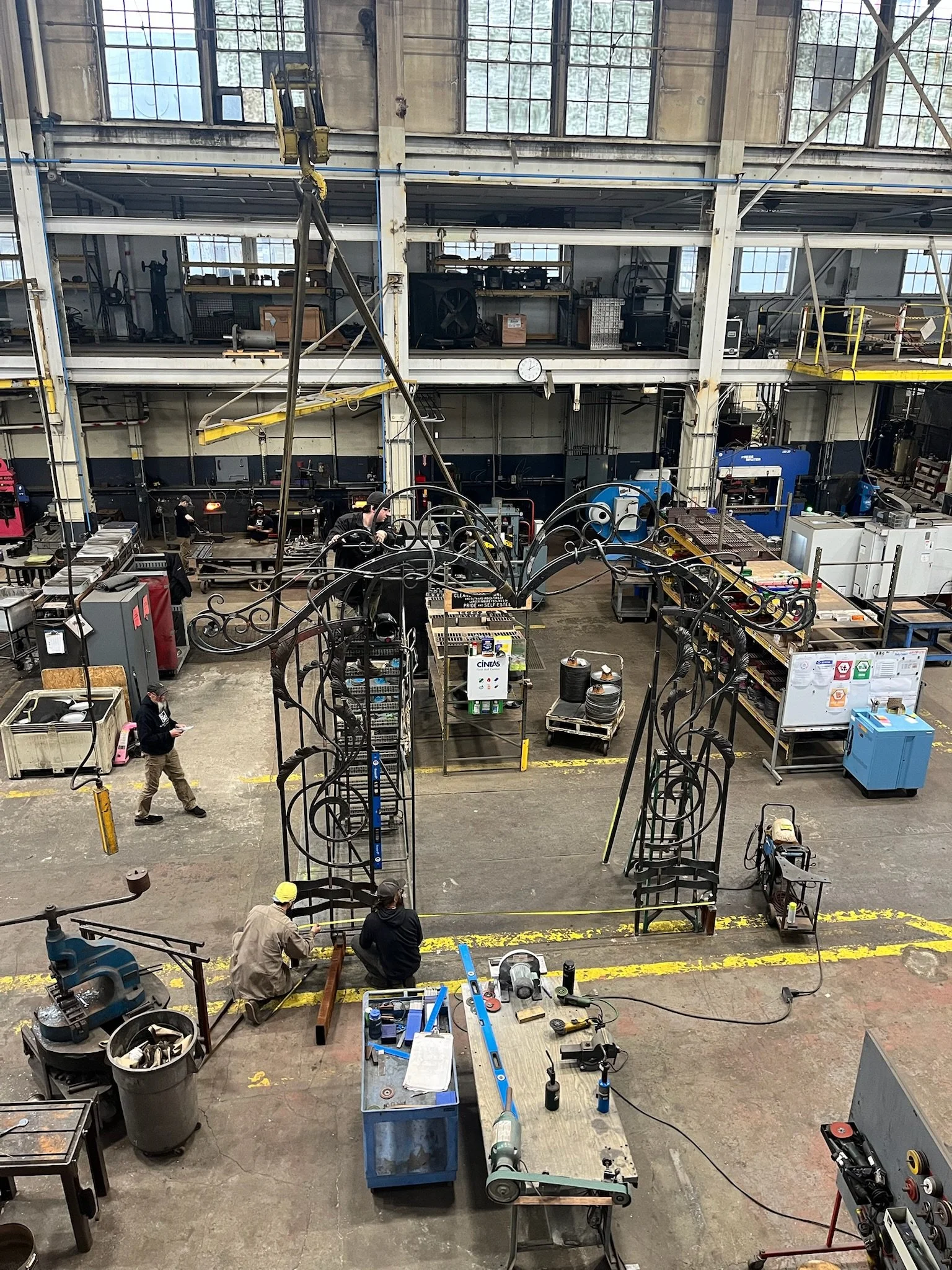
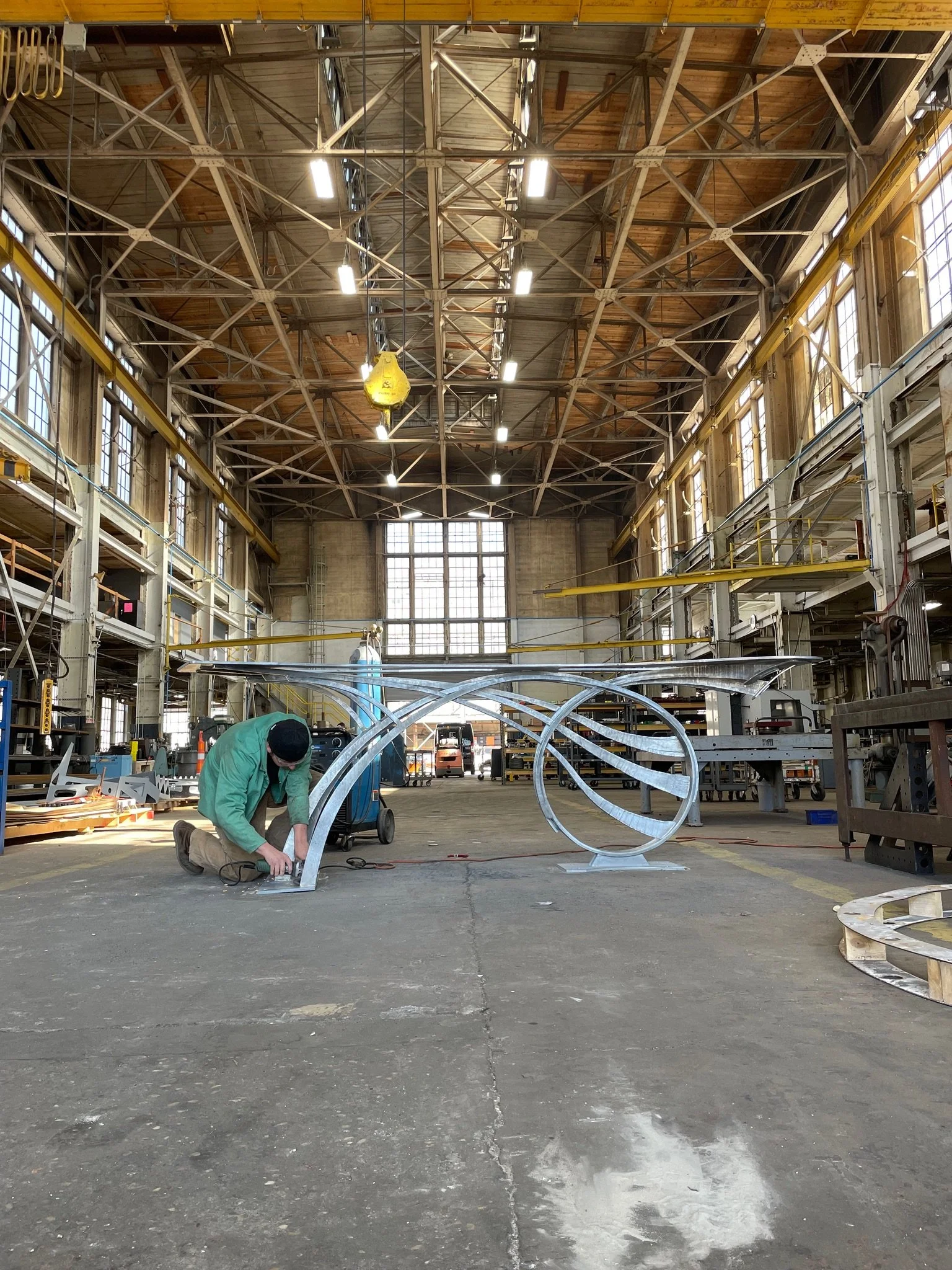
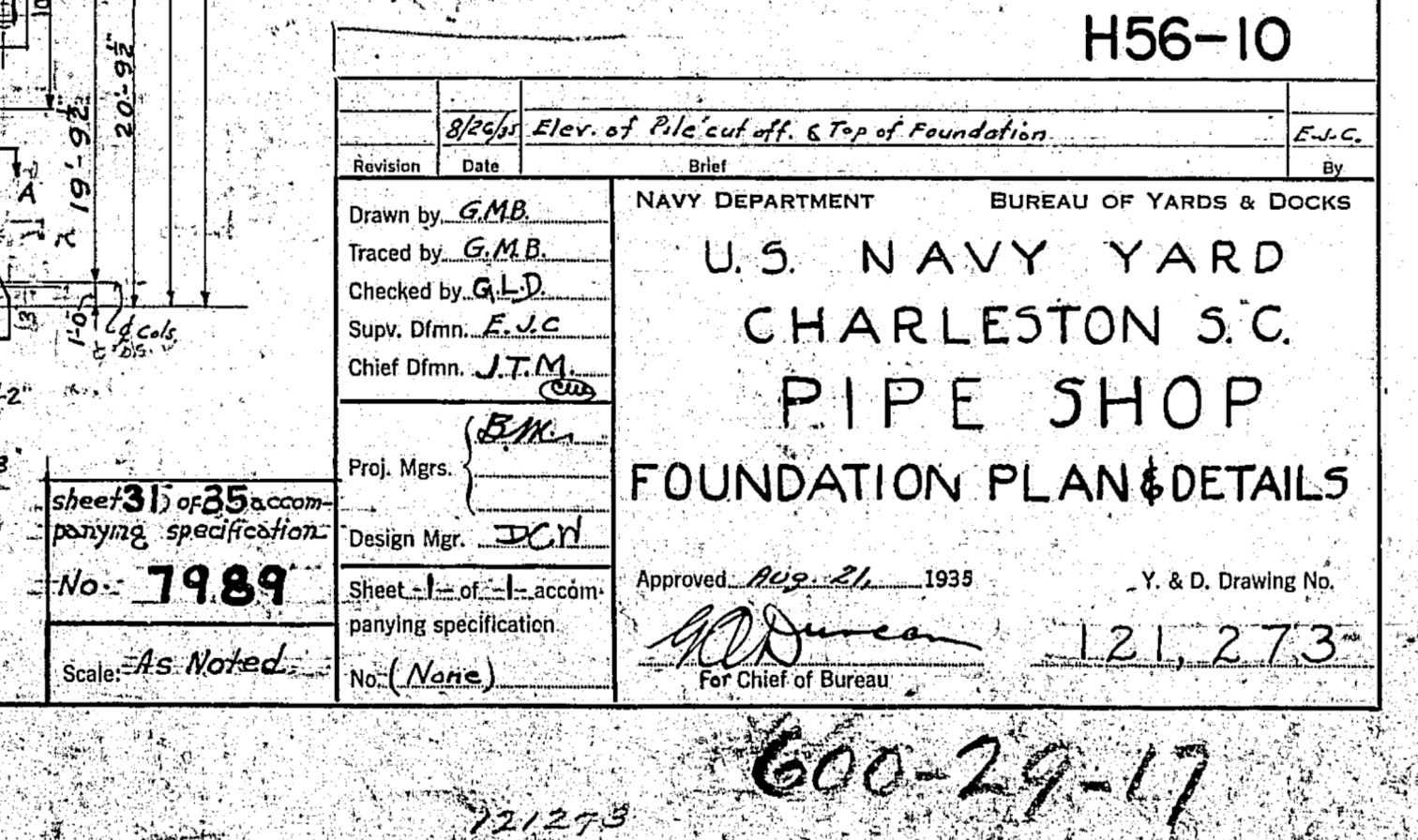
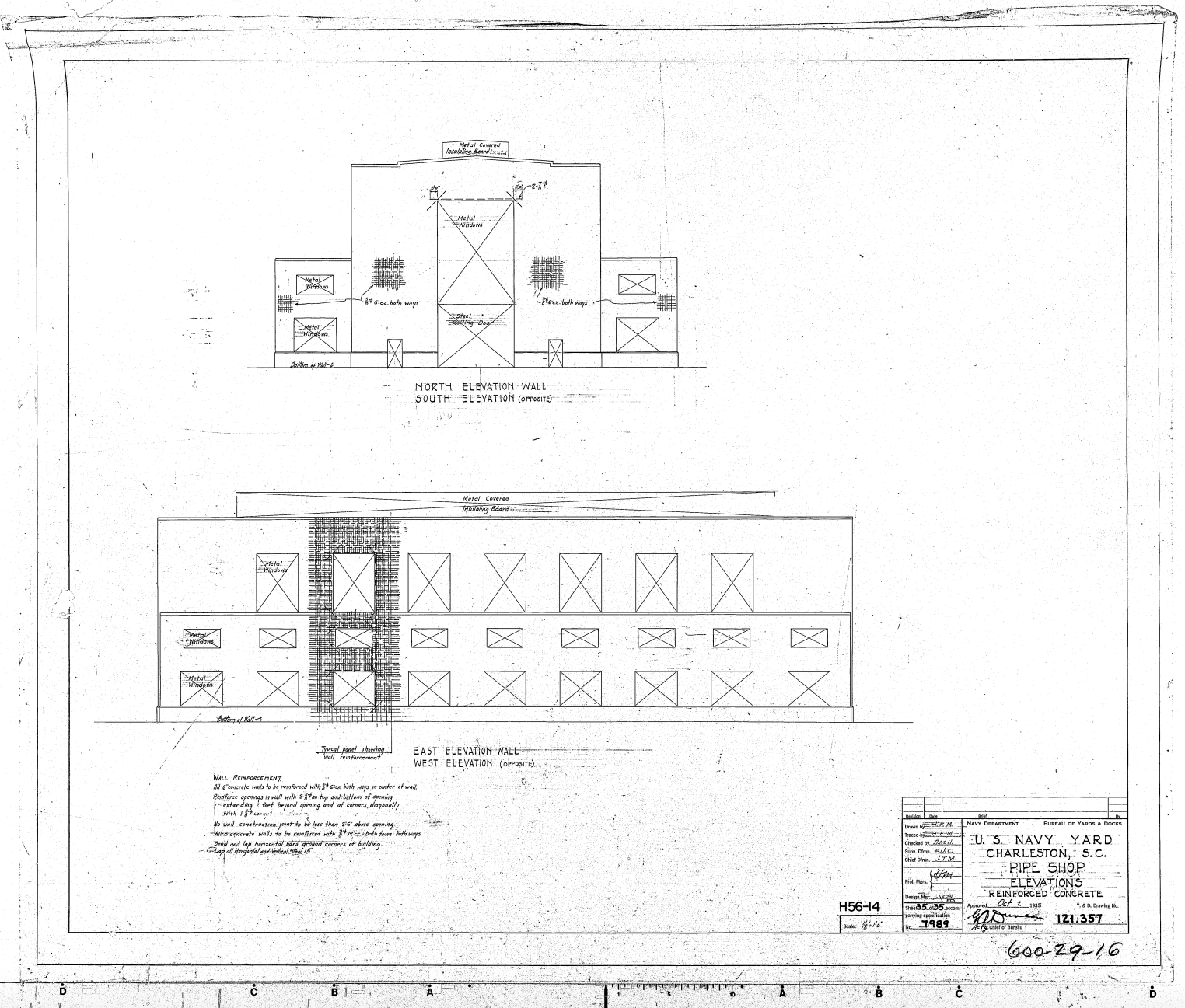
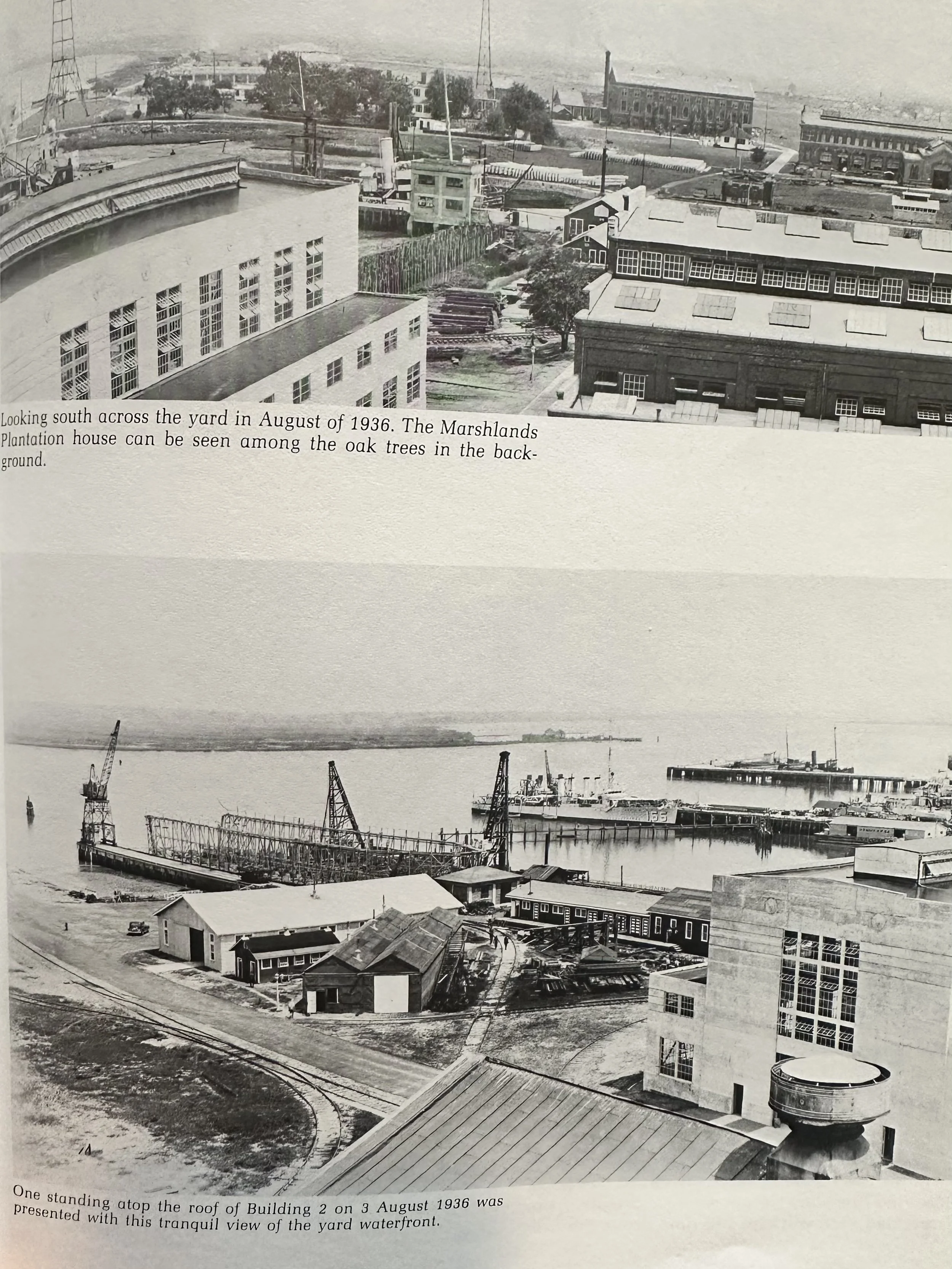
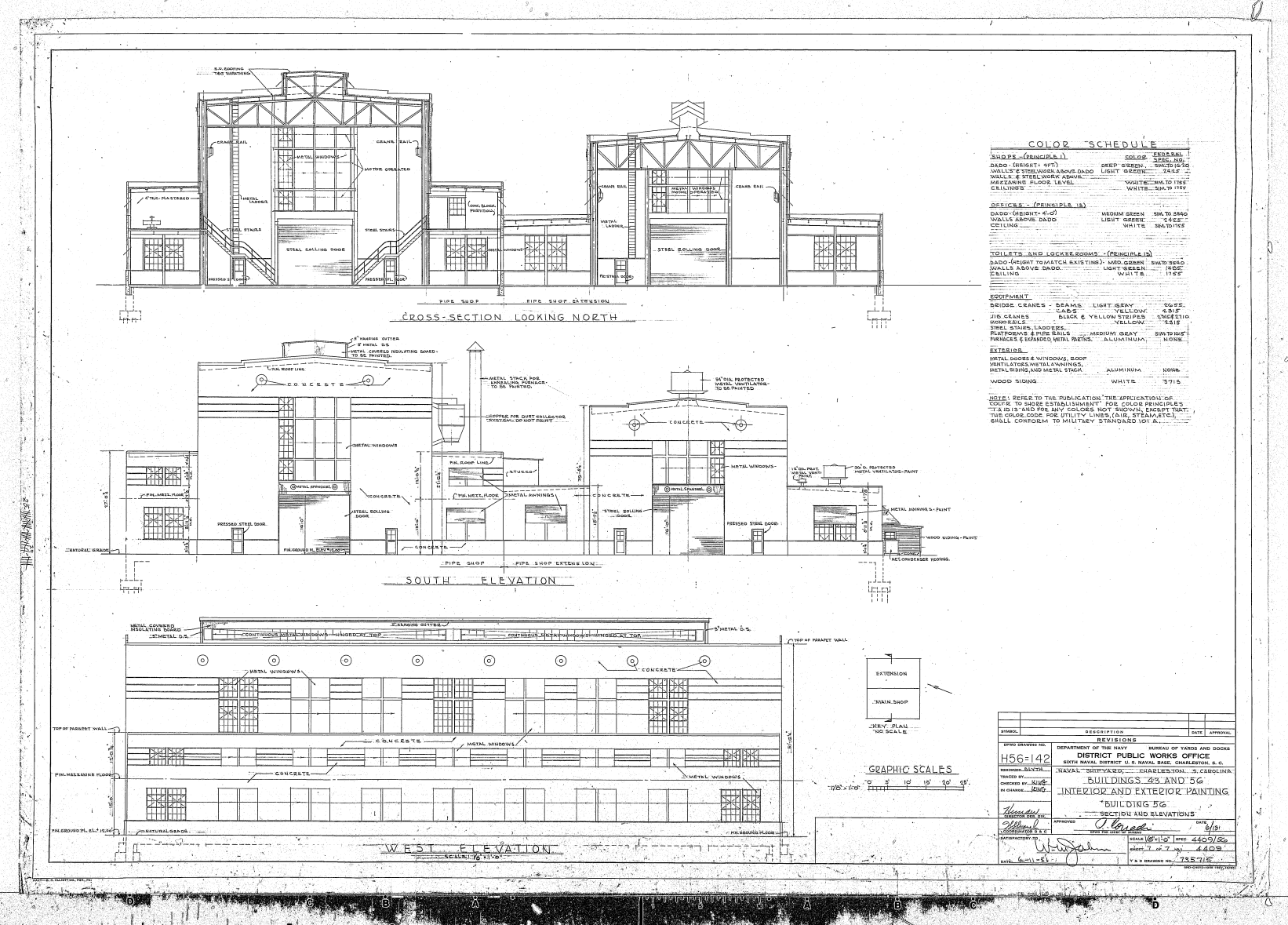
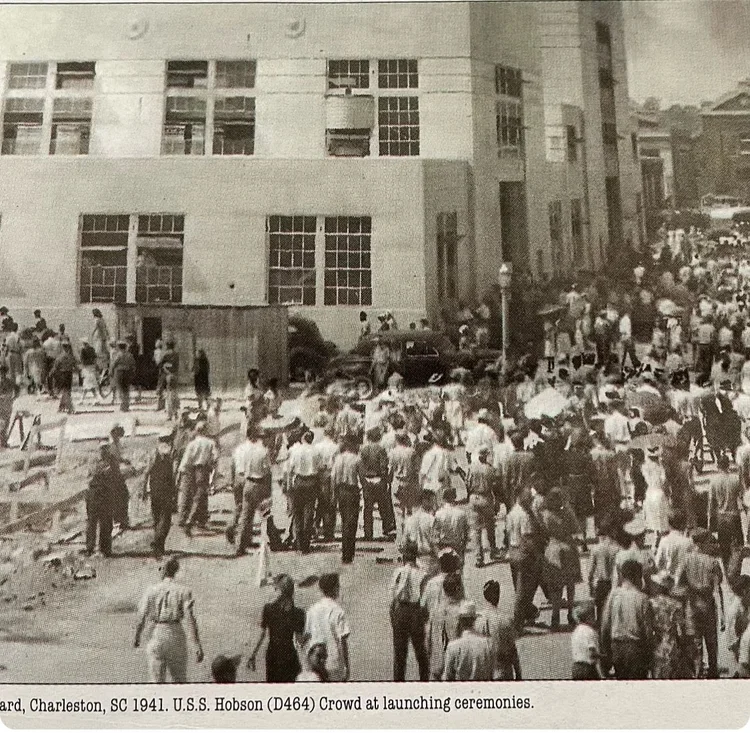
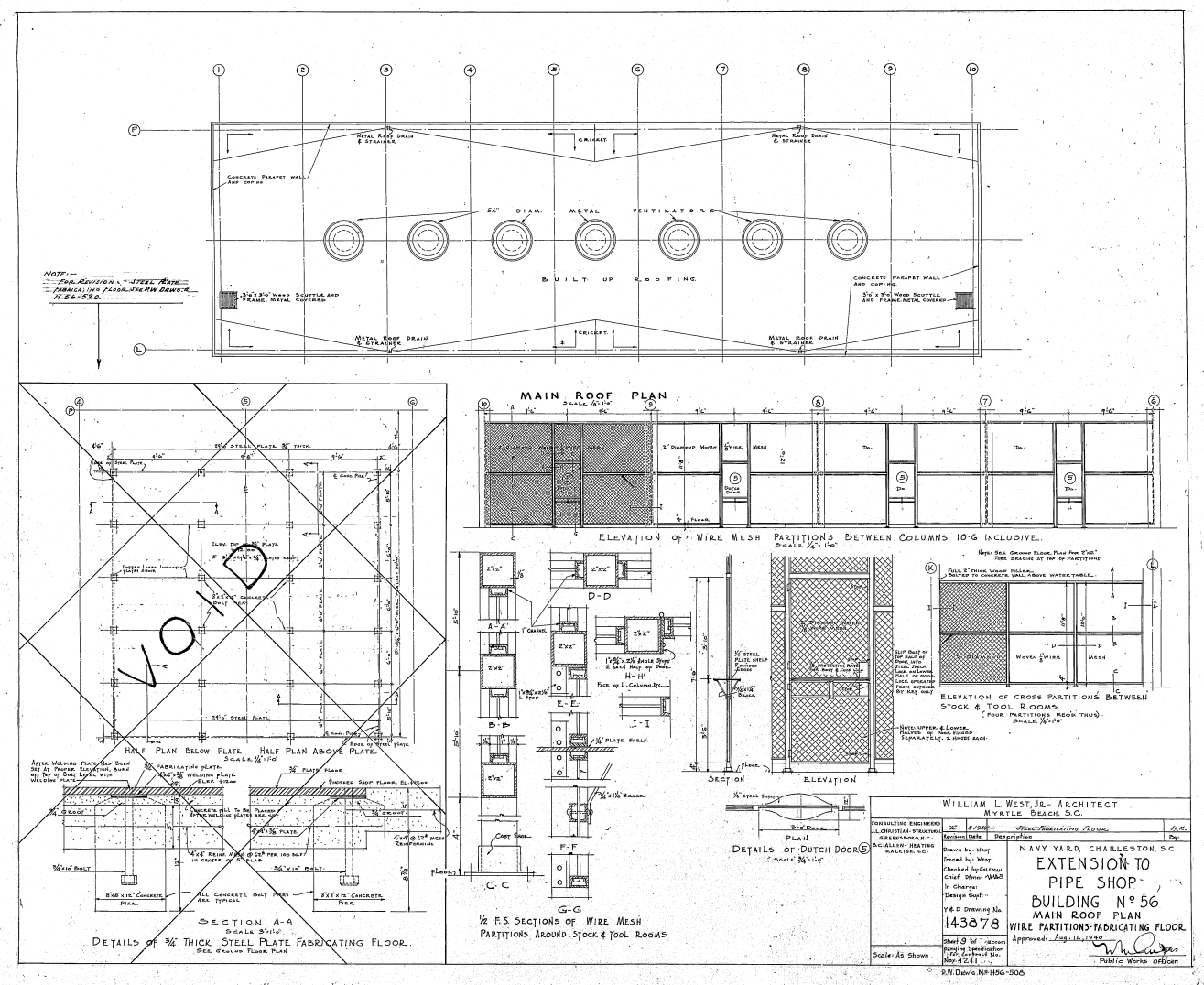
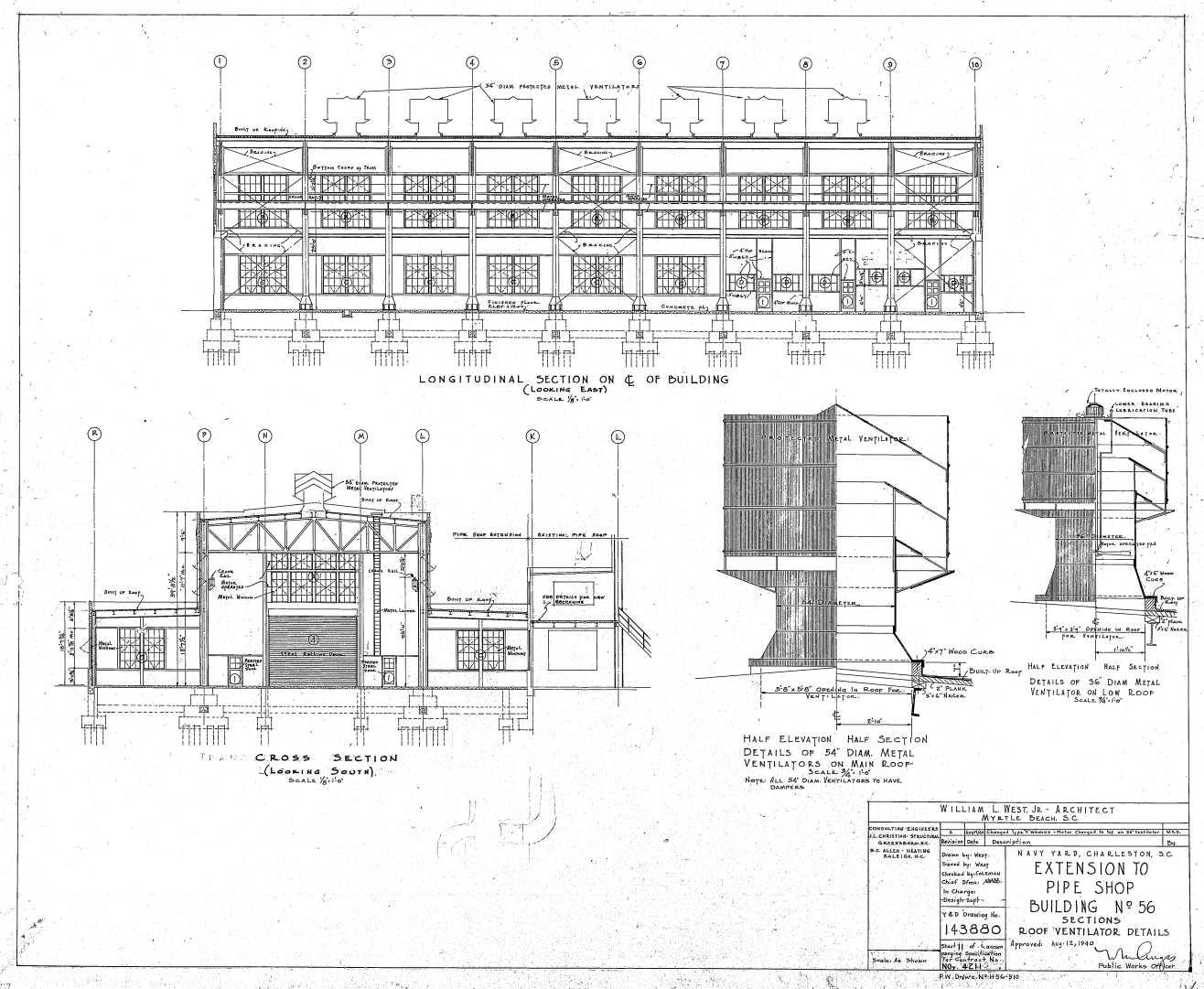
Original Drawings and Images of Building 56, Charleston Navy Yard
More Than a Building
What makes Building 56 special goes beyond size or equipment. The building itself is a constant source of inspiration. Its riveted steel, concrete construction, and utilitarian detailing reflect an era when things were built to last and to serve a purpose.
For more than 75 years, this building supported work that mattered—work that helped power American industry and infrastructure. We feel that history every day. Clients feel it when they walk in. There’s something about being in a space like this that immediately raises the bar.
We see Building 56 as our forever home. If we grow beyond it, we hope that growth looks like expansion within or around this space, not another move. Our goal is to continue filling it with machines, people, and projects that respect its history while pushing our work forward.
Carrying on the spirit of this building feels like a responsibility—and one we’re proud to take on.
Robert Thomas Iron Design — Forging meaning into metal.